

Why Basement Flood Prevention Matters for Every Homeowner
Basement flood prevention is essential for protecting your home from costly water damage, mold growth, and structural issues. A flooded basement is a homeowner’s nightmare, threatening everything from family heirlooms to your home’s foundation and electrical systems. The average damage claim can be tens of thousands of dollars, not to mention the stress and potential health risks from mold.
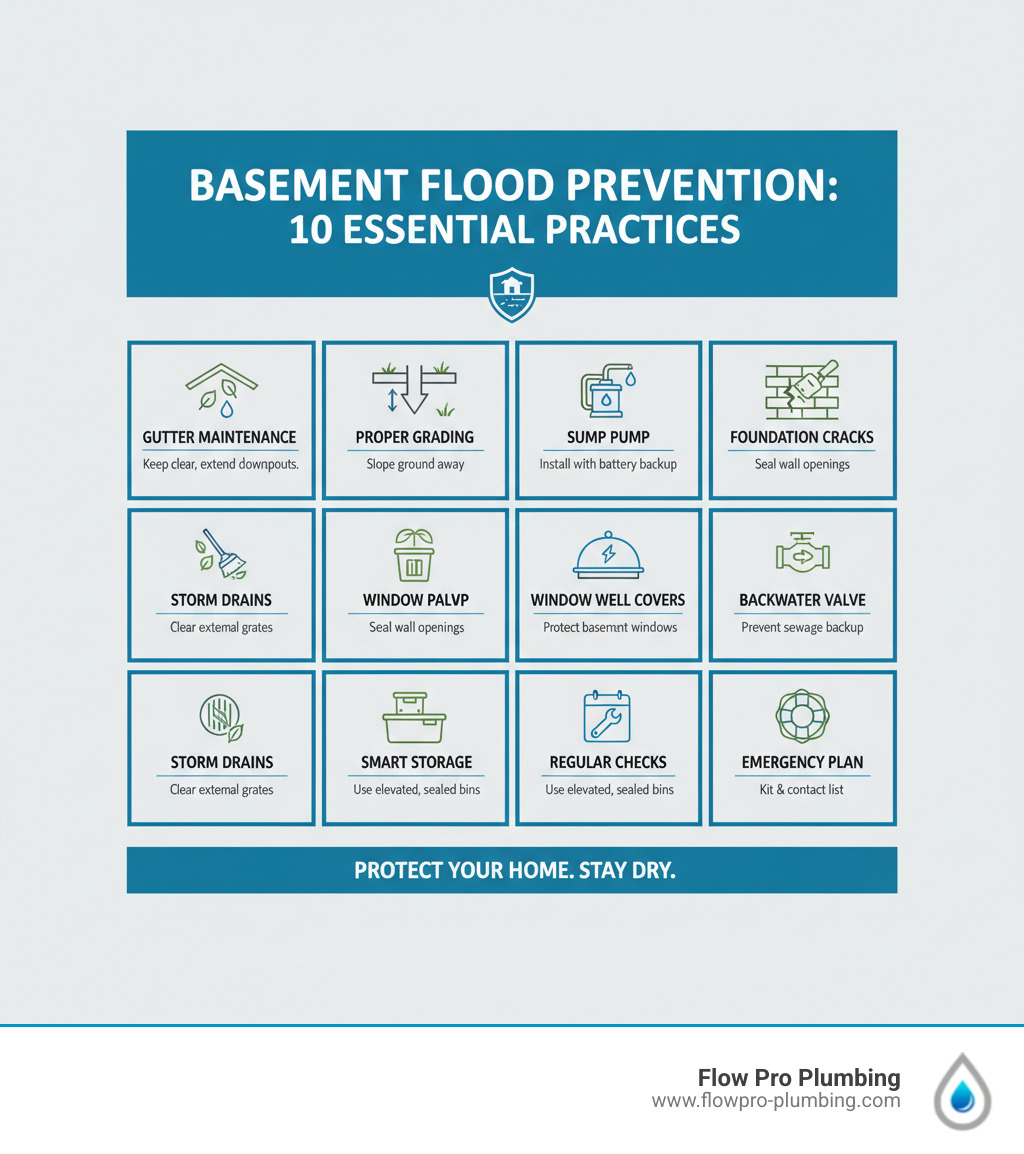
Fortunately, most basement flooding is preventable. Key strategies include:
- Maintain gutters and downspouts
- Grade your yard properly
- Install and maintain a sump pump with a battery backup
- Seal foundation cracks
- Install backwater valves
- Keep storm drains clear
- Waterproof basement walls
- Store items properly
Understanding the causes and solutions for issues like overland flooding and sewer backups can save you thousands. I’m Jesse Delgado, a licensed plumber at Flow Pro Plumbing with over a decade of experience. I’ve seen how proactive basement flood prevention can turn potential disasters into minor inconveniences, and I’m here to guide you through the process.
Fortifying Your Home’s Exterior: Your First Line of Defense
Your home’s exterior is the first line of defense against water invasion. Effective basement flood prevention starts by redirecting water away from your home’s perimeter before it ever reaches the foundation. Most water problems begin outside, caused by poor yard grading, clogged gutters and downspouts, or even poor landscaping choices. Addressing these exterior issues is often more cost-effective than dealing with water damage after the fact.

Essential Exterior Maintenance for Basement Flood Prevention
Consistent exterior maintenance is critical. Proper grading is the most important step; the ground should slope away from your foundation at least 6 inches over the first 10 feet. This directs water away from your basement walls. After a heavy rain, look for pooling water near the foundation and regrade these areas by adding soil.
Gutter cleaning is another essential chore. Clogged gutters overflow, creating waterfalls next to your foundation. Clean them at least twice a year and ensure your downspouts extend at least 6 feet away from your home. For persistent issues, our drain clearing services can help.
Smart tree and shrub placement also matters. Keep large plants at least 10 feet from the foundation to prevent roots from cracking walls. Window wells are natural collection points for water, so ensure they have proper drainage and use window well covers to keep out rain and debris. Finally, help keep local storm drains clear of debris to prevent street flooding that could reach your property.
Advanced Exterior Drainage Solutions
Sometimes, basic maintenance isn’t enough. For areas with heavy rain or poor soil, advanced solutions may be necessary.
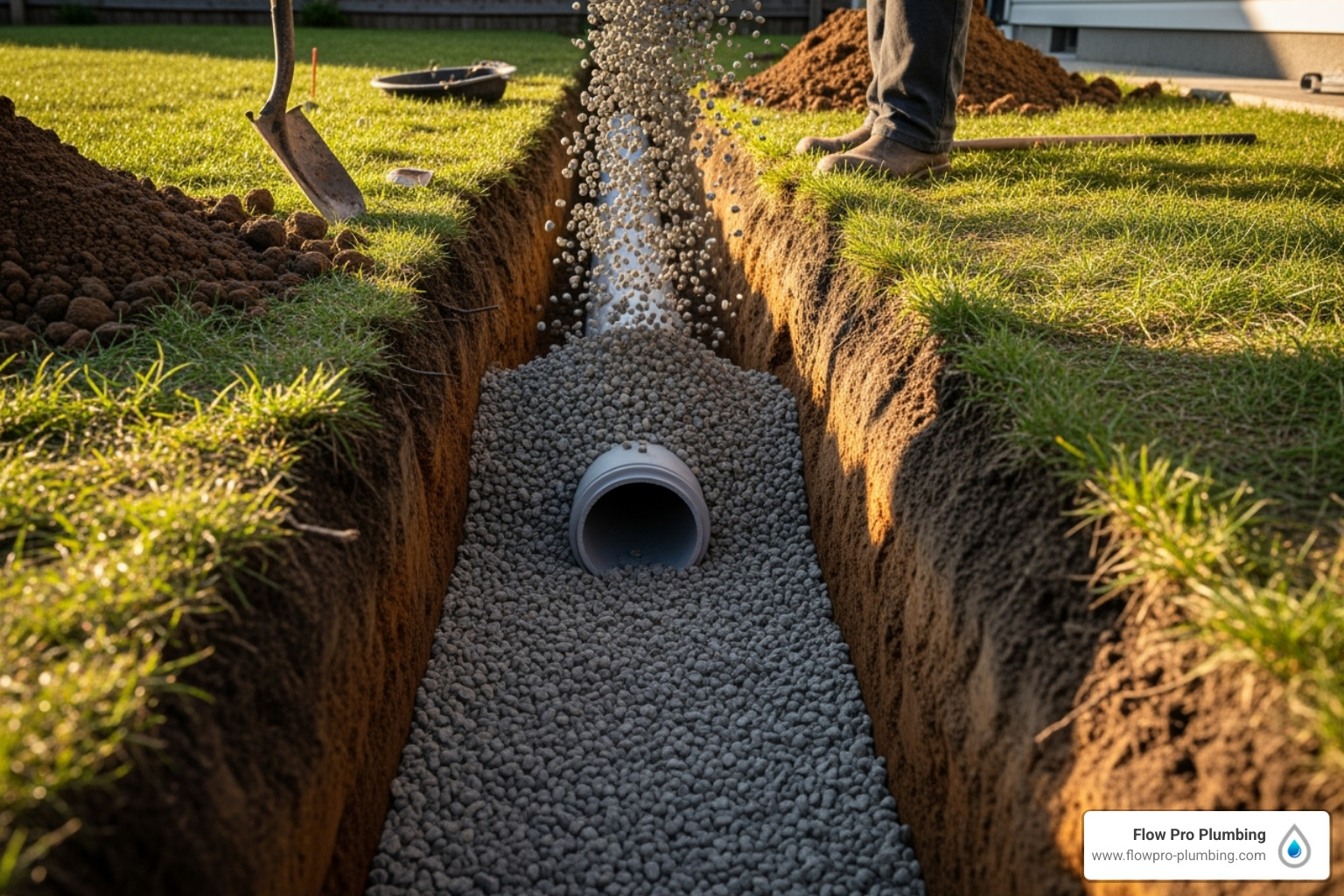
French drains are highly effective for long-term basement flood prevention. If you’re wondering what is a French drain, it’s a gravel-filled trench with a perforated pipe that collects and redirects groundwater away from your foundation. This reduces hydrostatic pressure—the force that pushes water through foundation cracks.
Catch basins can solve issues with persistent low spots in your yard, while swales (shallow ditches) can help guide water to safer discharge points. These advanced systems require professional expertise to ensure they are designed and installed correctly for your property’s specific needs.
Your Proactive Plan for Interior Basement Flood Prevention
While exterior defenses are your first line of protection, an interior basement flood prevention plan acts as your safety net. When severe weather overwhelms your exterior systems, interior solutions are crucial. This strategy focuses on maintaining your foundation, implementing reliable drainage, and using dependable sump pumps.
Sealing and Waterproofing from the Inside
Even strong concrete can develop cracks over time. Foundation crack sealing is a vital preventative measure. Regularly inspect your basement for new cracks in the walls or floor. For small, non-structural cracks, hydraulic cement or epoxy injections create a strong, waterproof seal. Vapor barriers, which are plastic sheets applied to walls, add another layer of protection by preventing moisture migration and helping to control humidity. As we explain in our guide on How Serious is a Burst Pipe?, small issues can quickly escalate if ignored.
The Role of Sump Pumps and Interior Drains
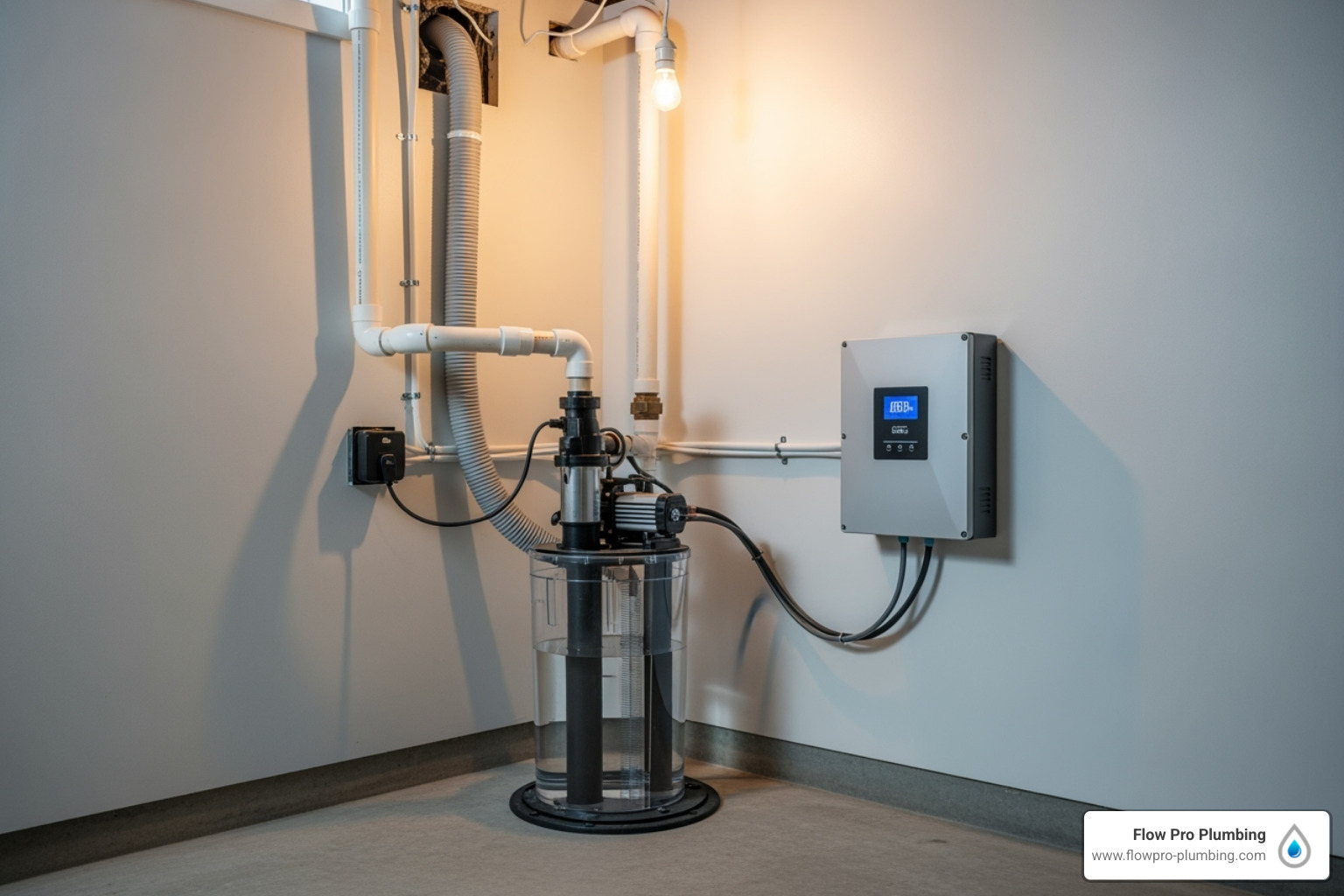
Sump pumps are the workhorses of interior basement flood prevention. A sump pump system collects water that gets under your foundation in a sump pit. When the water level rises, the pump automatically activates, discharging the water safely away from your home. Many homeowners ask Why Would a House Need a Sump Pump?, and the answer often relates to a high water table, frequent heavy rains, or older home construction.
Weeping tile systems (or drain tile) often work with sump pumps. These perforated pipes, installed around the basement perimeter, collect water and channel it to the sump pit. Sump pump maintenance is critical; test your pump at least twice a year to ensure it runs properly. Since heavy storms can cause power outages, a Battery Backup Sump Pump is essential for uninterrupted protection. Finally, water alarms and flood sensors provide an early warning of rising water, often sending alerts to your smartphone.
Smart Storage Strategies for Flood-Prone Areas
Even with the best prevention systems, it’s wise to prepare for the unexpected. How you store belongings can make a huge difference.
- Lift Everything: Use sturdy metal or plastic shelving to get all items off the floor.
- Use Waterproof Containers: Store irreplaceable items like photos and documents in airtight plastic bins.
- Choose Water-Resistant Materials: If finishing your basement, opt for materials like ceramic tile and moisture-resistant drywall.
- Store Valuables Upstairs: For your most precious items, the safest place is on an upper floor.
Protecting Your Plumbing: Preventing Sewer Backups and Leaks
Beyond managing rainwater, a solid basement flood prevention plan must address threats from within your plumbing system. The two main culprits are sewer backups, where wastewater flows backward into your home, and internal leaks from appliances or pipes, which can cause significant damage over time.
Advanced Plumbing Solutions for Basement Flood Prevention
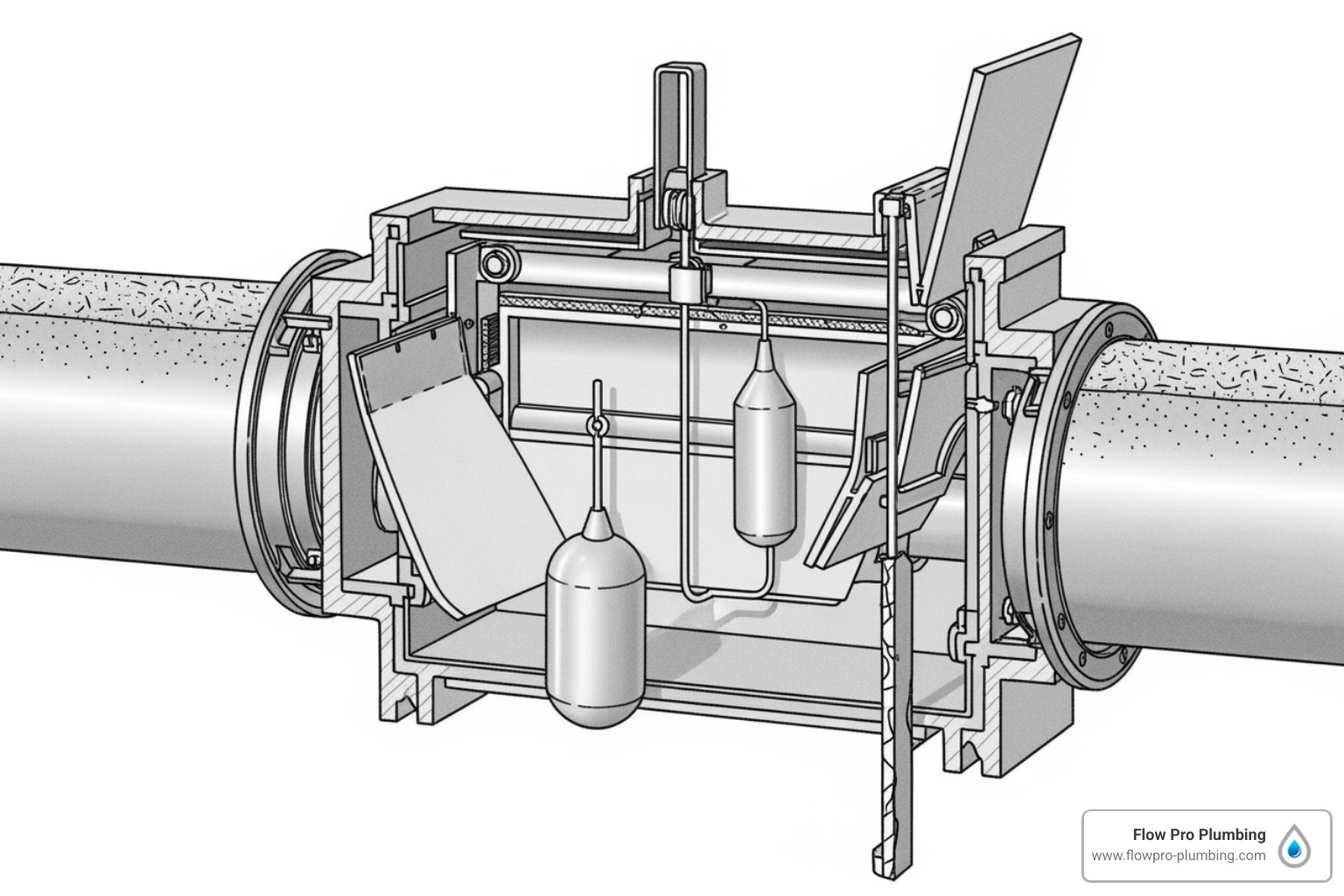
It’s important to understand the difference between overland flooding (from rain) and sewer backup. A sewer backup occurs when the municipal sewer system is overwhelmed, forcing wastewater back into your home. The primary defense against this is a backwater valve. This device, installed in your home’s sewer line, acts as a one-way gate, allowing waste to flow out but automatically closing to block any backflow. You can see A typical backwater sanitary valve installation (courtesy ICLR, 2009) to understand the mechanism. Professional installation and seasonal backwater valve maintenance are crucial for it to function correctly during an emergency.
The Importance of Regular Sewer and Drain Maintenance
Your sewer line works hard but is vulnerable to issues like tree root intrusion. Sewer line inspections with video technology can spot problems before they cause a backup. Our Sewer Video Inspection Role service allows us to see inside your pipes to identify cracks or blockages.
Preventing clogs is also key. Never pour fats, oils, and grease (FOG) down the drain, as they solidify and create stubborn blockages. Our guide on Preventing Sewer Blockages offers more tips. Address even small drips promptly; for guidance, see our article on What to Do if a Pipe is Leaking. Finally, professional Regular Drain Cleaning is like a tune-up for your plumbing, removing buildup and ensuring everything flows smoothly.
After the Flood: Immediate Steps and Future-Proofing
Despite the best basement flood prevention efforts, water can sometimes get in. When it does, acting quickly and calmly can minimize the damage. Water damage worsens by the hour, and mold can begin growing in just 24-48 hours.
What to Do When Your Basement Has Already Flooded
Safety first. If water is near electrical outlets or your panel, do not enter. Call your utility company to shut off the power. If you suspect a sewage backup, the health risks are serious, so call for emergency help.
Document everything. Before touching anything, take photos and videos of the damage for your insurance claim. Make a detailed list of all affected items.
Contact your insurance company as soon as possible to start the claims process. Understand whether your policy covers the specific type of flood, as our guide on Does Your Insurance Protect You From Water Leaks? explains.
Remove the water quickly. Use wet/dry vacuums, buckets, or mops. For significant flooding, call a professional water extraction service with industrial-grade equipment.
Dry the area thoroughly. Open windows, use fans, and run dehumidifiers to remove all moisture, especially from hidden areas like behind walls or under flooring.
Clean and disinfect. All surfaces that touched floodwater must be cleaned. Porous materials like carpet, drywall, and insulation that were saturated will likely need to be discarded to prevent mold.
Analyze the cause. Once the crisis is over, determine what failed. Was it the sump pump, gutters, or a foundation crack? Understanding the cause is the key to preventing a recurrence.
Your response should differ based on the flood type:
| Action / Type of Flood | Overland Flooding | Sewer Backup |
|---|---|---|
| Safety First | Avoid contact with floodwaters (may contain contaminants) | Avoid contact with floodwaters (high risk of raw sewage) |
| Power/Gas | Shut off if water level reaches electrical outlets | Shut off immediately if water is present |
| Insurance | Check policy for specific “overland flood” coverage | Typically covered by home insurance; notify insurer immediately |
| Plumbing Use | Continue normal use (unless sewer system is overwhelmed) | Avoid using toilets, sinks, showers to prevent worsening backup |
| Cleanup | Remove water, dry, clean, disinfect (less hazardous) | Professional cleanup highly recommended (biohazard risk), disinfect thoroughly |
| Prevention Review | Focus on exterior grading, drainage, barriers | Focus on backwater valves, sewer line maintenance, FOG prevention |
Flooding doesn’t mean you’ve failed as a homeowner. What matters is how you respond and learn from the experience to make your home more resilient.
Frequently Asked Questions about Basement Flooding
What are the most common causes of basement flooding?
Effective basement flood prevention starts with understanding the common culprits. These often include:
- Heavy rainfall and spring snowmelt that overwhelm drainage systems.
- Poor exterior grading that funnels water toward your foundation.
- Clogged gutters and downspouts that dump water right next to your house.
- Foundation cracks that provide an entry point for groundwater under pressure.
- Sump pump failure, especially during power outages.
- Sewer backups from overwhelmed municipal systems.
- Internal plumbing leaks from appliances or pipes.
How do I know if I need a sump pump?
Your basement will often give you clues. You likely need a sump pump if you notice:
- Frequent dampness or musty odors, indicating persistent moisture issues.
- Water pooling on the floor during or after rain, even in small amounts.
- You live in a high water table area, near water, or have clay-heavy soil.
- You have an older home built before modern foundation drainage standards were common.
Some local building codes may also require a sump pump based on your property’s location.
Can I prevent basement flooding myself, or do I need a professional?
Effective basement flood prevention is a partnership between DIY maintenance and professional expertise.
DIY tasks you can handle:
- Regular gutter cleaning and extending downspouts.
- Minor grading adjustments to slope soil away from the foundation.
- Clearing debris from nearby storm drains.
- Sealing small, non-structural foundation cracks.
- Installing flood alarms and organizing basement storage.
Jobs for a professional plumber:
- Sump pump installation and adding a battery backup system.
- Installing French drains or other complex exterior drainage.
- Backwater valve installation, which involves your main sewer line.
- Sewer line inspections and repairs.
- Major foundation repairs or extensive waterproofing.
Secure Your Home with Expert Flood Prevention
We’ve covered the essential strategies for a complete basement flood prevention system, from exterior grading and gutter maintenance to interior sump pumps and backwater valves. Effective protection isn’t about a single solution but creating multiple layers of defense that work together.
Proactive maintenance is the key to avoiding the stress and cost of a flooded basement. Your home is one of your largest investments, and protecting it means keeping water outside your foundation walls. While many tasks can be handled by homeowners, critical systems like sump pumps and backwater valves require professional installation and service to ensure they work when you need them most.
At Flow Pro Plumbing, we understand the challenges homeowners in Contra Costa County face. Our experienced team has helped countless families in Brentwood, Oakley, Antioch, and surrounding areas secure their basements. We know that the right combination of professional installation and homeowner vigilance is the most effective defense against water damage.
Don’t wait for the next heavy rain to find the weak spots in your home’s defenses. Contact us for professional sump pump services in Brentwood and let our team help you gain the peace of mind that comes with a dry, protected home. Your basement should be a valuable part of your home, not a source of worry.