

Why Backflow Prevention Testing Protects Your Home’s Water Supply
Backflow prevention testing is the annual inspection required by law to ensure devices that protect your clean water supply are working properly. This testing verifies that contaminated water cannot flow backward into your home’s drinking water or the public water system.
Key Facts About Backflow Prevention Testing:
- Required annually by most municipalities for homes with irrigation systems, pools, or fire sprinklers
- Must be performed by state-certified professionals using specialized equipment
- Protects against contamination from chemicals, pesticides, or sewage entering clean water lines
- Failure to test can result in fines up to $500 per day and water service disconnection
- Takes 15-30 minutes with temporary water shut-off during testing
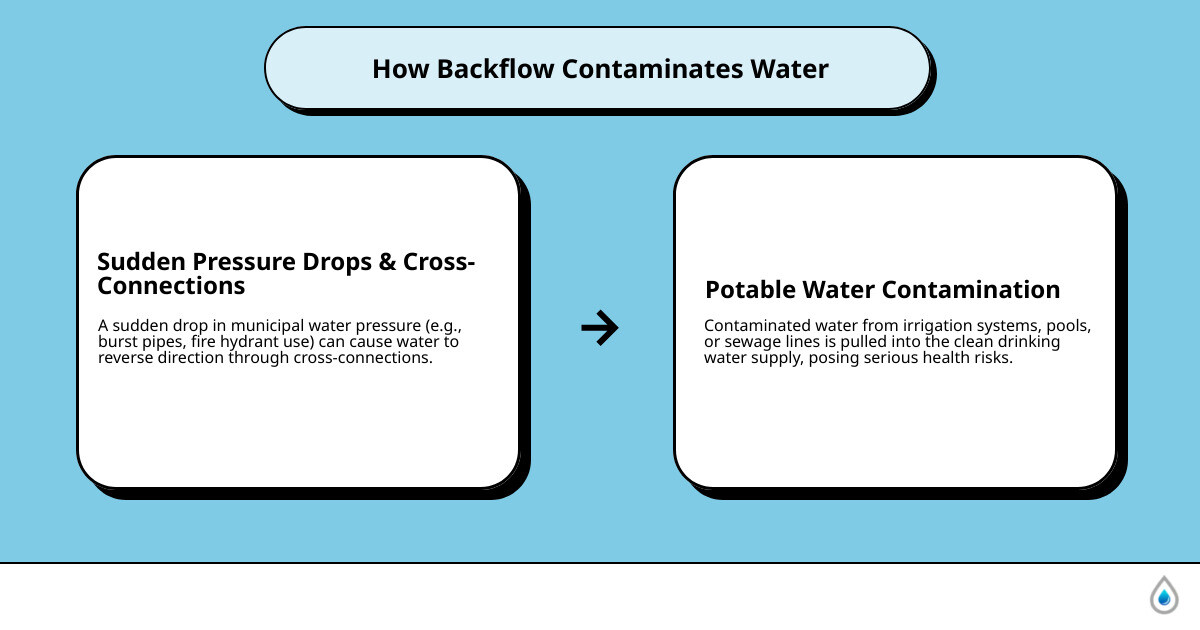
Backflow occurs when water pressure changes cause dirty water to reverse direction and enter clean water lines. As one industry expert explains, “backflow is when contaminated water has reversed flow and entered clean water lines” – typically caused by significant pressure changes like burst water mains or high demand from fire hydrants.
The contaminated water flowing backward can contain hazardous materials including human waste, pesticides, or industrial chemicals. This creates a serious health risk not just for your family, but for your entire neighborhood’s water supply.
I’m Jesse Delgado, a licensed plumber with over ten years of experience protecting East Bay Area homes through proper backflow prevention testing and maintenance. As owner of Flow Pro Plumbing, I’ve helped hundreds of homeowners understand and comply with these critical safety requirements.
The Critical Role of Backflow Prevention Devices
Think of a backflow prevention device as your water supply’s personal bodyguard. Its purpose is simple but vital: ensure one-way water flow so clean drinking water stays clean, and contaminated water from other sources never sneaks backward into your pipes.
These devices rely on smart mechanical components that work together like a well-orchestrated team. The most important players are check valves – imagine tiny doors that swing open to let water flow forward but slam shut if water tries to reverse direction. Many devices also include relief valves that automatically open to dump water if pressure gets wonky, and air inlets that break vacuum conditions to prevent back-siphonage.
You might think backflow preventers are only for big commercial buildings, but many homes right here in Brentwood need them too. Lawn irrigation systems are the most common culprit – they can pull stagnant, chemical-laden water back into your drinking water if pressure drops suddenly. Fire sprinkler systems often contain non-potable water or fire suppressants that you definitely don’t want in your morning coffee. Swimming pools with their chlorinated water and boilers with their closed-loop heating systems also pose contamination risks.
These mechanical marvels are literally the only thing standing between your family’s drinking water and potentially dangerous contaminants. But like any hardworking device, they experience mechanical wear and tear over time. Debris accumulation can prevent valves from sealing properly, which is exactly why regular backflow prevention testing isn’t optional – it’s essential.
For more insights on protecting your entire plumbing system, check out our guide on the importance of plumbing maintenance.
Common Types of Backflow Preventers
While all backflow preventers share the same mission of protecting your water supply, they come in different designs suited for various risk levels and applications. Understanding these differences helps explain why precise backflow prevention testing procedures matter so much.
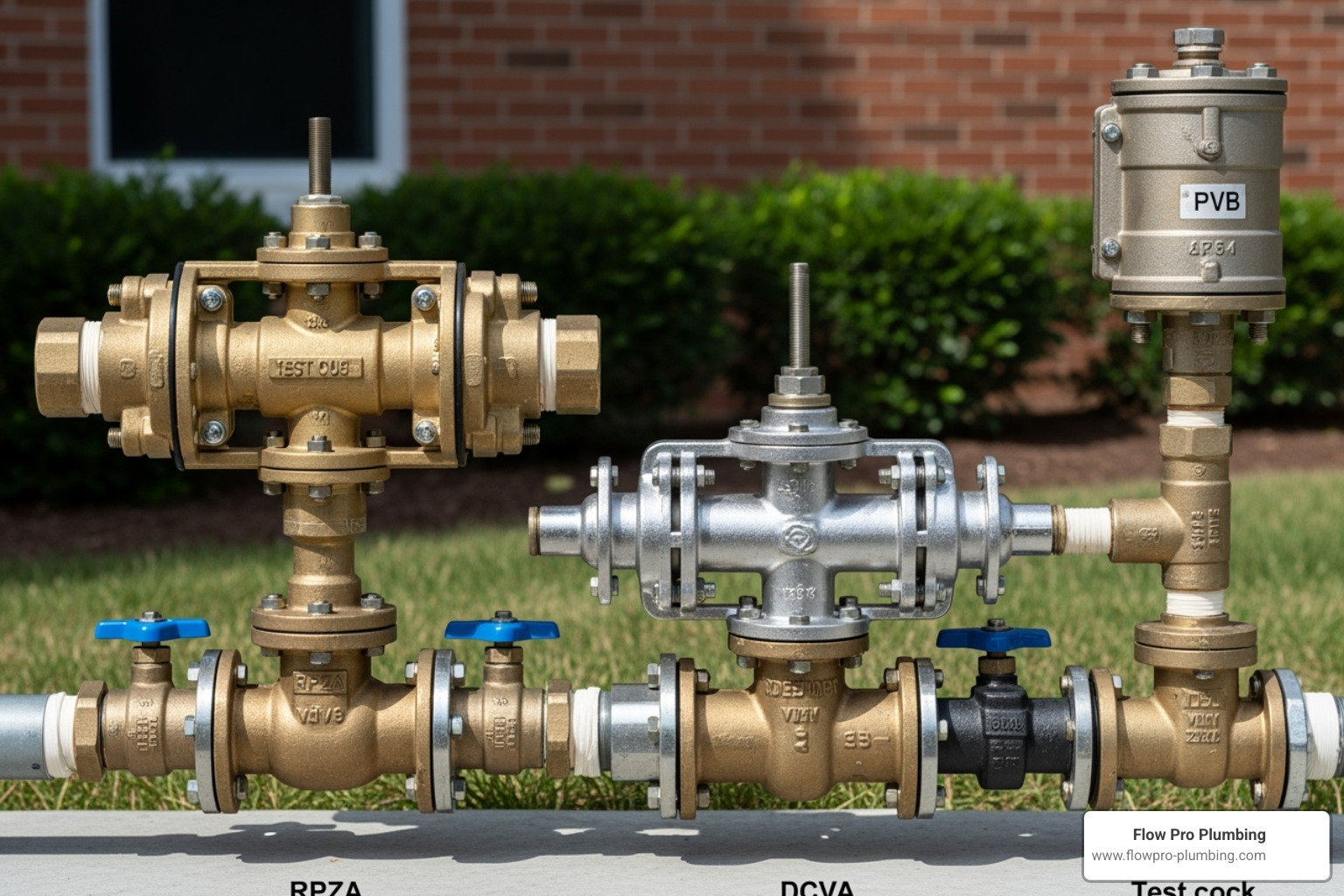
The Reduced Pressure Zone Assembly (RPZA) is the heavy-duty champion of backflow prevention. With two independent check valves, an automatic relief valve between them, and two shut-off valves, it provides the highest level of protection against both back-siphonage and backpressure. That’s why a fire protection system would likely use a Reduced Pressure Zone Assembly (RPZA) – the stakes are simply too high for anything less reliable.
The Double Check Valve Assembly (DCVA) handles moderate-risk situations with two independent check valves, two shut-off valves, and four test ports. While effective against backflow, it lacks the relief valve safety net of an RPZA. You’ll commonly find DCVAs protecting residential irrigation systems where the contamination risk is lower.
The Pressure Vacuum Breaker (PVB) specializes in preventing back-siphonage using a spring-loaded check valve and an independent air inlet valve. These above-ground devices are perfect for irrigation systems where there’s no continuous downstream pressure.
Each type requires specific installation conditions and distinct testing procedures to verify every internal component works exactly as designed. Our certified technicians understand the unique requirements of each device, ensuring your system meets all local regulations and keeps your water safe.
Why Regular Backflow Prevention Testing is Non-Negotiable
Here’s the truth: backflow prevention testing isn’t just another item on your home maintenance checklist. It’s absolutely essential for protecting both your family’s health and your entire community’s water supply. Think of it like getting a yearly physical – you’re checking that everything is working properly before problems develop.
Your municipal water system works hard to deliver clean, safe water to homes throughout Pittsburg, Antioch, and Concord. But this massive network depends on every property owner doing their part to prevent contamination. When you maintain your backflow prevention device, you’re taking on a shared responsibility that keeps everyone’s water safe.
The reality is that even the best-built backflow prevention devices experience mechanical wear and tear over time. Springs lose their tension, seals crack, and check valves don’t close as tightly as they should. Debris accumulation is another common culprit – tiny particles can get stuck in valves, preventing them from sealing completely.
As industry experts point out, “mechanical backflow prevention devices protect municipal water systems from potential contamination. However, wear and debris can limit a device’s effectiveness.” This means your device could look perfectly fine from the outside while failing to protect your water on the inside.
That’s why annual testing requirements exist in most municipalities. It’s not bureaucratic red tape – it’s a proven way to catch problems before they become health hazards. You’ll also need testing after any repairs or new installations to ensure everything is working correctly from day one.
The consequences of non-compliance are serious and expensive. Many areas impose potential fines of up to $500 per day for untested devices. Even worse, your local water authority can order water service disconnection until you complete the required testing. Imagine explaining to your family why there’s no water for showers, cooking, or drinking because of a skipped inspection.
For more detailed answers to common questions about testing requirements, the American Backflow Prevention Association – Frequently Asked Questions provides helpful guidance.
Why is Backflow Prevention Testing Necessary?
Beyond avoiding fines and keeping your water flowing, backflow prevention testing serves a critical purpose: ensuring device functionality when you need it most. During testing, our certified technicians perform precise checks that reveal whether your device is truly protecting your water supply.
We start by verifying valve seals – the rubber components that create watertight barriers against contaminated water. Even tiny leaks can allow dangerous substances to enter your clean water lines. Next, we focus on confirming pressure differentials, which are the specific pressure measurements that prove your device is working correctly.
Complying with local water authority mandates isn’t optional, but it’s also not just about following rules. These requirements exist because they work. When every property owner maintains their backflow prevention device, we’re all actively preventing contamination events that could affect entire neighborhoods in Bay Point, Clayton, and beyond.
This testing process is especially important because backflow incidents can happen suddenly and without warning. A burst water main, heavy water usage during a fire emergency, or even routine maintenance on municipal lines can create the pressure changes that cause backflow. When these situations occur, you want to know your device will perform flawlessly.
Understanding your local requirements is crucial for staying compliant. Our guide on local plumbing codes & regulations can help you steer the specific rules that apply to your property.
What to Expect During a Professional Inspection
When it’s time for your annual backflow prevention testing, you might feel a bit uncertain about what’s coming next. Maybe you’ve received that official-looking notice from your water utility, or perhaps you’re being proactive about staying compliant. Either way, our team at Flow Pro Plumbing is here to walk you through exactly what happens during a professional inspection.
Scheduling your test is the first step, and timing matters more than you might think. If you’ve received a notice, your local water authority has identified your property as having a testable device that needs immediate attention. Don’t let that notice sit on your kitchen counter – acting quickly helps you avoid those hefty daily fines we mentioned earlier.
Here’s something important to remember: this isn’t a job for your handy neighbor or even a general contractor. The testing must be performed by a certified professional who holds specific backflow prevention credentials. In our service areas throughout Contra Costa County – from Walnut Creek to Pleasant Hill to Knightsen – state regulations are crystal clear that only licensed professionals with proper certifications can legally test these devices.
When our certified technician arrives at your property, they’ll start by locating your backflow prevention device. Sometimes homeowners aren’t even sure where theirs is located! Don’t worry if you can’t point it out right away – we’re experts at finding these devices, whether they’re tucked near your water meter or connected to your irrigation system.
Now, here’s the part that catches some folks off guard: there will be a temporary water shut-off during the inspection. Yes, this means no running water for a short period, typically around 15 to 30 minutes. We know it’s not ideal, especially if you’re trying to get the kids ready for school or prep dinner, but this shut-off is absolutely necessary for accurate testing.
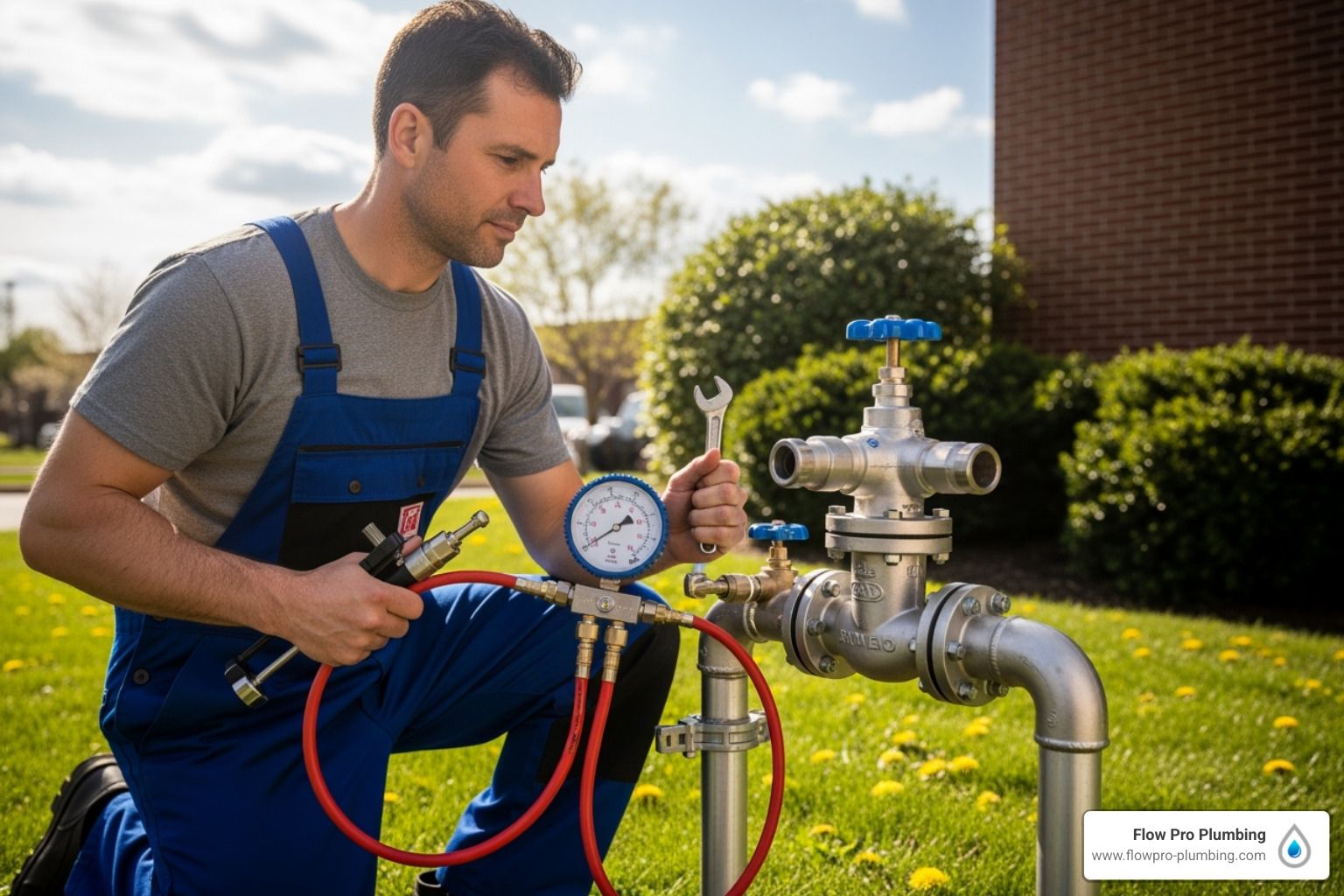
The actual inspection process involves both visual and technical components. Our technician will first conduct a thorough visual inspection looking for any obvious signs of damage, corrosion, or tampering with the device. Then comes the technical magic – attaching specialized test equipment including a calibrated differential pressure gauge that measures the precise pressures within your device.
During the testing phase, you’ll see our technician methodically opening and closing various valves while carefully recording pressure readings on their official test forms. These numbers tell the complete story of how well your device is protecting your water supply. Every measurement matters because it determines whether your device passes or needs attention.
Once testing is complete, our technician will submit the compliance reports directly to your water authority on your behalf. No paperwork hassles for you – we handle the bureaucratic side so you can focus on your day. If everything checks out, you’re good for another year. If not, we’ll explain exactly what needs to be fixed and help you get back into compliance quickly.
The Process of Professional Backflow Prevention Testing
Behind the scenes of every backflow prevention testing appointment, there’s a carefully choreographed sequence of technical steps that our certified technicians follow. Understanding this process helps you appreciate why professional testing is so thorough and why it takes the time it does.
Isolating the device is always our first technical step. Think of it like putting your backflow preventer into a testing bubble – we close the shut-off valves on both sides of the assembly, creating a controlled environment where we can measure exactly what’s happening inside those check valves and relief valves.
The heart of the inspection involves testing each check valve individually. For devices like Double Check Valve Assemblies and Reduced Pressure Zone Assemblies, this means applying specific pressures to each valve and watching our gauges like hawks. We’re looking for those check valves to hold a minimum pressure – if they don’t, contaminated water could potentially flow backward into your clean water supply.
If you have a Reduced Pressure Zone Assembly (the gold standard of backflow prevention), there’s an additional critical step: verifying the relief valve opens correctly. This valve is your device’s emergency release system. When pressure drops dangerously between the two check valves, this relief valve should pop open and discharge water to prevent contamination. Our technicians will deliberately create the conditions that should trigger this valve, ensuring it responds exactly when it should.
Throughout every step, we’re documenting results on an official test report that becomes your legal proof of compliance. These aren’t casual notes – every pressure reading, every valve response, and every observation gets recorded on standardized forms that water authorities accept.
Finally, we complete the process by tagging the device with the test date and our certification information. This small tag serves as immediate visual proof that your device has been properly tested and is protecting your water supply.
The precision required for professional backflow prevention testing is why this isn’t a DIY project. Our certified technicians know exactly what pressure readings indicate a healthy device versus one that needs repair. While we’re on-site checking your backflow prevention system, we sometimes find other plumbing concerns that warrant attention – and a sewer camera inspection can identify other plumbing system issues that might be lurking in your pipes.
Frequently Asked Questions about Backflow Testing
We get it – backflow prevention testing can feel like one of those mysterious homeowner responsibilities that nobody really explains until you’re scrambling to figure it out. At Flow Pro Plumbing, we’ve answered thousands of questions from confused homeowners across Antioch, Byron, and Bethel Island, so you’re definitely not alone in wondering what this is all about.
Let me share the most common questions we hear, along with the straightforward answers that’ll put your mind at ease.
Why did I receive a notice to test my backflow preventer?
That official-looking envelope in your mailbox isn’t cause for alarm – it’s actually a good sign that your local water authority is doing its job! Local water authorities track all testable devices within their service area and send mandatory annual reminders to property owners like clockwork.
Think of it like getting your annual car inspection notice. Your city or water utility maintains detailed records of every backflow prevention device in the community, and they’re required by law to ensure compliance and safeguard the public water supply. The notice simply means your device is due for its yearly check-up.
When you receive one of these notices, consider it your friendly nudge to schedule testing with a certified professional. It’s not a penalty – it’s prevention.
Will my water be shut off during the test?
Yes, the water to the property must be turned off for a short period during testing, but don’t worry – we’re talking about a brief inconvenience, not a major disruption. Typically 15-30 minutes is all we need to allow the technician to perform the test accurately.
Here’s why the shut-off is absolutely necessary: our certified technicians need to isolate your backflow device completely to get precise pressure readings. Think of it like needing a quiet room to take an important phone call – we need that controlled environment to ensure the test results are spot-on.
We work efficiently to get your water flowing again as quickly as possible. Most homeowners use this as an opportunity to grab a coffee or catch up on a quick task around the house.
What happens if my backflow device fails the test?
If a device fails, it must be repaired or replaced by a licensed plumber – there’s no way around this requirement, and honestly, you wouldn’t want there to be. A failed device means it’s not protecting your family’s drinking water from potential contamination.
When we find a problem during backflow prevention testing, we’ll explain exactly what’s wrong in plain English. Maybe a check valve isn’t sealing properly, or perhaps debris has built up over time. Whatever the issue, we’ll walk you through your options for bringing it into compliance.
Once the repairs are complete or a new device is installed, the device will then be re-tested immediately. We don’t just fix it and hope for the best – we verify that everything is working perfectly before the results are submitted to the water authority. Only then can we confidently say your water supply is protected and your property is compliant with local regulations.
A failed test isn’t a reflection on you as a homeowner – these are mechanical devices that naturally wear out over time. The important thing is getting it fixed promptly so your water stays safe.
Conclusion: Ensure Your Water is Safe and Compliant
Your home’s water safety isn’t something you can set and forget. Throughout this guide, we’ve walked through why backflow prevention testing serves as your family’s first line of defense against water contamination – and honestly, it’s one of those “better safe than sorry” situations where the stakes are pretty high.
Think about it: those mechanical components we discussed are working 24/7 to keep contaminated water from sneaking back into your clean supply. But just like your car needs regular tune-ups to keep running smoothly, these devices need their annual check-ups to ensure they’re still doing their job properly.
The reality is that backflow prevention testing protects both your family and your entire community. When you stay compliant with testing requirements, you’re not just avoiding potential fines or water service disconnection – you’re being a good neighbor and helping maintain the safety of the municipal water system that serves everyone in your area.
At Flow Pro Plumbing, we’ve made it our mission to take the stress out of compliance for homeowners and businesses throughout Brentwood, CA, and the greater Contra Costa County area. Whether you’re in Oakley, Antioch, Pittsburg, or any of the surrounding communities, our certified technicians bring both expertise and a friendly approach to every backflow prevention testing appointment.
We know that dealing with plumbing regulations isn’t exactly anyone’s idea of fun. That’s why our experienced team handles everything from the technical testing to submitting your compliance reports directly to your water authority. Our unsurpassed workmanship and attention to detail mean you can trust that your testing is done right the first time.
Don’t wait until you receive that notice in the mail – being proactive about your backflow prevention testing puts you ahead of the game and gives you peace of mind knowing your water is safe and compliant. Schedule your certified backflow prevention testing in Brentwood, CA today and let Flow Pro Plumbing handle the details while you focus on what matters most to you.