
Why Modern Homeowners Are Making the Switch
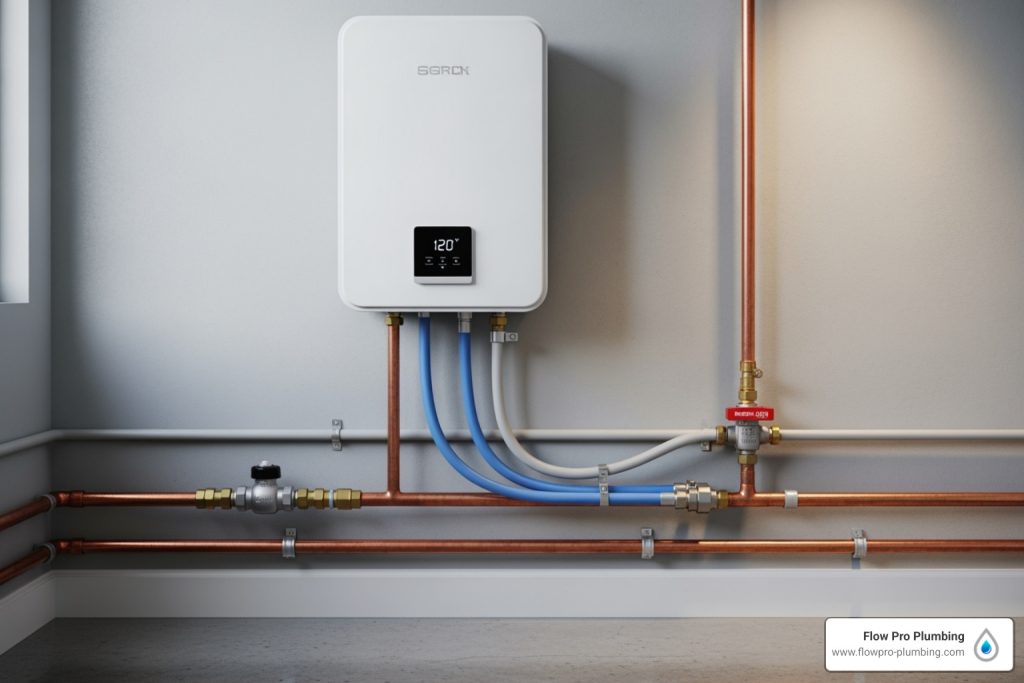
Tankless water heater benefits are changing how families think about hot water. Unlike traditional systems that constantly heat 40-60 gallons of water, tankless units heat water instantly as it flows through the system. This eliminates the standby energy losses that waste money on your utility bills.
Key Tankless Water Heater Benefits:
- Endless hot water supply – no more cold showers when the tank runs empty
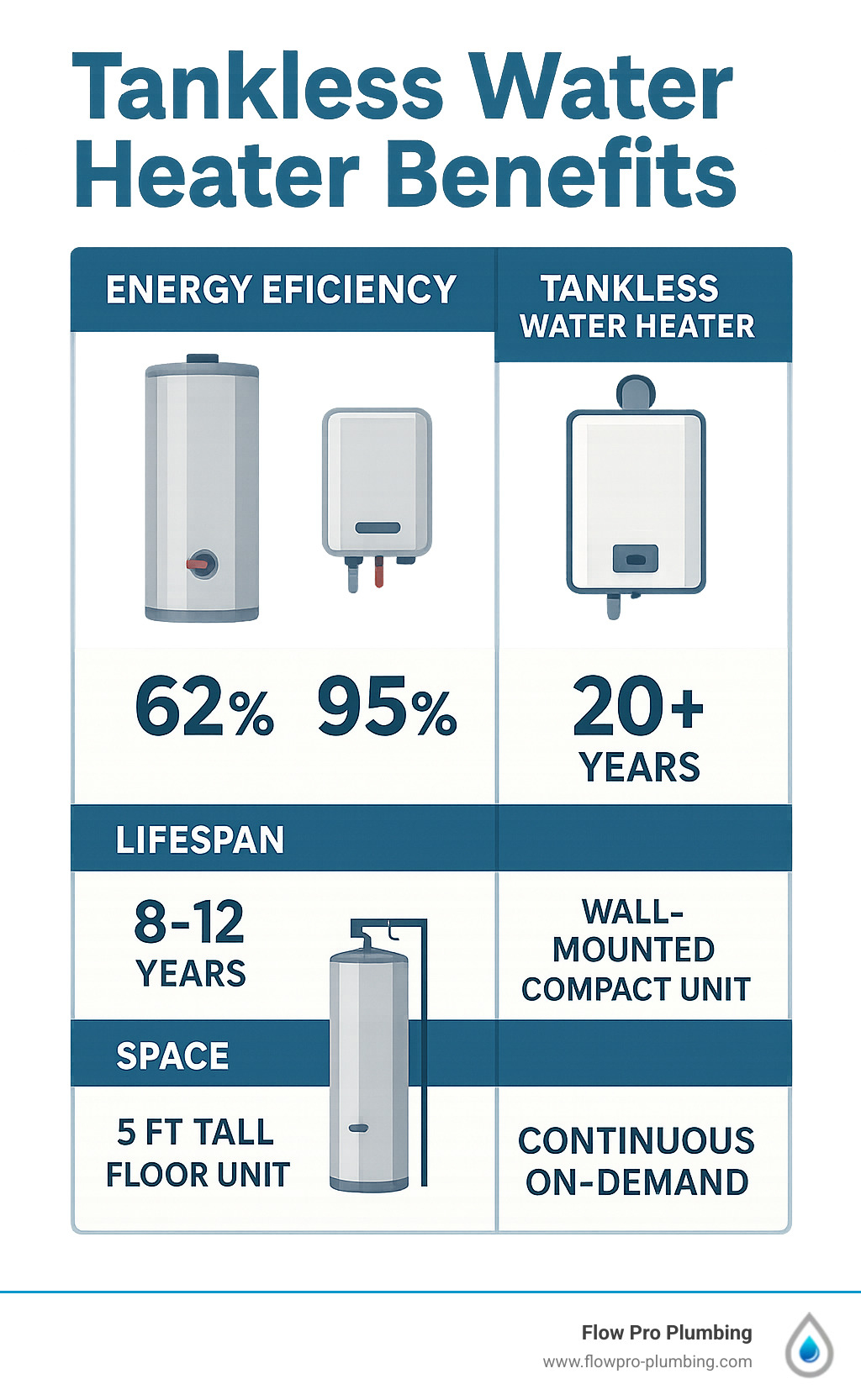
- 24-34% more energy efficient than conventional storage tanks
- 20+ year lifespan vs. 8-12 years for traditional tanks
- 80% less space required with wall-mounted design
- Higher home value with modern, efficient appliances
- Reduced risk of water damage from tank leaks or bursts
Here’s how it works: Cold water enters the unit, flows past a heat exchanger (gas burner or electric element), and exits as hot water at your desired temperature. No storage tank means no standby heat loss—you only use energy when you need hot water.
The on-demand heating eliminates running out of hot water mid-shower. With proper sizing, a tankless system provides a continuous supply that won’t leave you shivering.
I’m Jesse Delgado, a licensed plumber with over 10 years of experience helping Brentwood families understand the real-world tankless water heater benefits. My experience with both traditional and tankless systems provides unique insight into the best solutions for different households.
The Core Tankless Water Heater Benefits You’ll Enjoy
Upgrading to a tankless water heater is a significant step up for your home’s comfort, efficiency, and value. The tankless water heater benefits you’ll experience stretch far beyond simply having hot water on demand.
With a tankless system, you no longer have to rush showers or coordinate bath times. Because water is heated instantly as it flows through the unit, you get a virtually endless supply of hot water. Whether your family needs back-to-back showers while the dishwasher and laundry are running, your tankless unit is designed to keep up. This continuous hot water supply is one of the most celebrated tankless water heater benefits.
Beyond comfort, the energy efficiency is impressive. Traditional tank heaters constantly work to keep a large volume of water hot, leading to “standby heat loss”—wasted energy that costs you money. Tankless units eliminate this waste by only activating when you need hot water. This on-demand approach means less energy is consumed, which translates into real savings.
Space is often a premium in our homes. A traditional water heater can be a bulky appliance, hogging valuable floor space. One of the immediate tankless water heater benefits is their sleek, compact, wall-mounted design. They free up considerable floor space, giving you newfound flexibility and reclaiming precious square footage.
These modern units are also built to last. While a conventional storage tank water heater typically serves you for 8-12 years, tankless models boast an impressive average life expectancy of 15-20+ years with proper care. This durability means you’ll replace your water heater less often, saving money and hassle.
Investing in a tankless water heater can also increase your home’s value. Modern, energy-efficient appliances are highly attractive to potential buyers, signaling a well-maintained home. It’s an upgrade that pays dividends in daily living and potential resale value.
Finally, the environmental upside is a huge win. By consuming less energy, tankless water heaters help reduce your household’s carbon footprint, contributing to lower CO2 emissions.
More info about our water heater services
Unpacking the Financial and Energy-Saving Tankless Water Heater Benefits
Going tankless saves money through “on-demand” heating. Unlike tank-style heaters that constantly reheat water, a tankless unit only uses energy when you turn on a hot water tap. This design eliminates standby heat loss, where much of your energy money is wasted with traditional systems.
This efficiency directly impacts your monthly utility bills. For homes using 41 gallons or less of hot water daily, tankless water heaters can be 24–34% more energy efficient than conventional storage heaters. For households using around 86 gallons per day, the savings are still significant at 10-14%. An ENERGY STAR certified tankless water heater can be up to 30% more energy efficient, saving you hundreds of dollars annually.
The efficiency of tankless units is measured by the Uniform Energy Factor (UEF). Many condensing tankless models have a UEF of 0.94 or higher, meaning 94% of the fuel directly heats your water. Leading brands like Navien offer ENERGY STAR certified models that reach an incredible 0.96 UEF.
According to the U.S. Department of Energy, these savings are real and measurable. We’ve seen many of our neighbors in Brentwood, Oakley, and Pittsburg experience noticeable reductions in their monthly energy costs after making the switch.
Beyond ongoing savings, you may find rebates, tax credits, or local utility incentives for installing energy-efficient appliances. These programs help offset the initial investment. We recommend checking with local utility providers to see what incentives are available.
Energy savings are also great for the environment. Less fuel used means a smaller carbon footprint for your household and a more sustainable future.
More Space and a Longer Lifespan
One of the most striking tankless water heater benefits is the incredible amount of space they save. Traditional tanks are bulky, taking up a huge chunk of a utility closet, basement, or garage.
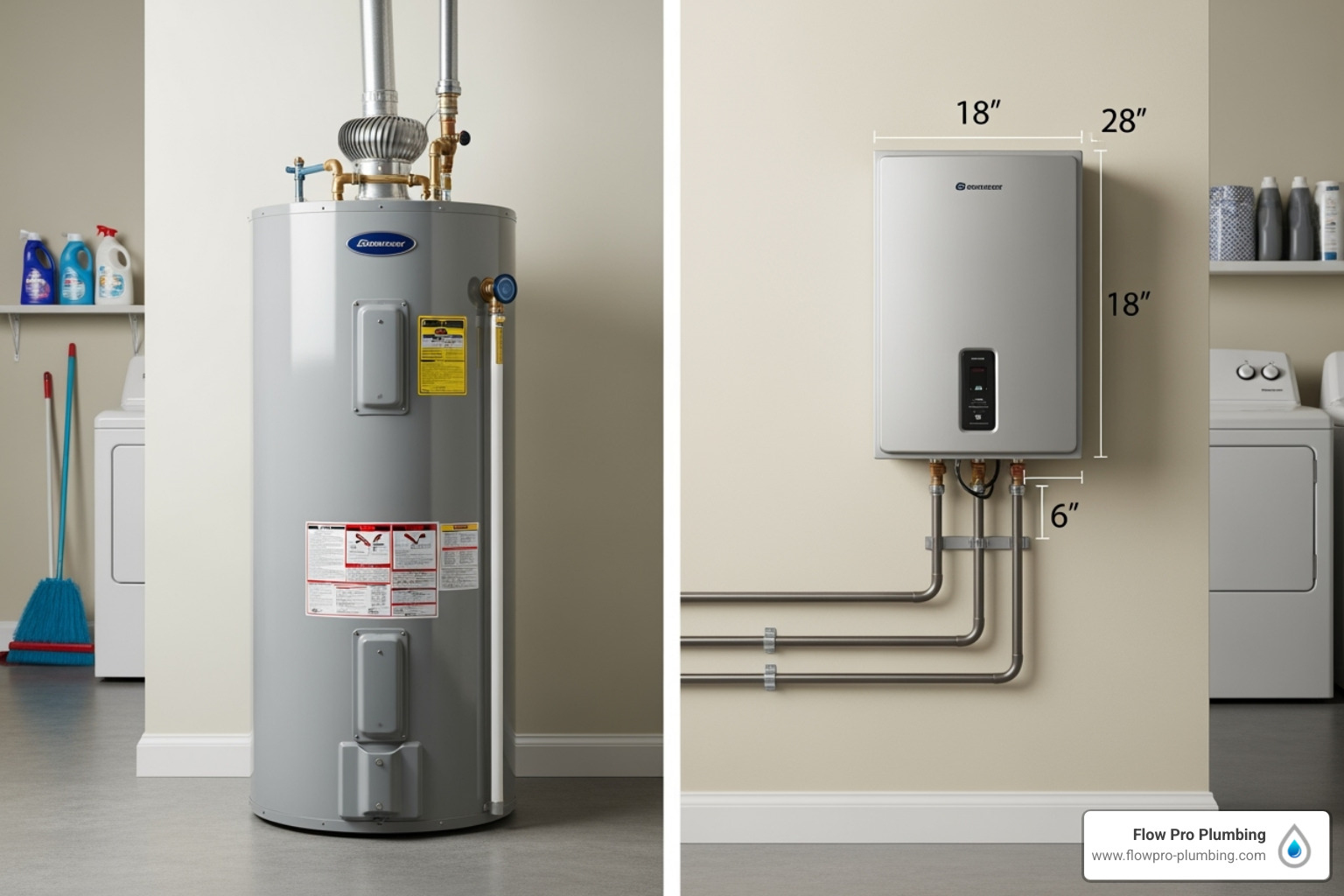
A typical storage-tank water heater is roughly 5 feet tall and 2 feet wide. In contrast, tankless units are compact, often around 28 inches tall, 20 inches wide, and 10 inches deep. They mount on a wall, freeing up about 80% more floor space. Imagine reclaiming that area for storage or a workbench.
This wall-mounted design also offers installation flexibility. We can often place them in smaller closets, attics, or on exterior walls (with proper freeze protection). This adaptability is a huge plus for homes with limited utility space in areas like Antioch or Findy Bay.
Beyond space savings, the longevity of tankless water heaters is another compelling benefit. Traditional tanks have an average lifespan of 8-12 years due to corrosion and sediment buildup. With proper maintenance, tankless units can last more than 20 years. This means less frequent replacement, saving you money and hassle.
Another advantage is that many components are replaceable. If a part wears out, it can often be swapped, extending the unit’s life. This differs from a traditional tank, which usually requires complete replacement upon failure. Manufacturers also offer robust warranties, often covering parts for 5 years and heat exchangers for 15 years or more, underscoring their confidence in the product’s durability.
How to Get the Right Performance and Comfort from Your System
While the tankless water heater benefits are amazing, getting the most out of your system means ensuring it’s the perfect fit for your home. Sizing is not a one-size-fits-all situation, and what works for one Brentwood home might not be best for another.
Getting the sizing right is crucial. For tankless units, we focus on two main factors: flow rate (GPM) and temperature rise. Flow rate is how many gallons of hot water the unit can deliver per minute. Temperature rise is how many degrees the unit must warm the incoming cold water to reach your desired temperature. For example, if your incoming water is 40°F and you want a 120°F shower, that’s an 80°F temperature rise.
Your local climate matters. In colder months in Contra Costa County, the incoming water is frostier. This means the unit works harder to achieve the desired warmth, which can slightly reduce its effective hot water output. We always account for local average incoming water temperatures when choosing a model.
We also consider your household’s hot water habits. Do multiple showers run at once? Is the dishwasher running during laundry and a shower? A unit rated for 5 GPM could handle two standard 2.5 GPM showers simultaneously. For families with higher demand, we might recommend a unit with a higher GPM or even two units to ensure everyone gets the hot water they need.
Ready to dive deeper into options? Explore Tankless Water Heaters.
Understanding the differences between gas and electric tankless models is also important.
Gas tankless water heaters are often the go-to for whole-home solutions because they typically provide a much higher flow rate (GPM), making them great for multiple simultaneous demands. For installation, they need a gas line, proper venting, and some electricity for their controls. In terms of operating efficiency, modern condensing gas models have impressive UEFs, sometimes as high as 0.96.
Electric tankless water heaters are fantastic for specific situations. They tend to have a lower GPM, making them ideal for point-of-use applications like a single bathroom or for supplementing an existing system. Their installation is simpler regarding venting, but they require a dedicated, high-amperage electrical circuit, which might mean an electrical panel upgrade. While the unit itself is nearly 100% efficient, the actual operating cost can be higher depending on local electricity rates versus gas.
The Truth About “Instant” Hot Water and Recirculation
A common misconception is that tankless heaters provide “instant” hot water. While they heat water on demand, it still needs to travel through your pipes to the faucet. Like with a traditional tank, there will be a short wait for hot water to reach distant fixtures.
However, a recirculation pump can virtually eliminate this wait. This device circulates hot water through your pipes, ensuring it’s available almost immediately. This convenient feature is one of the most celebrated tankless water heater benefits for larger homes.
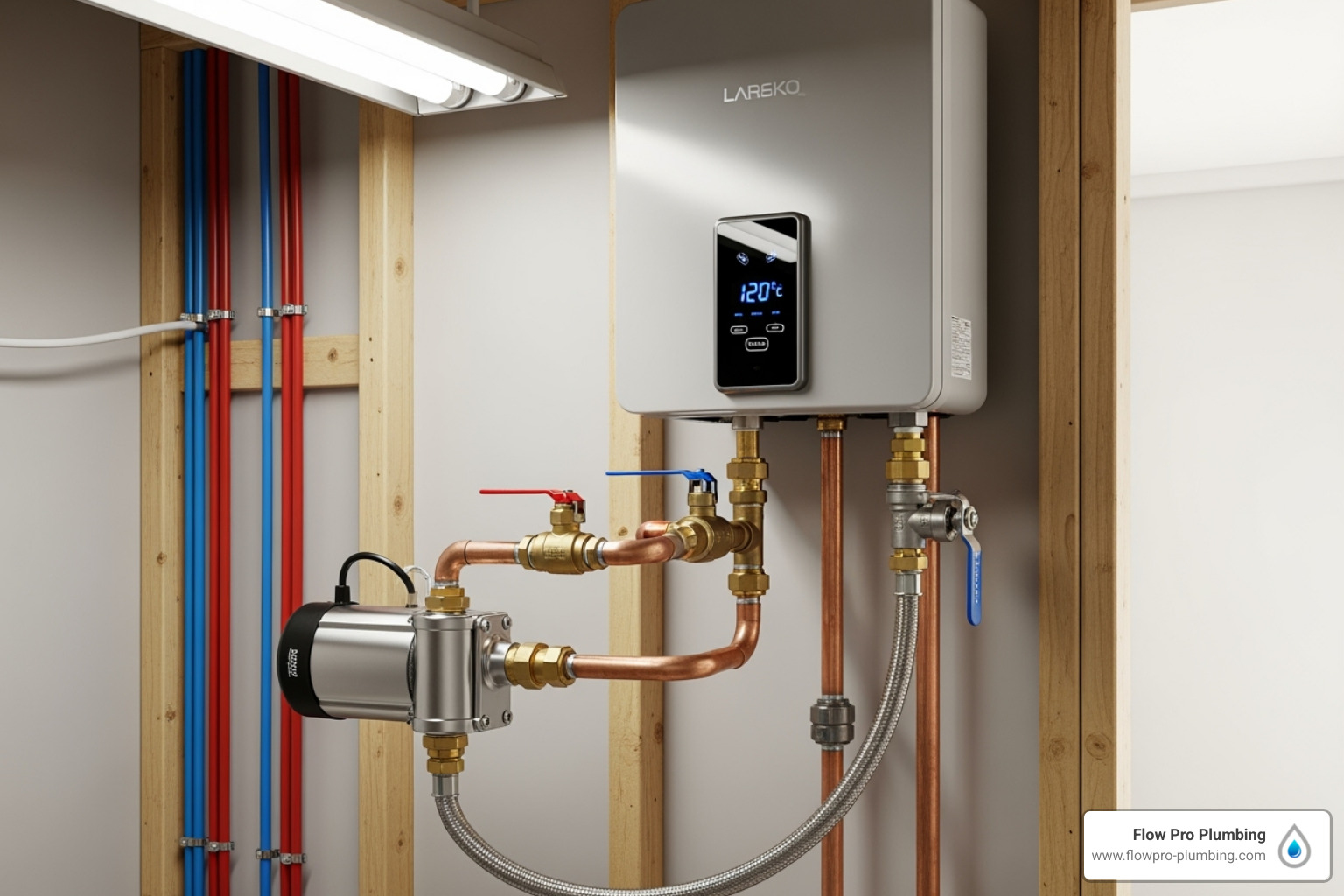
Recirculation can be set up in a few ways:
- Dedicated return lines: For new homes or major remodels, a dedicated line creates a continuous loop from the furthest fixture back to the heater.
- Crossover valves (Comfort Valves): For existing homes, a thermostatic crossover valve is a great retrofit. Installed at the furthest fixture, it uses the cold water line as a return path, sending cooled water back until hot water arrives.
We advise against running recirculation pumps 24/7, as this can negate some energy savings. Instead, we recommend on-demand or scheduled recirculation. On-demand systems activate the pump with a button, while scheduled systems run during peak usage times. This smart approach provides convenience without wasting energy.
When setting up a recirculation system, an expansion tank may be required. This tank absorbs pressure changes as water heats and expands, protecting your plumbing and water heater. We ensure your system meets all local codes in areas like Concord or Walnut Creek.
Avoiding Common Issues: The ‘Cold Water Sandwich’ and Flow Rate
Tankless water heaters need a minimum flow rate to activate. If a faucet is only dripping, the unit might not turn on. This saves energy but means very low flows might not produce hot water.
Another phenomenon, especially with older models, is the “cold-water sandwich.” If you briefly turn off the water mid-shower, the water in the pipes cools. When you restart the flow, you get a surprising burst of cool water before the fresh hot water arrives.
Modern tankless units minimize this. Some have a small buffer tank or an integrated recirculation pump (like Navien’s ComfortFlow system) that keeps a small amount of hot water ready. This reduces the cold-water sandwich effect and speeds up hot water delivery. Another helpful feature is modulating burners, which adjust their flame to match demand, ensuring a consistent temperature even when flow rates change. This provides a smoother, more comfortable hot water experience.
Installation and Long-Term Care: What to Expect
While the tankless water heater benefits are compelling, proper installation and care are paramount to realizing them. Professional installation is crucial for these sophisticated appliances. It’s not a DIY job, as incorrect installation can lead to safety hazards, poor performance, and voided warranties.
Tankless Water Heater Installation Guide
Safety is a top priority. Tankless water heaters often feature sealed combustion systems, drawing air from outside and venting exhaust directly outdoors. This direct vent technology prevents backdrafting of combustion gases, making them very safe. Most units also include built-in safety features like overheat protection and flame sensors.
Professional installation handles several key considerations:
- Venting Requirements: Gas units produce exhaust that must be safely vented outside using specific pipes (like PVC or stainless steel) and a system that adheres to local codes.
- Gas Line Sizing: Gas tankless heaters need a significant fuel supply, so your existing gas line may need to be upgraded to a larger size.
- Electrical Upgrades: Even gas units need electricity for their controls. Electric models, especially for whole-home use, demand substantial amperage and may require a dedicated circuit or even a panel upgrade.
Professional installation typically takes 4-6 hours, including removing your old tank, and ensures all permits and local codes are met.
Maximizing Longevity with Proper Maintenance
To enjoy all the tankless water heater benefits for decades, regular maintenance is essential. The most critical task is descaling, or flushing the unit.
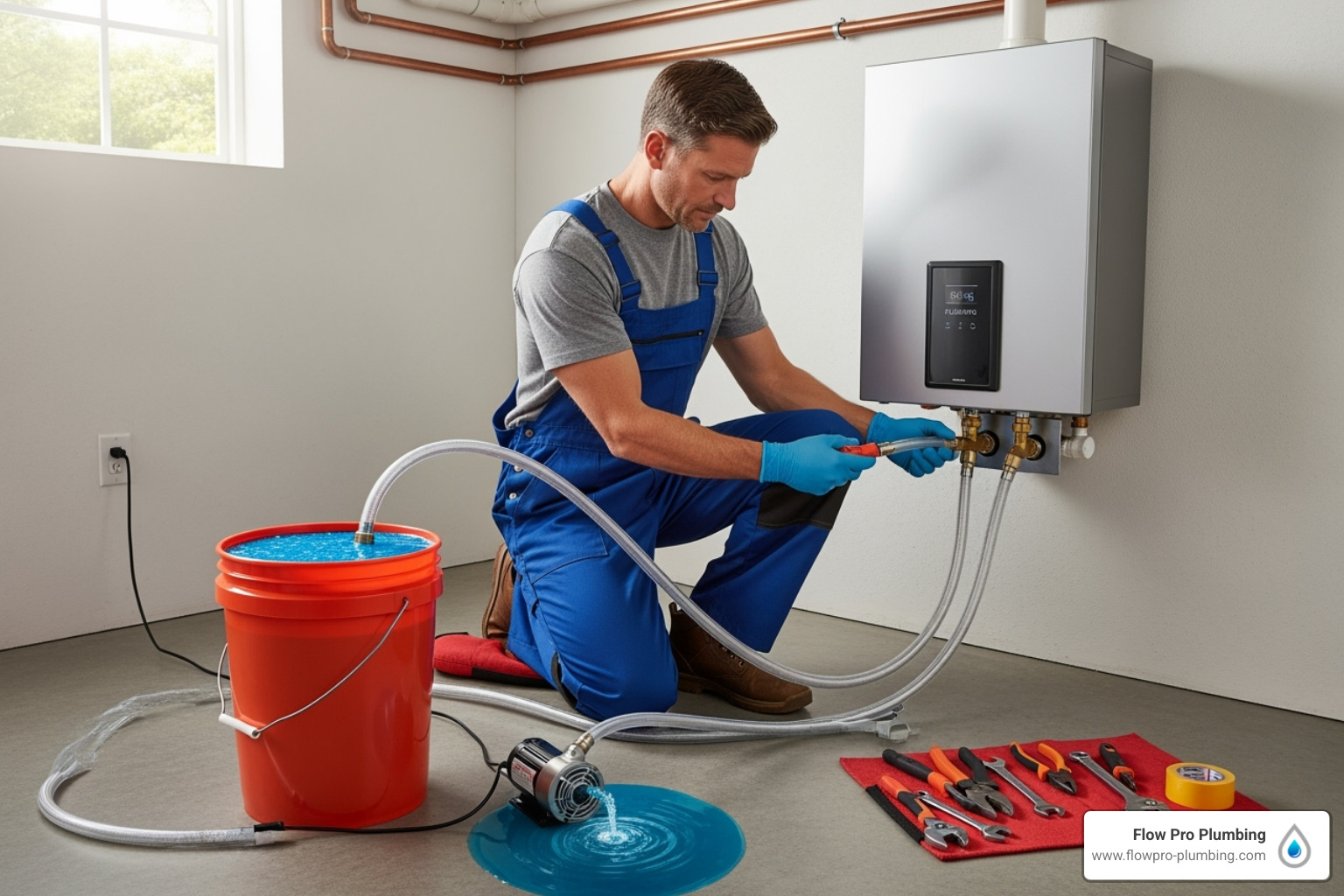
Hard water is the primary cause of problems in tankless heaters. High mineral content (calcium and magnesium) leads to scale buildup on the heat exchanger, reducing efficiency and restricting water flow. If you live in an area with hard water, like much of Contra Costa County, we highly recommend a water softener to protect your unit.
Even with a softener, periodic descaling is necessary. We recommend flushing your tankless water heater annually, or every 1-2 years in hard water areas. This process involves circulating a descaling solution through the unit to dissolve mineral deposits.
Some units also have filters that need periodic cleaning to prevent debris from entering the system. Our team can guide you on the specific maintenance needs for your model.
Can a Tankless Hot Water Heater Be Repaired?
Here’s a simple annual maintenance checklist a qualified technician will perform:
- Inspect and clean the water inlet filter.
- Flush the heat exchanger to remove mineral buildup.
- Check and clean the burner and ignition components (for gas units).
- Inspect gas and water connections for leaks.
- Verify proper venting and combustion air intake.
- Test temperature and pressure relief valves.
- Check and calibrate temperature settings.
Frequently Asked Questions About Going Tankless
It’s normal to have questions when considering a major home upgrade. We hear many similar questions from homeowners in Brentwood and surrounding areas and are happy to provide clear answers.
What happens to my hot water during a power outage?
If the power goes out, your tankless water heater will not work. Even gas models require electricity for their electronic ignition, control panel, and exhaust fan. Without electricity, the unit cannot start. During a power outage, you will be without hot water. If you live in an area prone to power interruptions, you might consider a small backup generator or a battery backup system for your water heater.
Are tankless water heaters suitable for large families or homes with well water?
Yes, tankless heaters are an excellent fit for large families, provided the unit is sized correctly for the household’s needs. We calculate the right flow rate (GPM) and temperature rise by looking at simultaneous hot water usage. For very large homes in areas like Bay Point or Clayton, we might suggest two units or a larger commercial-grade model to ensure everyone has enough hot water.
For homes with well water, tankless units are also suitable, but an important consideration is that well water often contains more sediment and minerals. To prevent buildup that can harm efficiency and lifespan, we highly recommend installing a whole-house sediment filter before the unit. We can also test your water to see if a water softener is needed. With these preventive measures, you can enjoy all the tankless water heater benefits with well water.
How loud are tankless water heaters when they are running?
Tankless water heaters are generally much quieter than traditional tank units but are not silent. When a gas unit kicks on, you might hear a soft click and hum from the burner igniting and a whir from the exhaust fan. Electric units are often quieter. Any noise is temporary, occurring only when you’re using hot water, and is comparable to a quiet furnace or refrigerator.
When planning the installation, we consider placement for noise reduction. Locating the unit in a garage, basement, or utility room away from main living areas can minimize operating sounds. For homes in Knightsen or Bethel Island, our team can help you pick the best spot to maximize the tankless water heater benefits while keeping your home quiet.
Is a Tankless Water Heater the Right Choice for Your Brentwood Home?
We’ve explored a wide range of tankless water heater benefits, from the convenience of endless hot water to the tangible savings on your utility bills. We’ve also covered the significant space they save, their impressive longevity, and the reduced risk of water damage. Choosing tankless is also a step towards a greener home.
The decision to switch is personal, but for many Brentwood homeowners, the advantages make it a clear choice. If you’re tired of running out of hot water, want to lower your energy use, or wish to maximize your home’s usable space, a tankless water heater could be the perfect solution.
Before making the switch, ask a reputable contractor, like our team at Flow Pro Plumbing, about:
- How they will size a unit for your household’s specific needs and climate.
- What potential gas line, electrical, or venting upgrades might be required.
- The recommended maintenance schedule based on your local water hardness.
- How they handle necessary permits and the disposal of your old water heater.
For expert advice and professional installation in the Brentwood area, the experienced team at Flow Pro Plumbing is ready to help. We pride ourselves on our unsurpassed workmanship and friendly, knowledgeable team, dedicated to your home comfort.
Ready to experience the difference a tankless water heater can make?