
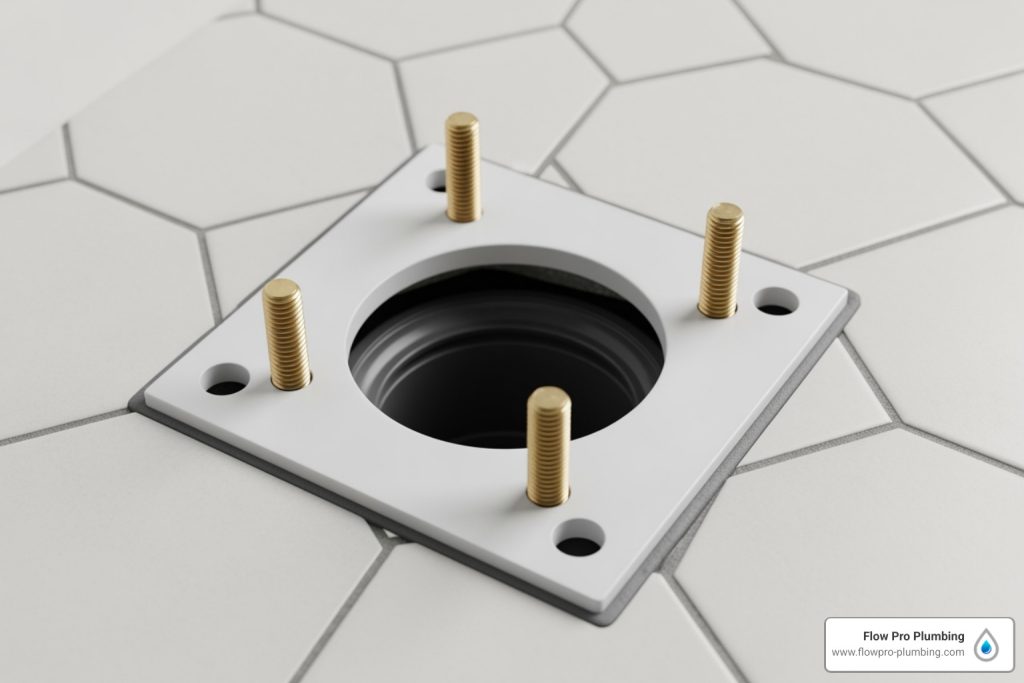
Why Your Oakley Toilet Flange Matters for a Leak-Free Bathroom
Proper Oakley toilet flange selection and installation is critical for preventing water damage, eliminating sewer gas odors, and ensuring your toilet stays securely anchored. A toilet flange, or closet flange, is the fitting that connects your toilet to the drain pipe while securing it to the floor. Its height is crucial—it must sit flush with or slightly above the finished floor. When a flange fails, you’ll know it from rocking toilets, leaks, and unpleasant odors.
Oatey has earned the trust of plumbing professionals for over 100 years by engineering flanges that solve real-world installation challenges. Their product line includes everything from standard PVC flanges to innovative Twist-N-Set repair flanges, plus specialized solutions like offset and swivel flanges for tight spaces.
The key to a leak-free installation lies in proper flange selection, correct height, and secure fastening. Whether you’re dealing with a broken cast iron flange in an older Oakley home or installing a new one, choosing the right Oatey solution can save you from costly water damage.
As Jesse Delgado, owner of Flow Pro Plumbing in Brentwood with over ten years of plumbing experience, I’ve seen countless oakley toilet flange failures. Understanding your options—from standard flanges to repair rings and extension kits—helps you make informed decisions that protect your home.
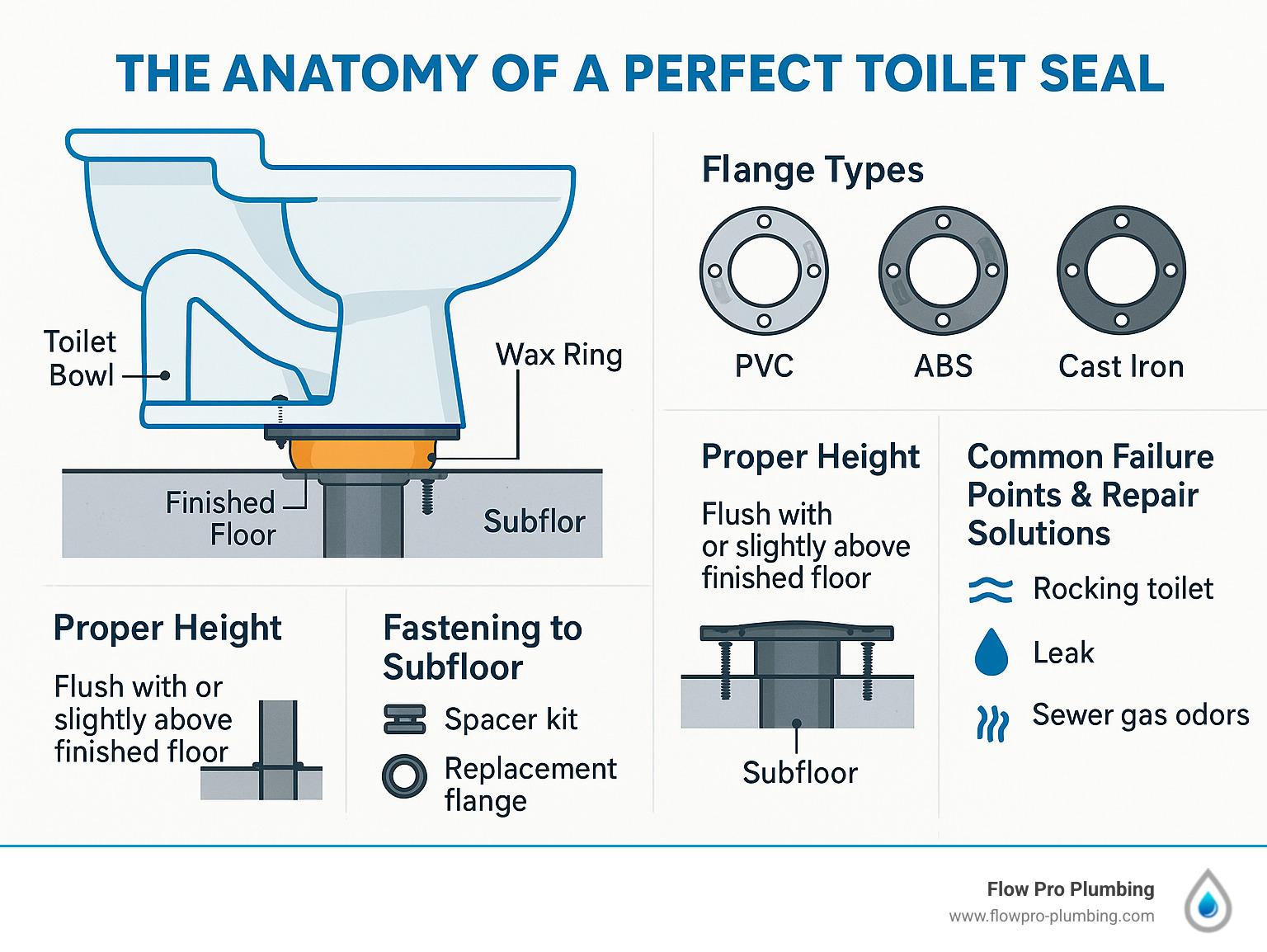
The Anatomy of a Perfect Toilet Seal
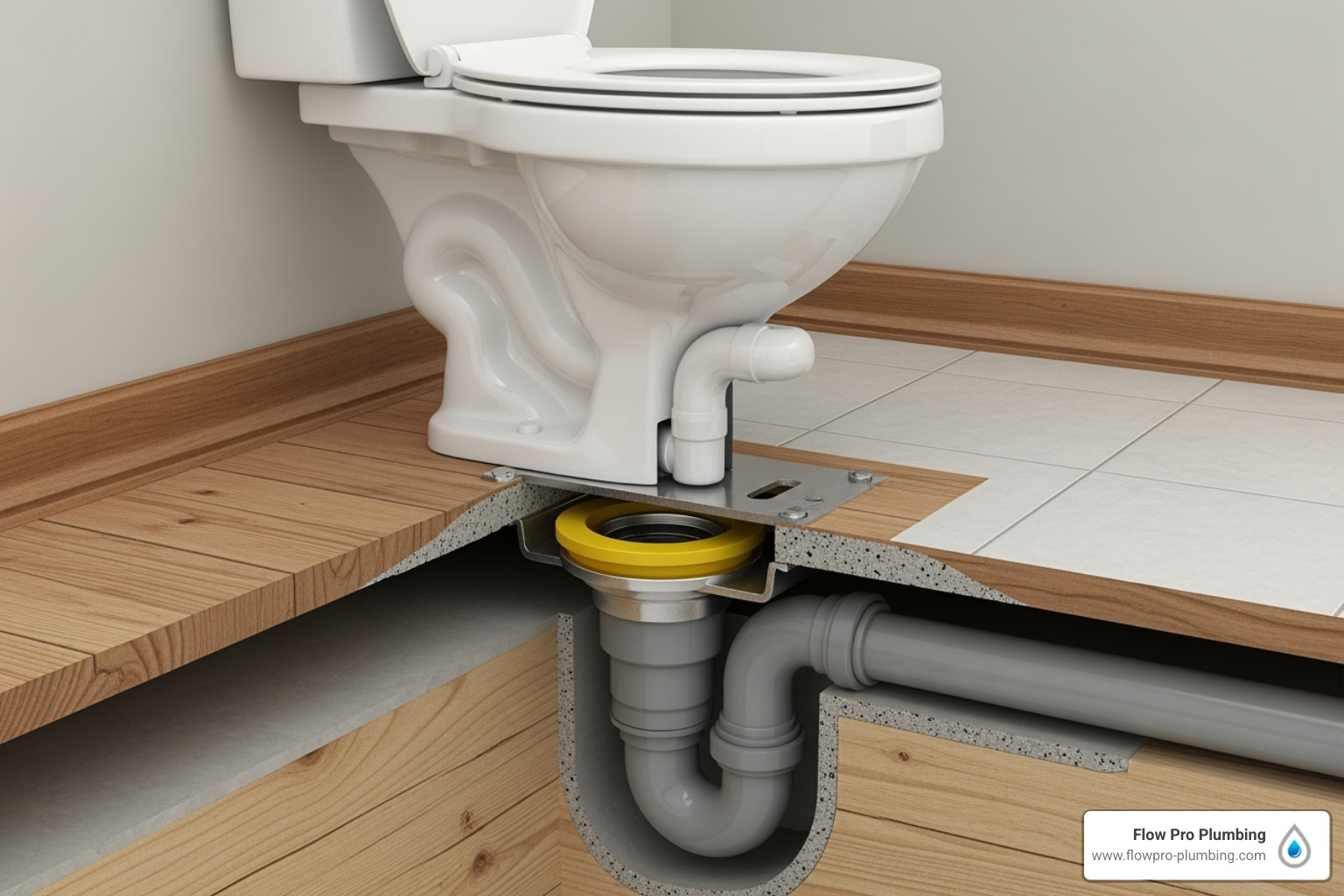
The oakley toilet flange is at the heart of the “perfect toilet seal,” the crucial barrier between your bathroom and the sewer pipe below. The wax ring creates the watertight seal, but it’s the flange that provides the stable platform for it to work. Without a properly installed flange, even the best wax ring will fail.
What is a Toilet Flange and Why is it Critical?
A toilet flange (or closet flange) has two critical jobs: securing your toilet firmly to the floor and creating a seamless connection to your drain pipe. A loose toilet is not just unstable; it creates a cascade of problems. The flange provides a flat, level surface for the wax ring to compress evenly, preventing leaks. A compromised seal can also allow unpleasant sewer gas to enter your bathroom. Finally, a properly anchored flange provides structural stability, protecting the toilet and the delicate wax seal from breaking down due to movement.
Flange Height and Material: Keys to Longevity
Proper flange height is essential. The golden rule is that your flange should sit flush with your finished floor, or ideally about ¼ inch above it. This allows the wax ring to compress just enough to create a perfect seal without being squeezed out. A flange that sits too low is a common cause of rocking toilets and leaks in Oakley homes, as the wax ring cannot make a proper seal.
Material selection is also key. PVC and ABS flanges are popular for their corrosion resistance and easy installation with solvent cement (use the correct cement for each material). Many older homes have cast iron flanges, which are durable but can corrode over time. The ring material is also important. While plastic rings are common, stainless steel rings offer superior strength and corrosion resistance, providing extra peace of mind.
Exploring Oatey’s Innovative Flange Families
What sets Oatey apart in the oakley toilet flange world is its knack for solving real-world problems. Their product line is a wish list of solutions for every tricky situation, prioritizing both durability and ease of installation. Professionals trust Oatey because their flanges work the first time and last for decades. You can explore their full range at More on Oatey Flanges.
The Ultimate Repair: Oatey Twist-N-Set® Flanges
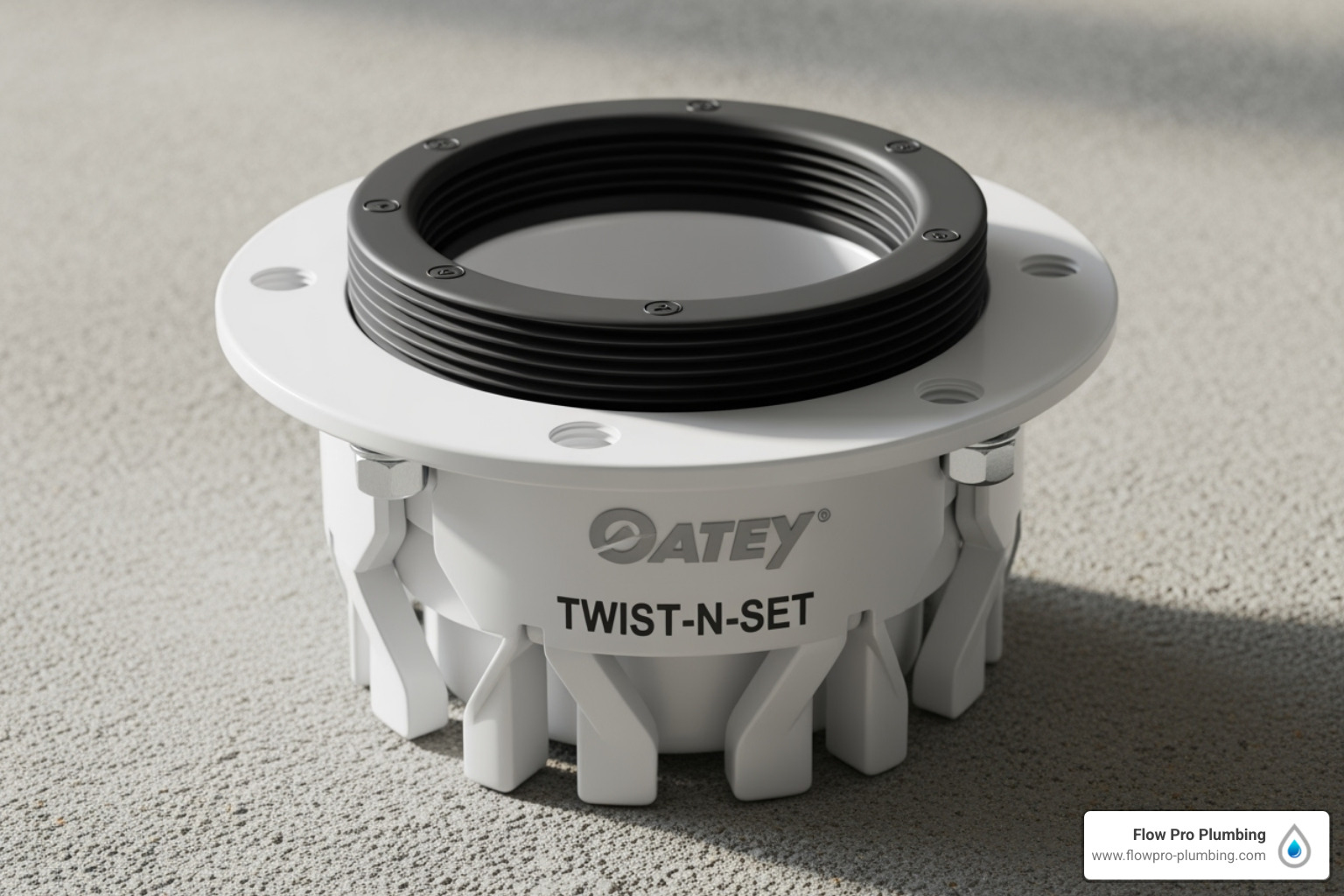
For a broken flange in an older Oakley home, the Oatey Twist-N-Set® Replacement Toilet Flanges are an ingenious solution. Instead of solvent welding, this flange uses a gasket expansion mechanism. You simply insert the flange into the existing pipe and twist it clockwise. This action expands a robust gasket, creating a watertight seal inside the pipe.
This no-tool installation is a game-changer in tight spaces or emergencies. The flanges work with cast iron, PVC, ABS, and copper pipes, making them ideal for repairs. For older cast iron plumbing, the gasket accommodates various pipe classes. Models like the 43654 (3-inch) and 43651 (4-inch) can eliminate the need for extensive pipe replacement. For more details, see the Oatey® Twist-N-Set® Product Details.
Solving Alignment Issues: Offset and Swivel Flanges
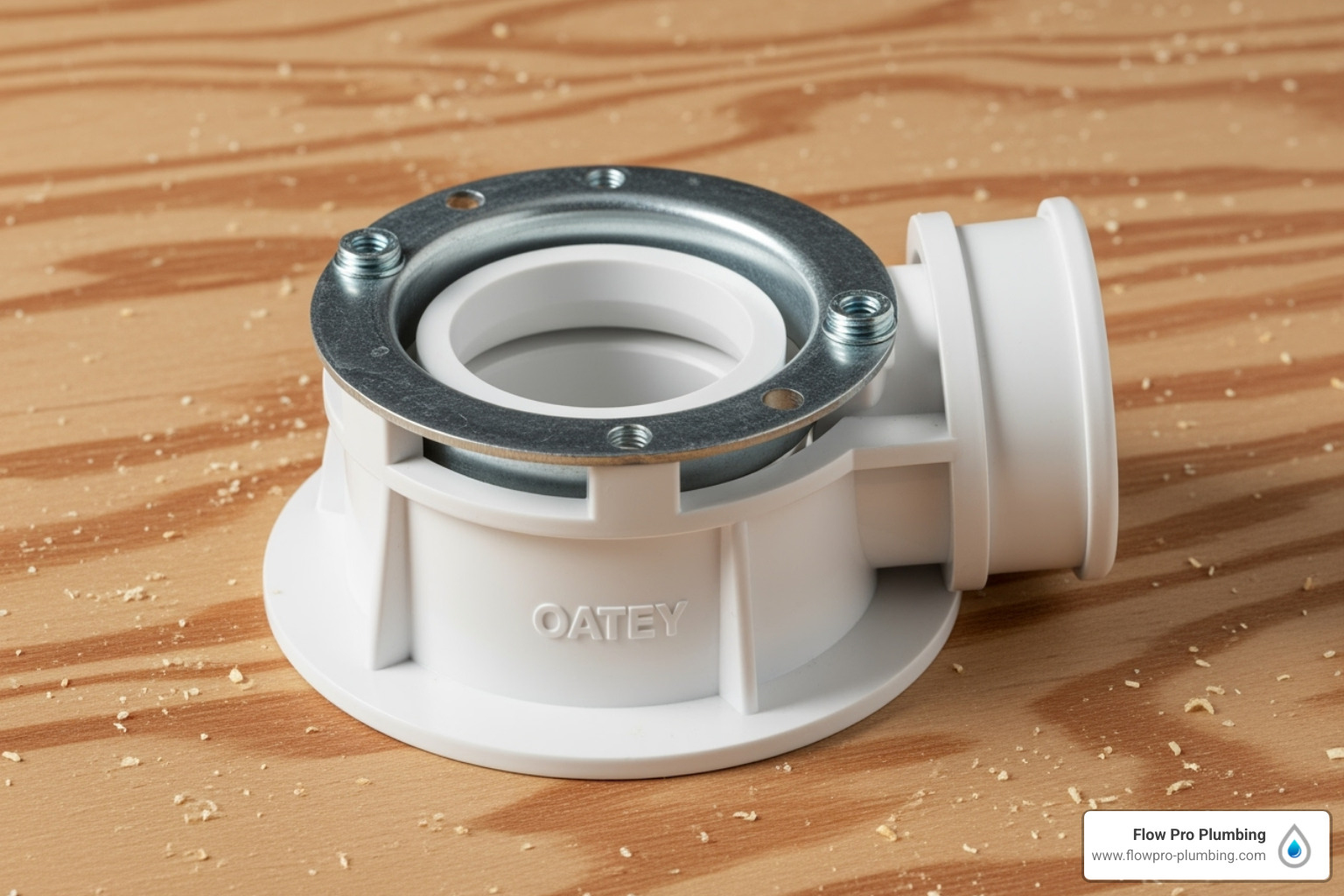
When a drainpipe doesn’t line up with the toilet’s location, an offset flange is the answer. The Oatey 3×4 offset flange (Model 43501) can bridge up to a 2-inch gap, saving you from re-routing drain lines. Always check local code requirements before using an offset flange.
For even trickier situations, Oatey’s Level Fit 45° Swivel Flange combines a 45-degree bend with 360-degree rotation, allowing you to orient the flange precisely around obstructions like floor joists. It’s an invaluable tool for tight space installations in older homes.
Simple Fixes: Flange Repair Rings and Spacers
Sometimes a simple fix is the best one. If your flange body is solid but the ring is broken or corroded, a stainless steel replacement ring like the Oatey Model 427782 can give your flange a new face. The stainless steel offers superior corrosion resistance, and installation is straightforward. This is a cost-effective repair that extends the flange’s life.
However, if the flange body is cracked or the pipe connection is compromised, a full replacement is necessary. Patching structural damage won’t solve the underlying problem.
For flange height issues, often caused by new flooring, Oatey’s Set-Rite spacers and flange extension kits are the solution. These systems let you stack spacers to raise your flange to the correct height without replacing the entire unit. Extension kits solve height problems, not structural damage.
Your Guide to Selecting and Installing an Oakley Toilet Flange
Installing or replacing a toilet flange can be a manageable project with the right Oatey products and a clear process. Proper preparation is key.
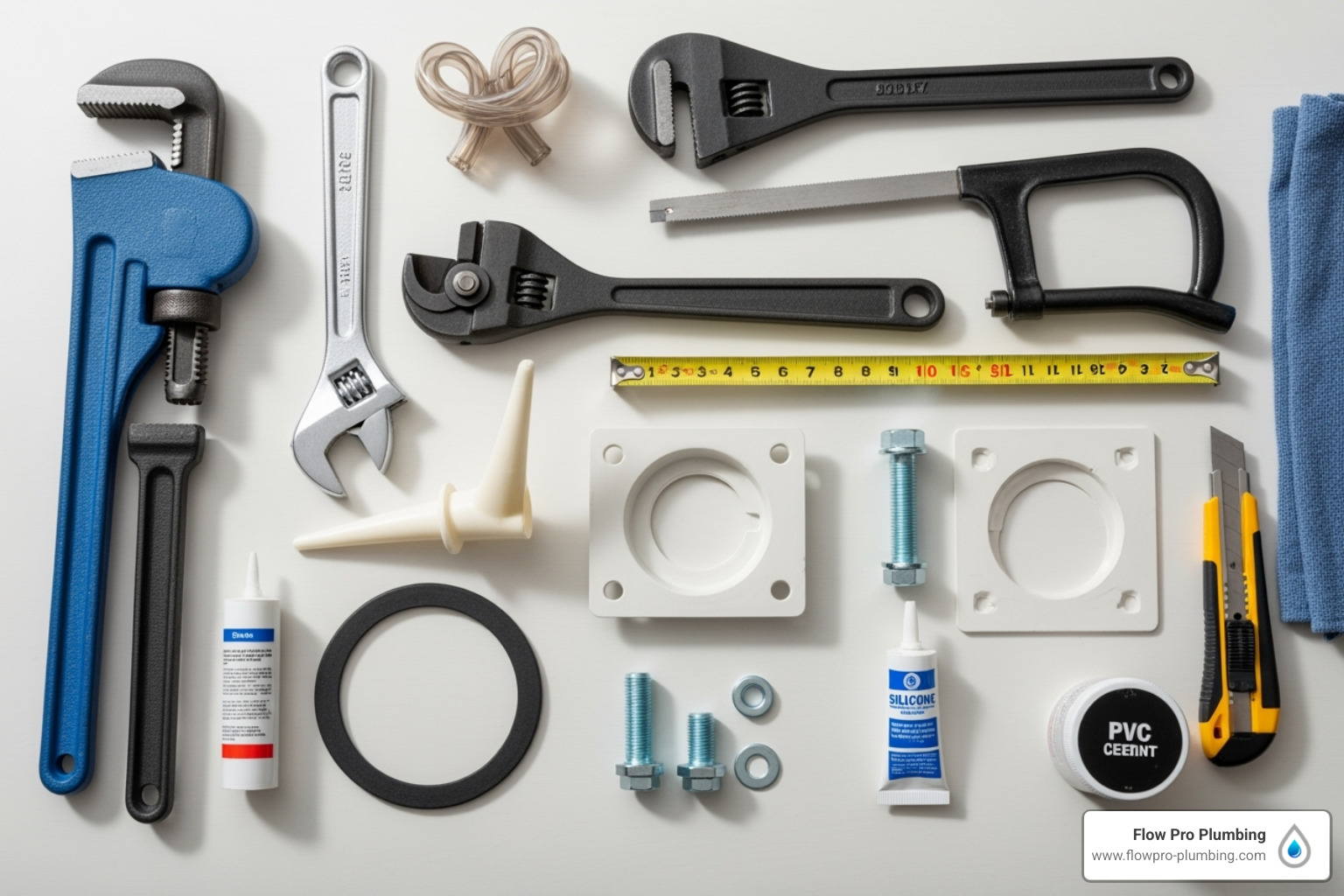
Before starting your oakley toilet flange project, gather your tools and materials. You’ll need a tape measure, pipe saw, level, drill, and screwdriver. For materials, have your chosen Oatey flange, compatible primer and cement, Johni-Bolts, appropriate subfloor fasteners, and a wax ring. Don’t forget safety gear like gloves and eye protection, and ensure good ventilation when using chemicals.
Sizing and Selection for Your Oakley Toilet Flange Project
First, match the flange to your drainpipe diameter (3-inch or 4-inch). Oatey’s versatile 3×4 combination flanges can fit over a 3-inch pipe or inside a 4-inch pipe, offering great flexibility. Decide if your flange needs to install inside the pipe or over the pipe, depending on the design. Twist-N-Set flanges always install inside the pipe. Two popular options are the Model 43539 open replacement and the Model 43501 offset flange. You’ll also see open vs. closed flanges; closed flanges have a knockout plug for pressure testing during construction.
Step-by-Step Installation for your Oakley Toilet Flange
Follow these steps for a successful installation.
For solvent-weld flanges (PVC/ABS):
- Cut the pipe so the flange will sit flush with or slightly above the finished floor.
- Chamfer the pipe edges to remove burrs for a strong joint.
- Dry-fit the flange to confirm height and orientation.
- Apply primer to the pipe exterior and flange interior.
- Quickly apply cement to both primed surfaces.
- Set the flange onto the pipe with a slight twist and hold for 30 seconds.
- After the cement cures, fasten the flange securely to the subfloor.
For Twist-N-Set flanges:
- Clean any debris from inside the existing pipe.
- Insert the flange into the pipe opening.
- Twist clockwise to expand the internal gasket until it feels snug.
- Ensure the flange is at the correct height, then secure it to the subfloor.
For a visual guide, check out this helpful Video guide on repairing a flange.
Anchoring and Sealing for a Rock-Solid Finish
Securing the flange to the subfloor is essential to prevent a rocking toilet. For wood subfloors, use corrosion-resistant wood screws. For concrete slabs, use concrete anchors like tapcons. To create a watertight floor penetration, apply a bead of 100% silicone sealant around the pipe where it meets the floor, underneath the flange. Finally, ensure the closet bolt alignment is correct so the bolts protrude vertically, ready to secure the toilet.
Troubleshooting Common Flange Failures
Even with careful planning, flange problems can occur. Knowing the signs helps you catch issues before they become major headaches. A rocking toilet, water pooling at the base, or sewer gas odors are clear indicators of flange trouble.
Flange height issues are a common culprit, especially after remodels in Oakley homes. If new flooring leaves the flange too low, the wax ring won’t seal properly. Oatey Set-Rite spacers can correct this, raising the flange to be flush with or slightly above the floor.
Inadequate fastening is another frequent mistake. The flange must be screwed securely to the subfloor to prevent movement that can break the wax seal. Use the right fasteners for your floor type. Misaligned closet bolts can also cause the toilet to sit unevenly, leading to rocking and seal failure.
When troubleshooting post-installation, a rocking toilet often points to a low or unfastened flange. Leaks almost always mean a failed wax ring, requiring you to pull the toilet and inspect the flange. Sewer gas odors also indicate a compromised seal that needs immediate attention.
Fixing a Broken Cast Iron Flange
Corroded cast iron flanges in older homes are a common challenge, but Oatey offers solutions that avoid major demolition. If the pipe below is solid, you have several repair options.
- The No-Caulk flange slides over the existing pipe and uses a compression gasket to create a seal.
- The Twist-N-Set for cast iron is a user-friendly choice that fits inside the pipe. Simply twist to expand the internal gasket, locking it in place.
- Compression-style replacements work similarly to create a reliable connection without replacing the entire pipe bend.
If the cast iron pipe itself is cracked or severely damaged below the flange, a more extensive professional repair is necessary.
Code Compliance and Advanced Considerations
Following building codes ensures your plumbing is safe and functional. Look for IAPMO/UPC listings on Oatey products, which certify they meet strict performance and safety standards. It’s also wise to perform local code checks in Oakley and Contra Costa County, as jurisdictions may have specific requirements. Codes often specify clearance rules and limits for offset flanges to ensure proper drainage. While Oatey flanges are suitable for both residential and commercial use, heavy-duty applications may benefit from stainless steel ring options for added durability.
Frequently Asked Questions about Oatey Toilet Flanges
Here are answers to some of the most common questions we get about toilet flanges.
What’s the difference between a standard flange and a Twist-N-Set replacement flange?
A standard flange is for new construction or full plumbing replacements. It’s permanently bonded to the drainpipe using solvent cement (glue), creating a rigid, new connection.
An Oatey Twist-N-Set® flange is a repair solution. It’s designed to fit inside an existing pipe (PVC, ABS, cast iron, or copper). Instead of glue, it uses an expanding internal gasket that seals tightly when you twist it. This allows for a quick, reliable repair without cutting or cementing pipe.
My new floor is higher than my old one. How do I raise my toilet flange?
This is a common issue after a remodel. If your existing flange is still in good condition, you don’t need to replace it. Use an Oatey Set-Rite® Toilet Flange Extension Kit. These kits contain stackable spacer rings that you place on top of your current flange to raise its height. The goal is to make the flange surface flush with, or about ¼ inch above, your new finished floor to ensure a proper wax ring seal.
Can I just repair my broken flange ring, or do I need to replace the whole thing?
This depends on the type of damage to your oakley toilet flange.
If only the outer ring (where the bolts attach) is cracked or corroded, but the main body of the flange and its connection to the pipe are solid, you can use an Oatey stainless steel replacement ring. This fits over the existing flange body to provide new, strong bolt slots.
However, if the main body of the flange is cracked, shattered, or no longer securely connected to the drainpipe, a full flange replacement is necessary. Patching a structurally compromised flange will lead to recurring leaks and an unstable toilet.
Conclusion
From the wax ring to the oakley toilet flange, it’s clear these components are the heroes of a leak-free, odor-free bathroom. They are crucial for preventing leaks and keeping your toilet stable.
Oatey consistently provides innovative solutions, from the clever Twist-N-Set® repair flanges to offset and swivel flanges that solve alignment issues in tight spaces. They offer a reliable product for nearly every situation, whether you’re building new or repairing an older home in Oakley.
While it’s good to understand the process, getting a toilet flange just right can be tricky. That’s where we come in. At Flow Pro Plumbing, our team has tackled every kind of oakley toilet flange challenge imaginable. Our goal is always to get it done right the first time, giving you peace of mind.
For expert oakley toilet flange installation and repair in the Oakley area, trust the professionals to get it done right. We’re here to help you achieve a leak-free and stable bathroom.