
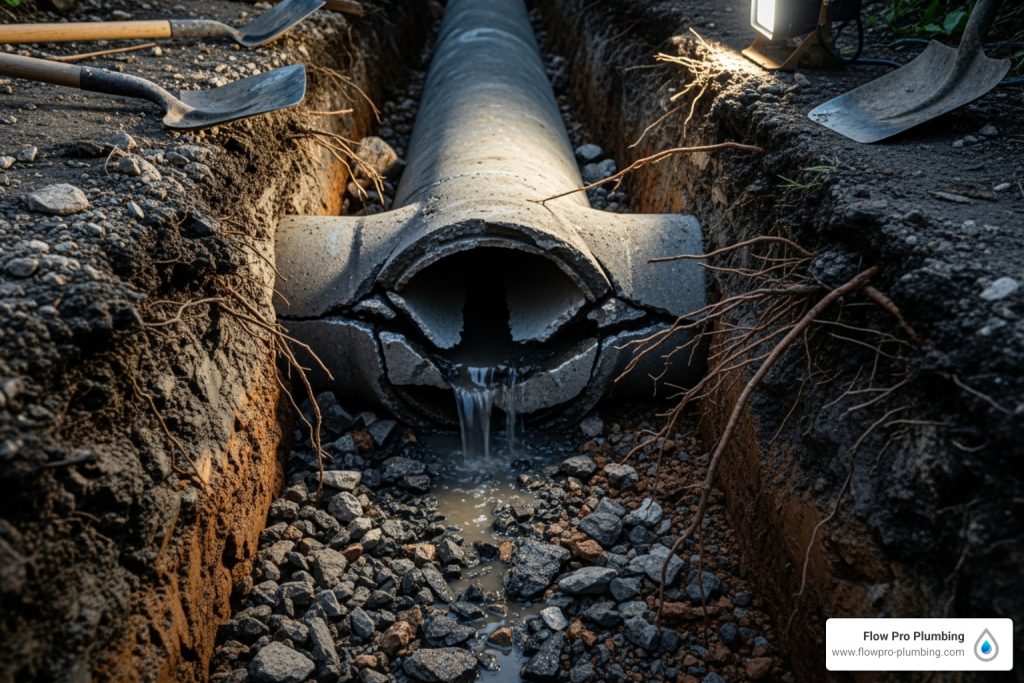
Understanding the Hidden Crisis Beneath Your Home
Broken sewer pipe repair is a critical concern when your home’s underground plumbing fails. Warning signs like slow drains, foul odors, or soggy patches in your yard point to a problem that requires immediate attention.
Quick Answer for Broken Sewer Pipe Repair:
- Identify the problem – Look for slow drains, gurgling sounds, sewage odors, or wet spots in your yard.
- Get a professional diagnosis – Schedule a video camera inspection to locate and assess the damage.
- Choose your repair method – Options include traditional excavation or trenchless repair (pipe lining/pipe bursting).
- Complete the repair – Ensure professional installation with post-repair testing.
- Prevent future issues – Adopt regular maintenance and proper disposal habits.
Your sewer system carries wastewater away through underground pipes. When these pipes crack, collapse, or get blocked by tree roots, the results can be messy and expensive. A broken sewer pipe can cause raw sewage to back up into your home, creating health hazards and significant property damage. Fortunately, modern methods like trenchless pipe lining can fix most problems without destroying your yard.
Common culprits include tree roots seeking water, ground shifting, corrosion, and aging pipes, especially in older homes with clay or cast iron systems.
As Jesse Delgado, owner of Flow Pro Plumbing with over ten years of experience, I’ve seen how broken sewer pipe repair situations can escalate from minor issues to major emergencies. My team provides clear assessments and multiple solution options so homeowners can make informed decisions.
What Causes a Sewer Pipe to Break?
Your home’s sewer system works quietly underground, but several factors can lead to a break and the need for broken sewer pipe repair. While pipes are built to last, they aren’t invincible.
Common Causes of Broken Sewer Pipe Repair Needs
- Tree root infiltration is a primary cause. Roots seek water and can invade pipes through the smallest cracks, eventually growing to create major blockages and pipe damage.
- Aging pipes, especially in homes built before the 1980s, are a major culprit. Cast iron pipes can rust from the inside out, while clay pipes become brittle and crack under pressure. Modern PVC pipes are more durable, lasting over 100 years, but are not immune to damage.
- Corrosion gradually eats away at pipe walls, particularly in cast iron and galvanized steel pipes. The damage is often extensive by the time problems become noticeable.
- Shifting soil from earthquakes, nearby construction, or weather changes can put immense pressure on pipes, causing them to crack, disconnect, or develop a “belly” that collects waste.
- Clogs and blockages from grease, wipes, and other items don’t directly break pipes, but the resulting pressure buildup can cause a rupture in weakened sections.
- Extreme temperatures can freeze water inside shallow pipes, causing them to expand and crack.
- Poor installation without proper support, joining, or slope makes pipes more likely to fail prematurely.
- Ground settlement occurs as soil compacts over time, stressing pipes that weren’t designed to handle the movement.
Understanding these causes helps you spot potential problems before they become emergencies. Learn more about preventing sewer blockages to keep your system running smoothly.
Recognizing the Telltale Signs of a Broken Sewer Pipe
Your sewer line will send clear signals when it’s in trouble. Knowing what to look for is key to preventing a minor issue from becoming a major broken sewer pipe repair.
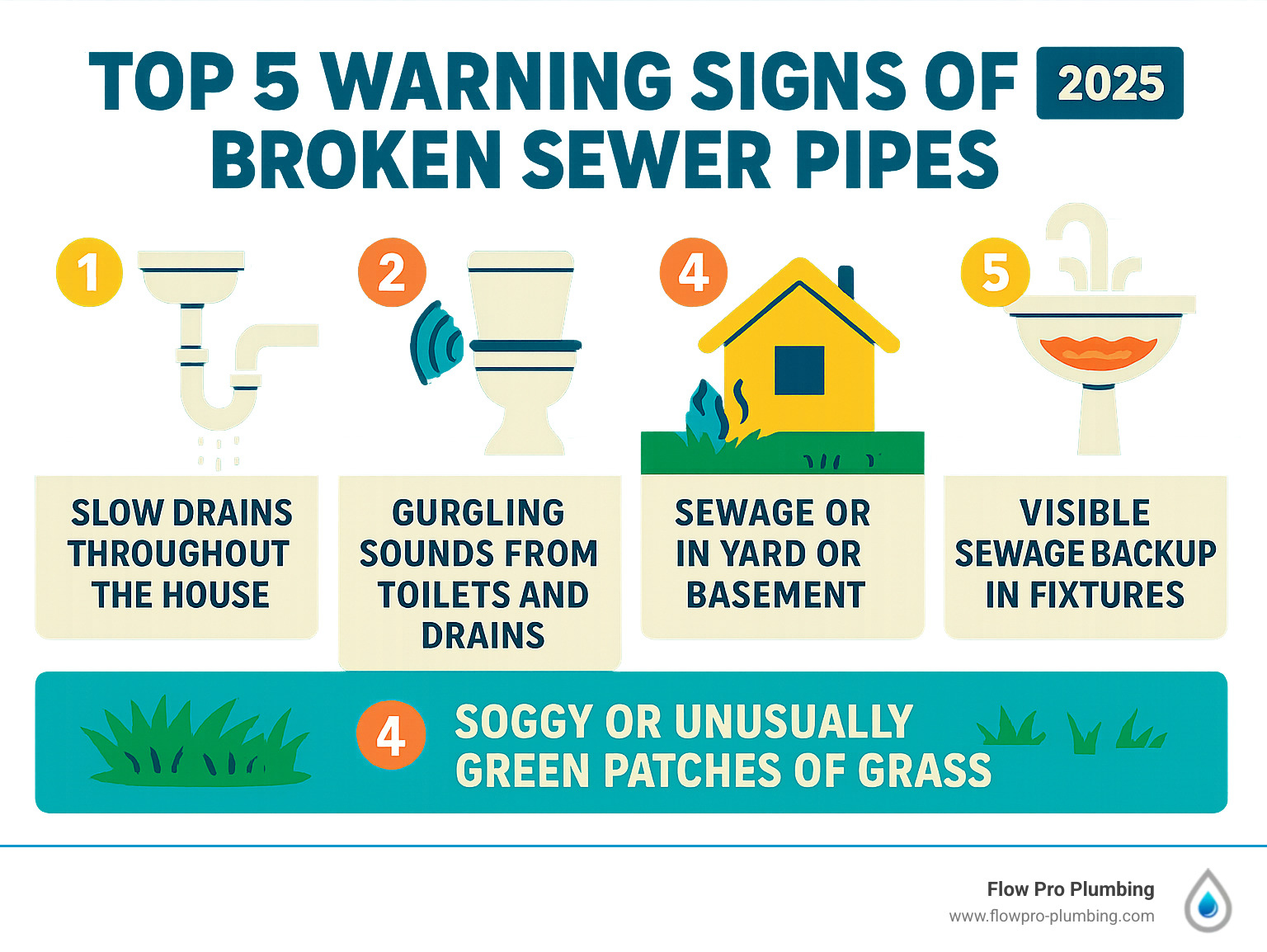
Key warning signs include:
- Multiple slow drains, especially on your home’s lowest level.
- Gurgling noises from toilets or drains, which indicate trapped air from a blockage.
- Foul odors of sewage in your yard, basement, or from drains.
- Soggy patches or unusually green grass in your yard above the sewer line.
- Foundation cracks or sinkholes, caused by leaking water saturating the soil.
- Increased pest problems, as rodents and insects are attracted to the moisture.
- Unexplained mold growth on walls, indicating a possible leak in drain lines.
The Importance of a Professional Diagnosis
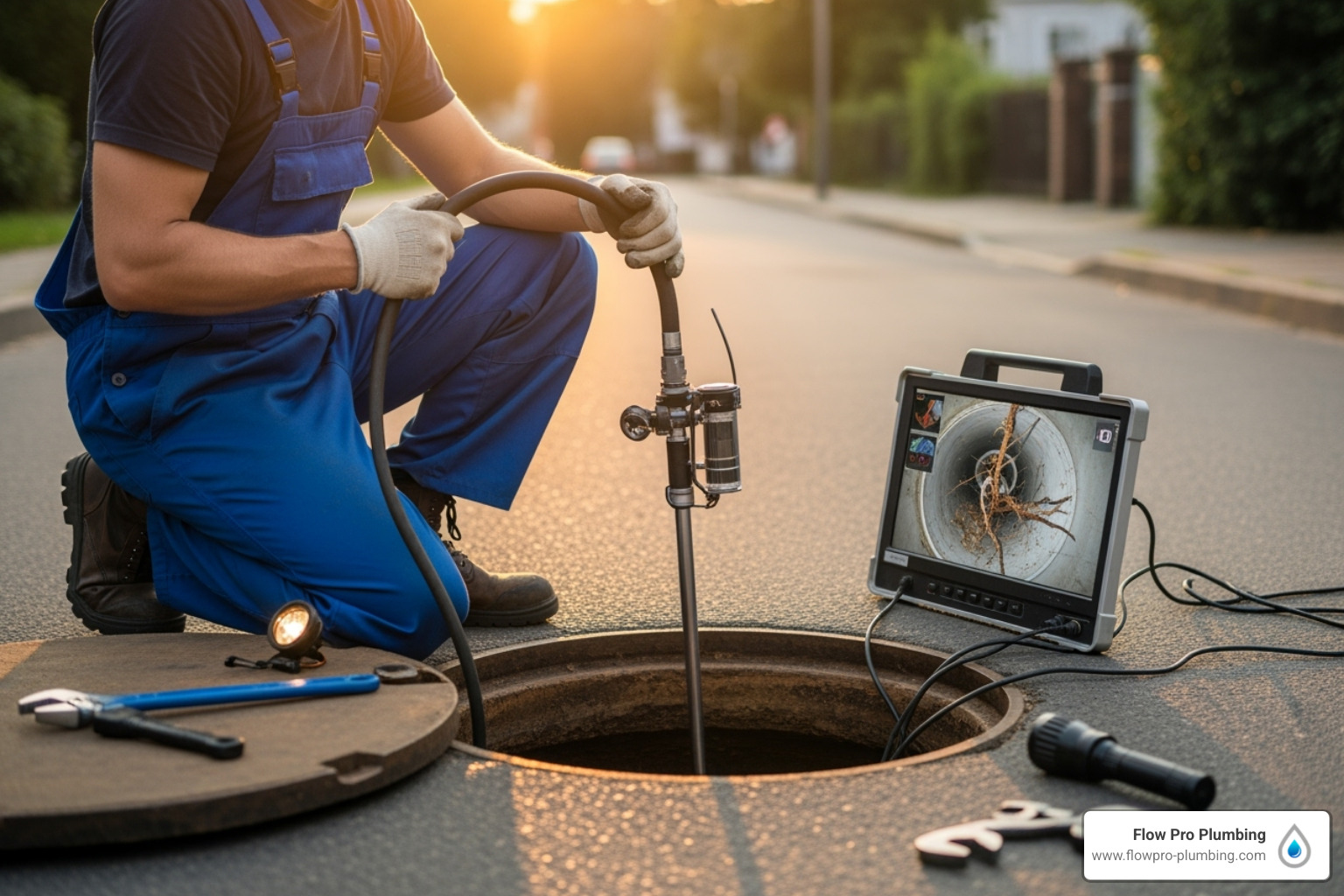
When you notice these signs, a professional diagnosis is essential. Guesswork can be costly and ineffective. The most effective tool is a video camera inspection. We insert a high-resolution camera into your sewer line to get a live feed of what’s happening inside.
This technology allows us to:
- Locate the exact break with pinpoint accuracy.
- Assess the damage severity to determine the best repair method.
- Identify the pipe material (clay, cast iron, PVC) and its overall condition.
An accurate diagnosis eliminates guesswork and ensures your broken sewer pipe repair is done right the first time. This approach helps catch problems early, as sewer video inspections help prevent plumbing issues. For more details, learn about sewer camera inspection and how it demystifies underground plumbing problems.
Your Guide to Broken Sewer Pipe Repair: Methods and Processes
For broken sewer pipe repair, you have more options than ever. Modern technology offers solutions that are faster and less disruptive than the methods of the past. Choosing the right approach is key to a successful, long-lasting repair.
Traditional vs. Trenchless Repair Methods
While traditional excavation (digging a trench) is effective for severe damage, it is highly disruptive to your landscape and can take days or weeks to complete. Trenchless methods have become the preferred option for most repairs due to their minimal impact.
| Feature | Traditional Excavation | Trenchless Repair |
|---|---|---|
| Disruption | High (extensive digging, landscape damage) | Minimal (small access holes, preserves property) |
| Time | Days to weeks (excavation, repair, restoration) | Hours to a day (faster completion, less downtime) |
| Effectiveness | Highly effective for severe or localized damage | Highly effective for many types of damage, creates new pipe |
Two primary trenchless techniques are:
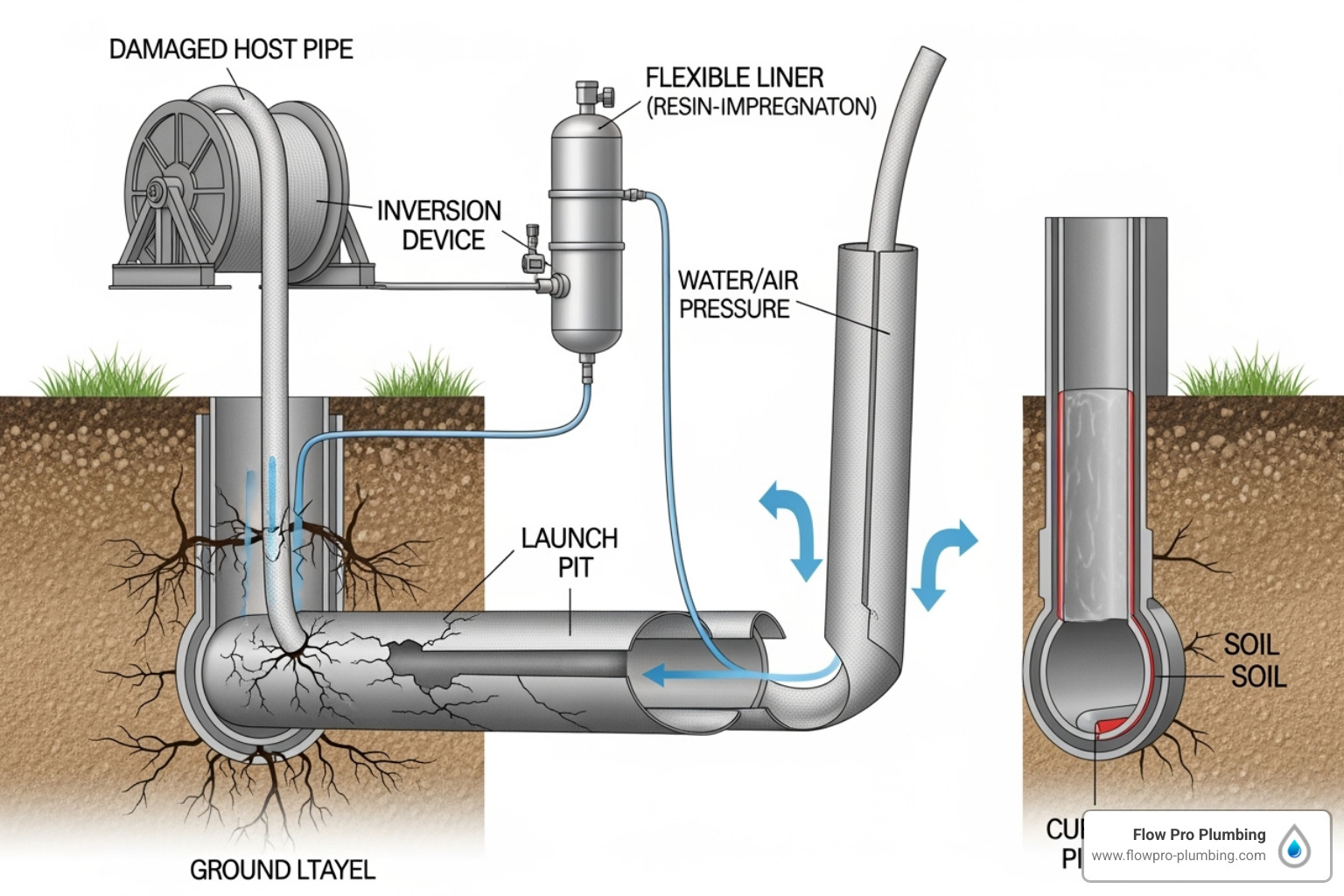
- Pipe lining, or Cured-in-place pipe (CIPP), creates a new pipe within the old one. A flexible, resin-coated liner is inserted into the damaged pipe, inflated, and cured. This creates a seamless, corrosion-resistant surface that can last for 50 years or more.
- Pipe bursting is used for severely damaged or collapsed pipes. A new, durable pipe is pulled through the old one, fracturing the old pipe outward while simultaneously laying the new line. It’s a highly effective replacement method with minimal digging.
The benefits of trenchless sewer line repair include landscape preservation, faster completion times, and durable, seamless new pipes.
The Process of a Professional Broken Sewer Pipe Repair
A professional broken sewer pipe repair follows a clear process:
- Initial Inspection: A sewer camera inspection provides the data needed to plan the repair.
- Choosing a Method: We discuss the findings and repair options with you, considering factors like damage type, property layout, and pipe material.
- Site Preparation: For traditional repairs, this involves excavation. For trenchless methods, we create small access points.
- Repair Execution: Our team carries out the chosen method, whether it’s traditional replacement, pipe lining, or pipe bursting.
- Post-Repair Inspection & Testing: We run the camera through the repaired line to verify the work and test the system to ensure proper flow.
- Site Restoration: We clean up the work area. This is extensive for traditional repairs but minimal for trenchless jobs.
Repair or Replace? Making the Right Decision
When your sewer line fails, you face a critical decision: repair the damaged section or replace the entire line? The right choice impacts your finances, property, and long-term peace of mind. The answer depends on several factors.
- Extent of Damage: A small, localized crack is often a good candidate for repair. However, if we find widespread corrosion, collapsed sections, or multiple breaks, replacement is the smarter long-term investment.
- Pipe Age and Material: Older homes often have cast iron or clay pipes nearing the end of their 75-100 year lifespan. Repairing one spot on an old line can be a temporary fix, as other sections may soon fail. In contrast, modern PVC pipes can last over a century, making targeted repairs a viable option.
- Frequency of Repairs: If you are repeatedly calling for broken sewer pipe repair on the same line, it’s a clear sign that the system is failing. The cumulative cost of frequent repairs can exceed the cost of a full replacement.
- Long-Term Solution: Consider the lifespan of the fix. A CIPP liner or pipe bursting can add 50+ years of life to your system. A full replacement with modern PVC is an investment that can last a century. We help you weigh the immediate cost against long-term durability.
Using camera inspection technology, we show you exactly what’s happening inside your pipes. This transparency allows you to understand the pros and cons of each option. Today’s repair technology, like CIPP liners, is incredibly durable, creating a pipe that’s often stronger than the original. Sometimes, however, a full replacement is the most cost-effective solution. Our goal is to provide the facts so you can make the best decision for your home.
For comprehensive information, explore our sewer main line repair services to see how we can restore your peace of mind.
Proactive Prevention: How to Avoid Future Sewer Pipe Damage
While you can’t control aging pipes or ground shifts, proactive measures can significantly reduce your risk of needing broken sewer pipe repair. A little prevention can save you from the stress and expense of a sewer emergency.

- Schedule Regular Inspections: A professional camera inspection every few years, especially for homes over 20 years old, can catch small cracks before they become major breaks.
- Mind What Goes Down the Drain: Avoid pouring grease down the drain, as it solidifies and creates stubborn clogs. Your toilet is not a trash can; only flush human waste and toilet paper. So-called “flushable” wipes, paper towels, and hygiene products cause blockages. For more information, see the EPA’s guide on what not to flush.
- Use Root Barriers: If you have large trees near your sewer line, underground barriers can redirect roots away from your pipes, preventing infiltration.
- Landscape Wisely: When planting new trees, choose species with less aggressive root systems or plant them at least 20 feet from your sewer line.
- Address Clogs Promptly: Don’t ignore slow drains. If clogs are frequent, it’s time for a professional inspection or hydro-jetting.
These steps help protect your home and prevent future issues. For more tips, read about preventing sewer blockages and keeping up with sewer system services in your home.
Frequently Asked Questions about Sewer Line Repair
When facing sewer problems, homeowners have many questions. Here are answers to the most common ones we hear during broken sewer pipe repair consultations.
How long does a sewer line repair typically take?
The timeline depends on the method. Traditional excavation repairs usually take 2 to 5 days to allow for digging, repair, and restoration. In contrast, trenchless methods like pipe lining or bursting are much faster, often completed in a few hours to one day, minimizing disruption to your home.
What is the lifespan of a repaired sewer pipe?
Modern repairs are built to last. A CIPP liner adds 50 years or more to your pipe’s life by creating a new, seamless pipe within the old one. Pipe bursting with new HDPE or PVC pipes also offers a lifespan of 50 to 100 years. Professional installation is key to achieving this longevity.
Can tree roots grow back after being removed from a sewer line?
Yes. Simply clearing roots with a snake or hydro-jetting is a temporary fix. The roots will grow back into the same cracks or joints that allowed them entry in the first place. The likelihood of regrowth is very high unless the pipe itself is repaired. The most effective solution is to combine root removal with a permanent pipe repair, such as lining, to seal the entry points for good.
Your Partner for a Healthy Plumbing System
A broken sewer pipe repair is more than a plumbing problem; it’s a potential threat to your home and family’s health. Warning signs like slow drains and foul odors are calls for help that should not be ignored. Delaying action allows the damage to worsen, leading to more complex and costly repairs.
Professional expertise is crucial for a lasting solution. Improper repairs can lead to recurring issues and serious health hazards from sewage backup and mold growth. Protecting your property starts with entrusting its most critical systems to experienced technicians.
At Flow Pro Plumbing, we provide superior service for installations, repairs, and drain clearing throughout Brentwood, CA, and the surrounding Contra Costa County areas. Our experienced, friendly team serves communities including Oakley, Antioch, Findy Bay, Pittsburg, Bay Point, Concord, Byron, Bethel Island, Clayton, Walnut Creek, Pleasant Hill, and Knightsen.
We have built our reputation on unsurpassed workmanship and a transparent approach. We understand that emergencies happen, and we are committed to being your trusted partner when you need us most.
Don’t let a hidden problem become a disaster. When your sewer system sends warning signals, we’re here to respond with the expertise needed to restore your peace of mind.
Contact us for expert sewer services in Brentwood to protect your home’s most essential system.