
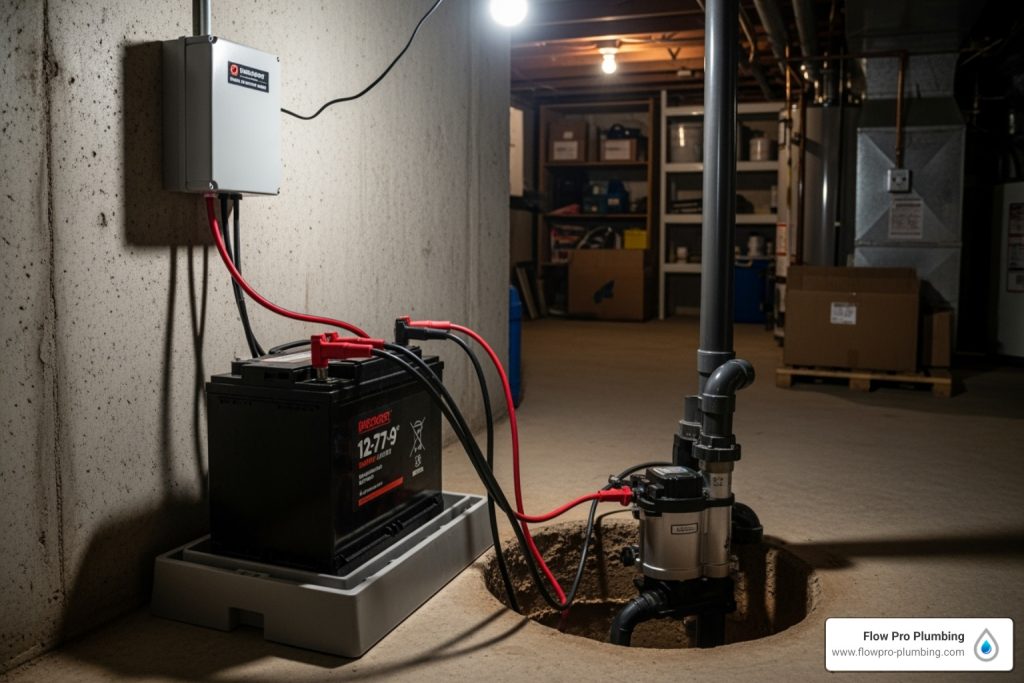
Why Sump Pump Battery Replacement Protects Your Home
Sump pump battery replacement is a critical task that keeps your basement dry during power outages. When storms knock out electricity, your primary sump pump stops, but a battery backup system continues pumping water away from your foundation.
Quick Answer for Sump Pump Battery Replacement:
- Replace every 3-5 years or when the alarm sounds.
- Match specifications: 12V deep-cycle (75Ah-120Ah capacity).
- Safety first: Disconnect the charger, wear gloves, and remove the negative terminal first.
- Install new battery: Connect the positive first, then the negative, and secure hold-downs.
- Test system: Plug in the charger and verify the green “charged” indicator light.
Recently, a homeowner’s sump pump alarm blared after nearly 10 years without a battery change. This real-world scenario shows why proactive replacement matters—waiting until failure puts your basement at risk.
The battery is your home’s flood insurance when the power goes out. Most sump pump batteries last 3-5 years, but frequent power outages, deep discharge cycles, and temperature extremes can shorten their lifespan.
Battery replacement costs typically range from $180-$400, a small investment that protects against thousands in potential flood damage. The process takes about 30 minutes with basic tools.
I’m Jesse Delgado, a licensed plumber at Flow Pro Plumbing with over 10 years of experience. I’ve seen how proper sump pump battery replacement prevents costly water damage for East Bay homeowners during unexpected power outages.
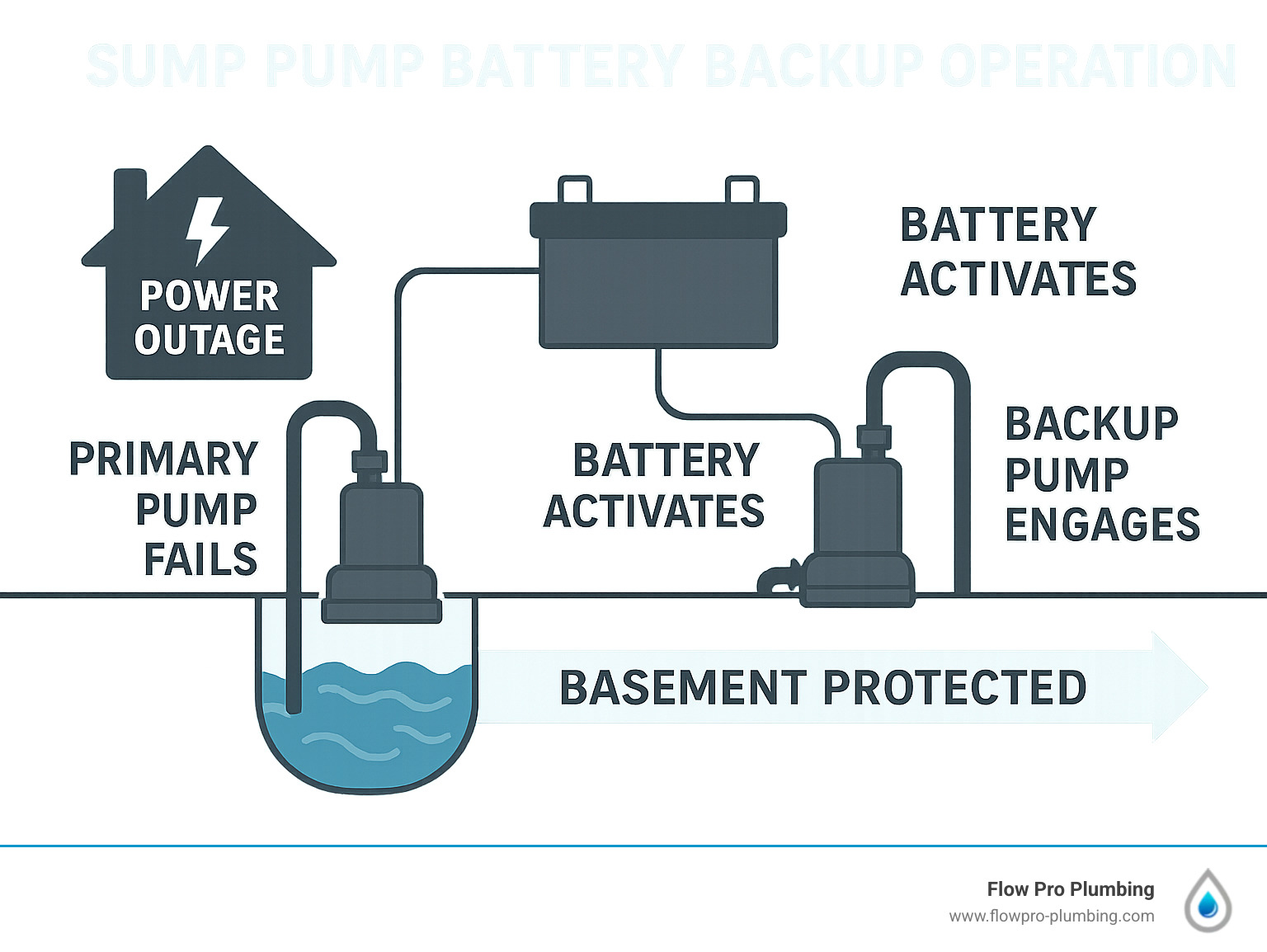
Decoding Sump Pump Batteries: Types and Functions
Your sump pump’s battery backup system is your home’s emergency flood protection. When a power outage disables your main pump, the backup system instantly switches to battery power, activating a secondary pump to prevent basement flooding.
The heart of this system is a deep-cycle battery, which is different from a car battery. Deep-cycle batteries provide steady power over long periods and are designed for repeated charging and discharging, making them ideal for power outages.
Why Would a House Need a Sump Pump? Homes in flood-prone areas, with basements, or high water tables need sump pumps. A battery backup adds a critical layer of protection.
The battery chemistry affects performance and lifespan. Let’s explore the options:
| Battery Type | Lifespan (Cycles) | Maintenance | Pros | Cons |
|---|---|---|---|---|
| Wet Cell (Flooded) | 500-800 | High (distilled water top-ups) | Durable, cost-effective, readily available | Requires frequent maintenance, can vent hydrogen gas, susceptible to sulfation if not regularly charged |
| Gel Cell | 800-1,000 | Low (sealed) | Spill-proof, good vibration resistance, minimal off-gassing | More expensive than wet cell, sensitive to overcharging, less tolerant of high discharge currents in cold weather |
| AGM (Absorbed Glass Mat) | 800-1,200 | Low (sealed, maintenance-free) | Spill-proof, excellent vibration resistance, charges faster, lower self-discharge, more tolerant of deep discharge than wet cell | More expensive than wet cell, can be sensitive to overcharging if charger isn’t optimized for AGM |
| Lithium (LiFePO4) | 2,000-4,000+ | Very Low (sealed, maintenance-free) | Significantly longer lifespan, lighter weight, full usable capacity, faster charging, better performance in deep discharge | Higher upfront cost, requires specific charging profile (BMS often built-in), performance can be affected by very cold charging without a heater |
Wet Cell (Flooded) Batteries
Wet cell batteries are the traditional workhorses, containing a liquid electrolyte. They are durable and budget-friendly but require regular maintenance. You must check and add distilled water every three to six months to prevent the plates from drying out. They also release hydrogen gas during charging, so good ventilation is essential.
AGM (Absorbed Glass Mat) Batteries
AGM batteries are the most popular choice for sump pump battery replacement. The electrolyte is absorbed into fiberglass mats, creating a maintenance-free and spill-proof design. AGM batteries charge faster than wet cells, hold their charge longer, and handle vibration better. While they cost more upfront, the reduced maintenance and longer life make them a worthwhile investment.
Gel Cell Batteries
Gel cell batteries use a silica-based gel to immobilize the electrolyte, resulting in a sealed, maintenance-free battery with good vibration resistance. However, they are sensitive to overcharging, which can cause permanent damage. Their performance can also suffer in cold weather, making them less ideal for unheated basements.
Lithium (LiFePO4) as an Alternative
Lithium Iron Phosphate (LiFePO4) batteries are a modern alternative for sump pump battery replacement. Their biggest advantage is a longer lifespan of 10+ years. They also offer more usable capacity, meaning a smaller lithium battery can outperform a larger lead-acid one. Additionally, they are lighter weight, simplifying installation. The main drawback is the higher upfront cost, but their longevity and superior performance can result in a lower total cost of ownership.
When to Replace: Telltale Signs Your Battery is Failing
Your battery backup system provides warning signs before it fails. Recognizing these signals allows you to replace your battery on your schedule, not during an emergency. Most lead-acid batteries last 3-5 years, but these indicators will tell you when it’s time for a change.
Audible Alarms and Indicator Lights
Your sump pump controller uses lights and beeps to communicate battery health.
- Green Light: The battery is fully charged and ready.
- Red or Yellow Lights: The battery is charging. If these lights stay on for days, the battery may be failing to hold a charge, signaling it’s time for a sump pump battery replacement.
- No Lights: This could indicate a dead battery or a charger issue, requiring immediate attention.
- Beeping Alarm: A high-pitched beep is an urgent alert for a low charge or battery failure. Consistent beeping means the battery needs to be checked and likely replaced.
Age and Recommended Lifespan
The most reliable indicator is often the battery’s age. Most lead-acid batteries, including AGM types, have a lifespan of three to five years. After this period, their capacity diminishes significantly.
Proactive replacement is key. Plan to replace your battery within this 3-5 year window to avoid failure during a storm. If you don’t know the battery’s age, check for a date sticker or write the installation date on the new battery with a permanent marker.
Visual and Performance Clues
Regular visual inspections can reveal a battery’s health.
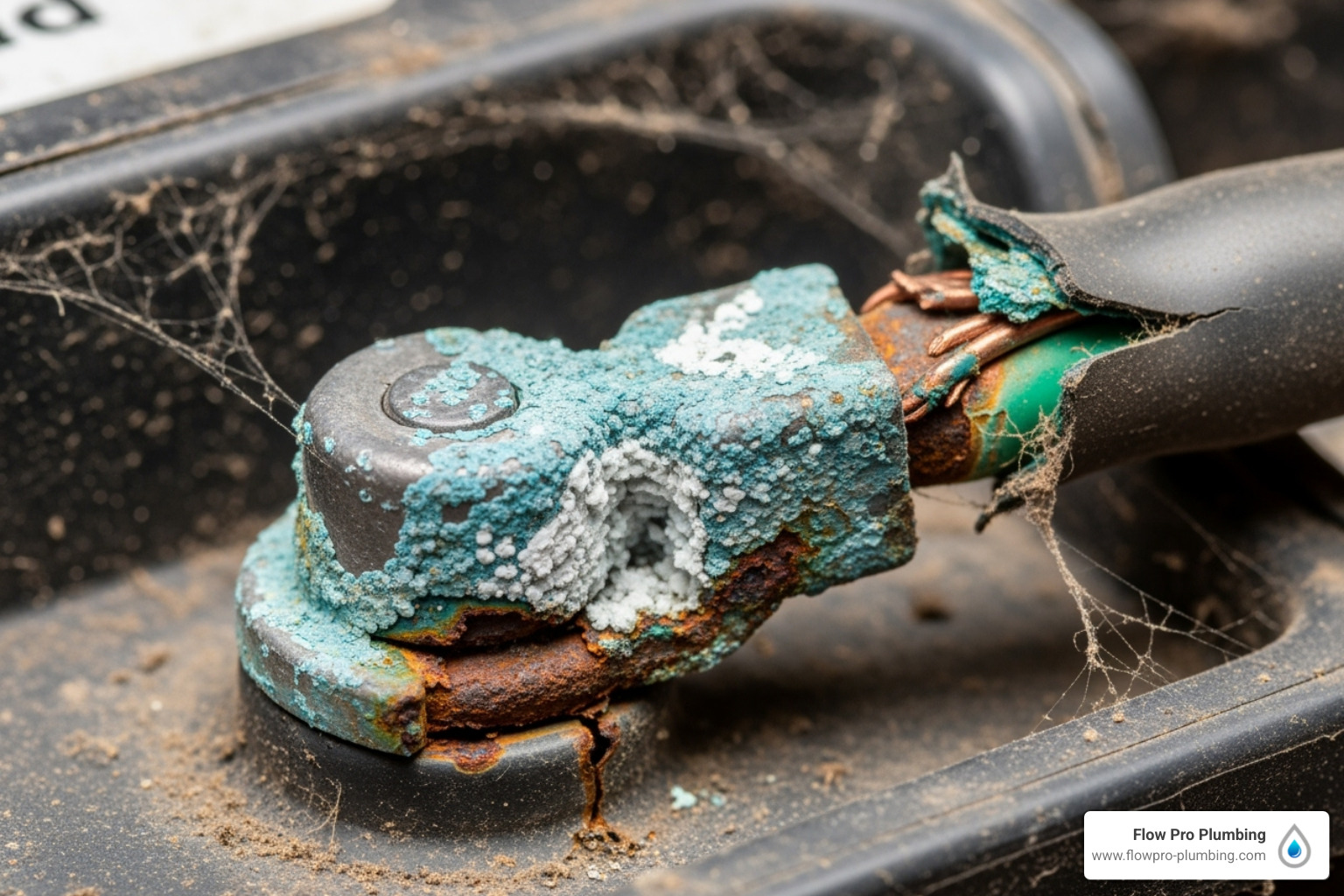
- Bulging or Cracked Case: Any swelling or cracks indicate internal damage. The battery is unsafe and must be replaced immediately.
- Excessive Terminal Corrosion: Heavy corrosion that reappears quickly after cleaning suggests internal breakdown.
- Shorter Runtime: If your backup pump runs for a much shorter time during tests than it used to, the battery’s capacity has declined.
- System Failure: If the backup system fails during a power outage, the battery is at the end of its life. This is a clear sign that sump pump battery replacement is urgent.
Choosing the Right Replacement: A Buyer’s Guide
Choosing the right battery for your sump pump battery replacement is straightforward if you know your system’s requirements. Your sump pump manual is the best source for this information. If you don’t have the manual, check the manufacturer’s website or the model number on your existing battery or control unit.
A guide to battery sizes can also help you understand standardized battery sizing.
Correct Voltage and Amp-Hour (Ah) Rating
Voltage is simple: nearly all backup systems use a 12V battery. The voltage must match exactly.
The amp-hour (Ah) rating is like the battery’s fuel tank; a higher rating means a longer runtime. Common sizes range from 75Ah to 120Ah.
A 75Ah battery may provide 4-6 hours of intermittent pumping, while a 100Ah or 120Ah battery could last 8-12 hours or more, depending on pump frequency and power draw. A larger pump (e.g., 1/2 HP) will drain the battery faster than a smaller one (1/3 HP). For areas with long power outages, a higher Ah rating is a wise investment.
Physical Size and Terminal Type
The battery must fit in its box. Check the Group size (e.g., Group 24, 27, or 31) on your old battery or measure the battery box to ensure a proper fit. A snug fit prevents the battery from sliding and damaging connections.
Also, match the terminal type. Most systems use either nut & bolt (NB) terminals or standard top-post terminals. Using the same type ensures a secure connection and simplifies installation. Taking a photo of your old battery before you shop is a helpful reminder of its specifications.
Your Step-by-Step Guide to Sump Pump Battery Replacement
Replacing your sump pump battery is a manageable DIY task, but safety is essential for a successful sump pump battery replacement.
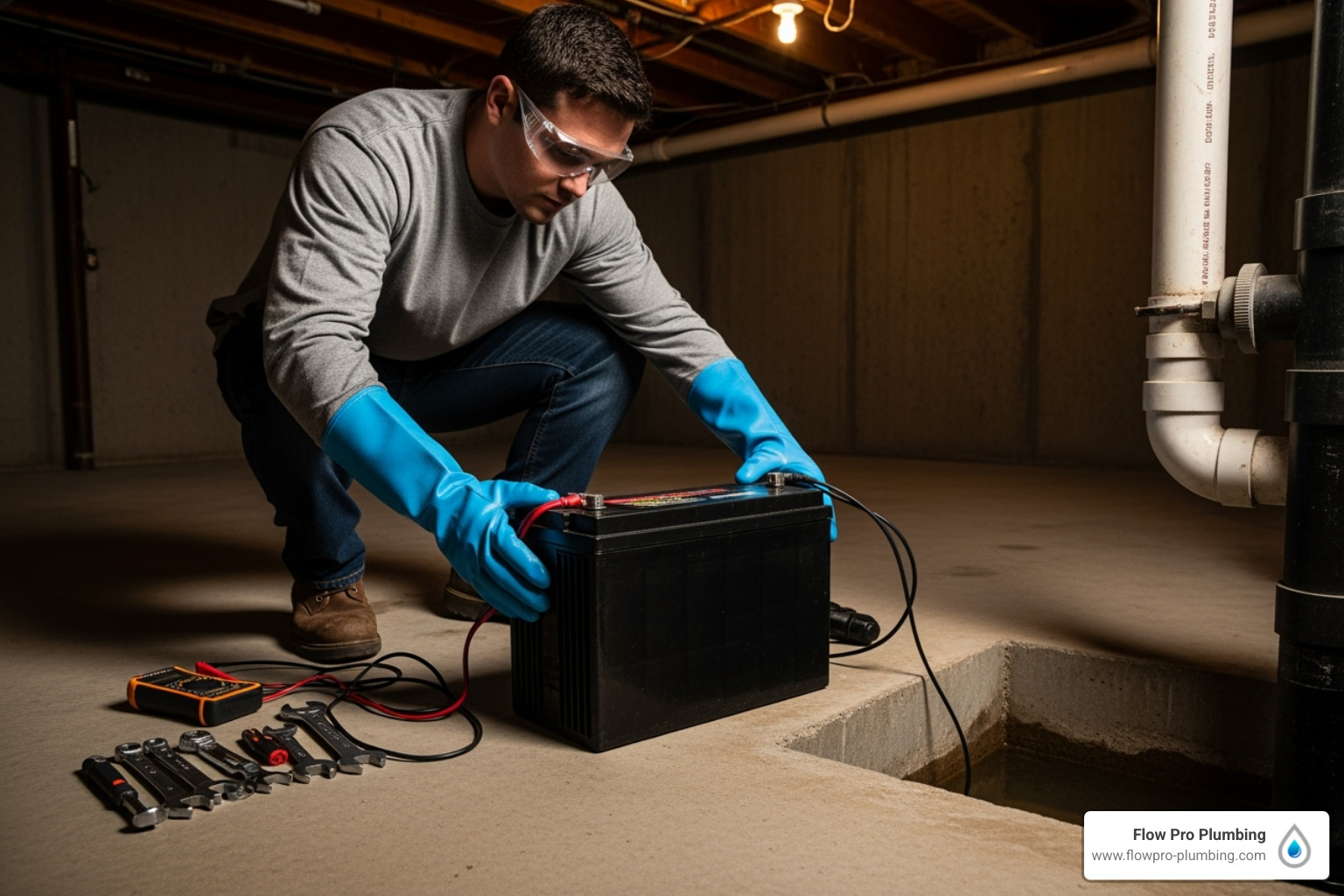
Safety First: Preparing for Your Sump Pump Battery Replacement
Before you begin, prepare your workspace and gather your safety gear.
- Unplug the charger from the wall outlet. This is the most important first step to cut all power.
- Wear heavy-duty work gloves and safety glasses to protect against acid residue and sparks.
- Ensure good ventilation, especially when working with wet cell batteries.
- Be prepared for heavy lifting. Sump pump batteries can weigh over 50 pounds. Lift with your legs.
- Prevent short circuits by keeping metal tools from touching both battery terminals at the same time.
Removing the Old Battery
- Locate the battery box, usually a plastic case next to your sump pump, and open it.
- Disconnect the negative (-) terminal first. Use a wrench to loosen the nut on the black cable and move the cable away from the battery.
- Disconnect the positive (+) terminal. Loosen the nut on the red cable and move it aside.
- Release the hold-downs that secure the battery.
- Lift the old battery out carefully. Use proper lifting technique and place it on a stable surface like cardboard.
Installing the New Battery
- Clean the battery box and cable terminals. Use a wire brush to remove any corrosion.
- Place the new battery in the box, ensuring it’s stable and the terminals are aligned correctly.
- Connect the positive (+) terminal first. Attach the red cable and tighten the nut securely, but do not overtighten.
- Connect the negative (-) terminal last. Attach the black cable and tighten the nut. This sequence is a critical safety rule.
- Secure the hold-downs to keep the battery stable.
- Plug the charger back in. The system will begin charging. Look for a charging light (red or yellow) that turns to a solid green light, confirming the sump pump battery replacement was successful.
Costs, Maintenance, and Where to Buy
Understanding the investment for sump pump battery replacement helps you budget for your home’s protection, which is far less than the cost of a flooded basement.
Determining the Cost of Sump Pump Battery Replacement
Battery prices vary based on capacity (Ah) and type. Higher amp-hour ratings provide longer runtime but cost more.
- AGM batteries are a popular, affordable choice. A 75Ah AGM is a common starting point, with 100Ah or 120Ah models offering longer backup time for a higher price.
- Lithium batteries have a higher upfront cost but can last 3-4 times longer than lead-acid types. Their longer lifespan and minimal maintenance often make them more cost-effective over time.
Battery Maintenance for a Longer Life
Proper maintenance extends your battery’s life and ensures reliability.
- Check Water Levels (Wet Cell only): Top up with distilled water every 3-6 months. Never use tap water.
- Clean Terminals: For all battery types, use a wire brush and a baking soda/water solution to remove corrosion.
- Test Regularly: Press the test button on your system monthly to ensure it’s working correctly.
- Keep it Charged: Leave the charger plugged in at all times to maintain a full charge and prevent damage to lead-acid batteries.
- Ensure Good Ventilation: Proper airflow is important, especially for wet cell batteries.
Where to Purchase Your New Battery
You can purchase replacement batteries from several places:
- Home improvement stores
- Auto parts stores
- Battery specialty retailers
- Online suppliers
When buying in person, bring your old battery for proper recycling and a potential core refund, which makes your sump pump battery replacement more economical.
Conclusion: Keep Your Basement Protected
A functional battery backup is your home’s best defense against basement flooding during a power outage. Sump pump battery replacement is more than a maintenance task; it’s an investment in peace of mind. Proactive replacement prevents your backup system from failing when you need it most, protecting your home from costly water damage.
This guide covered how to choose the right battery type, spot warning signs of failure, and select a replacement with the correct specifications. We also provided a step-by-step installation guide, showing that sump pump battery replacement is a manageable DIY task. By staying proactive—testing regularly and replacing your battery every 3-5 years—you create a reliable defense against water damage.
Of course, sometimes you might run into issues that go beyond a simple battery swap. If you’re unsure about your sump pump system’s health, need help diagnosing problems, or simply prefer having a professional handle your sump pump battery replacement, we’re here to help.
At Flow Pro Plumbing, we proudly serve homeowners throughout Contra Costa County, including Brentwood, Oakley, Antioch, Findy Bay, Pittsburg, Bay Point, Concord, Byron, Bethel Island, Clayton, Walnut Creek, Pleasant Hill, and Knightsen. Our experienced team understands how important it is to keep your basement dry, and we’re committed to providing the kind of workmanship that gives you real confidence in your home’s protection.