
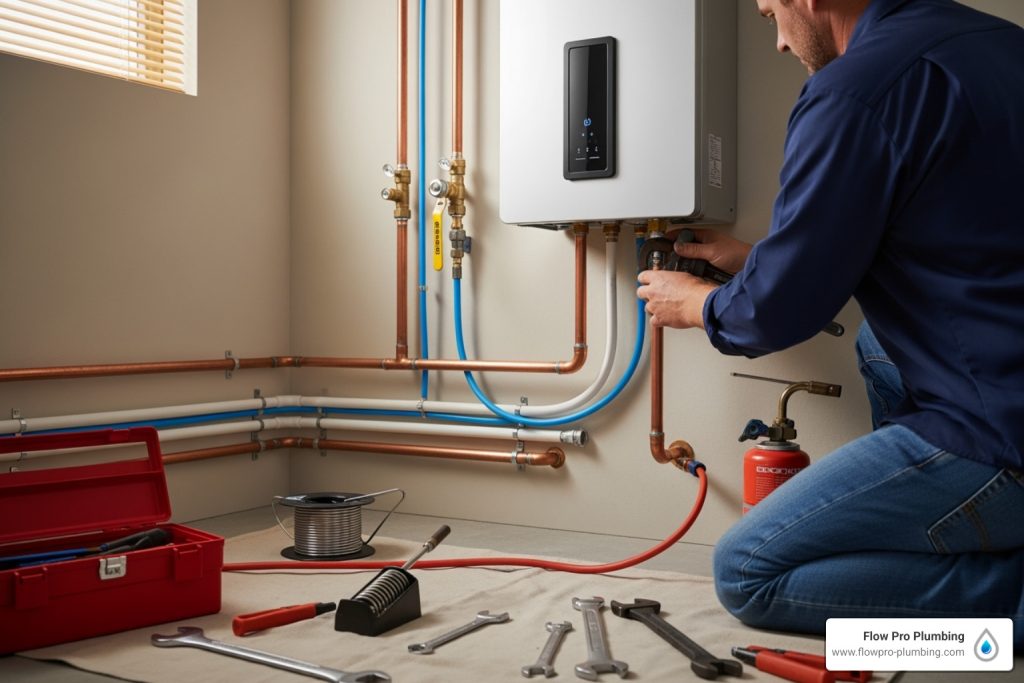
Transform Your Home with On-Demand Hot Water
Tankless water heater installation offers homeowners a modern solution to endless hot water while saving energy and space. Unlike traditional tank heaters that constantly heat and reheat stored water, tankless units heat water only when you turn on the tap, eliminating standby energy losses and providing continuous hot water flow.
Quick Installation Overview:
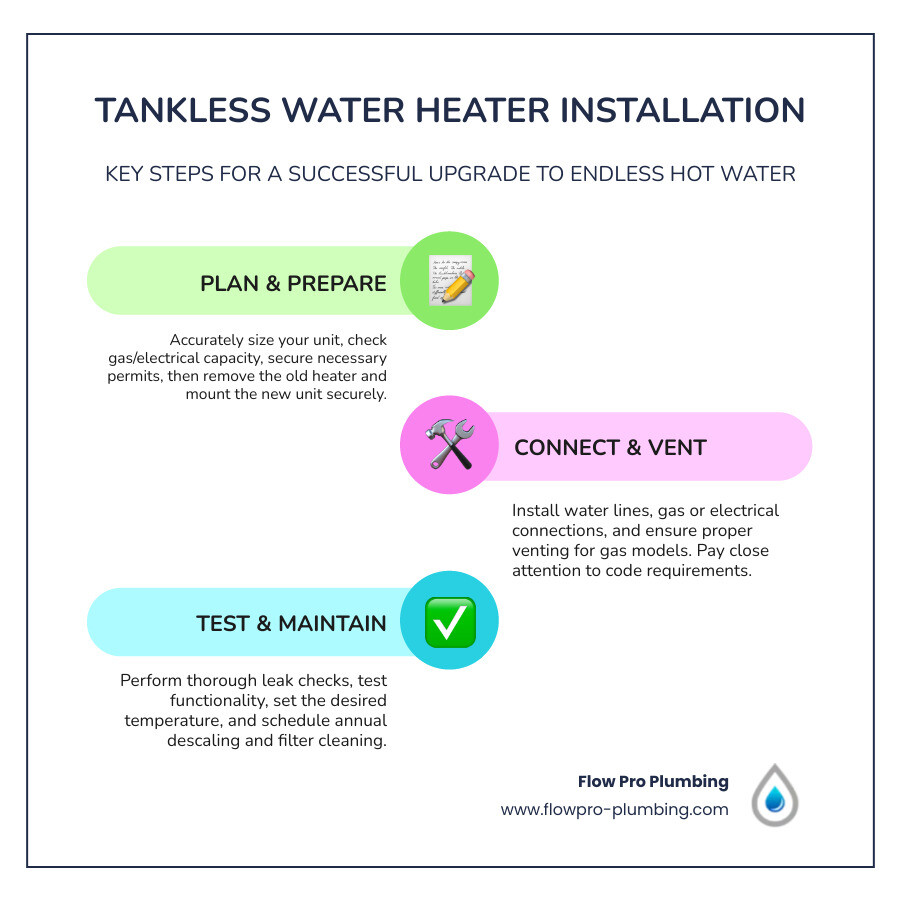
- Planning – Size your unit, check gas/electrical capacity, obtain permits
- Preparation – Remove old heater, mount new unit securely
- Connections – Install water lines, gas/electrical connections, venting
- Testing – Check for leaks, test functionality, set temperature
- Maintenance – Annual flushing and filter cleaning
The benefits are compelling: tankless units can provide 27-50% fuel cost savings compared to traditional tank heaters, last over 20 years, and free up valuable space in your home. However, installation complexity varies significantly between gas and electric models, with gas units requiring proper venting and potentially larger gas lines.
Gas models typically offer higher flow rates but need direct venting to the outside and may require upgrading from a 1/2-inch to 1-inch gas line. Electric models are simpler to install but often need dedicated high-amperage circuits and may have lower flow rates.
I’m Jesse Delgado, a licensed plumber with over ten years of experience and owner of Flow Pro Plumbing in Brentwood, California. Having performed countless tankless water heater installations throughout the East Bay, I’ve seen how proper installation transforms homes while improper DIY attempts can create costly problems.
Before You Begin: Planning Your Installation
The secret to a successful tankless water heater installation is thorough planning. Skipping these crucial steps can lead to complications that are easily avoided. Before choosing a unit, let’s ensure it’s the right fit for your home and needs.
| Feature | Traditional Tank Water Heater | Tankless Water Heater |
|---|---|---|
| Lifespan | 10-15 years | 20+ years |
| Operating Cost | Higher (due to standby heat loss) | Lower (heats water only when needed, 27-50% fuel savings) |
| Upfront Cost | Generally lower | Can be higher, but prices are decreasing |
| Size | Large, bulky tank | Compact, wall-mounted |
| Hot Water Supply | Limited to tank capacity | Endless hot water on demand |
While the upfront cost might be higher, tankless units typically last twice as long and can significantly cut water heating costs, offering substantial lifetime savings. For a deeper dive into these advantages, check out the Benefits of a Tankless Water Heater.
Sizing Your Unit: Flow Rate & UEF Rating
Sizing a tankless unit focuses on how fast it can heat water, not tank capacity.
Flow rate, measured in gallons per minute (GPM), is the key metric. To determine your need, add up the GPM of all fixtures that might run simultaneously. For example, a shower (2.5 GPM), dishwasher (1.5 GPM), and washing machine (2 GPM) would require a unit that can provide at least 6 GPM.
Groundwater temperature impacts performance; colder water reduces the effective flow rate. Household size is less important than the number of simultaneous hot water users.
The Uniform Energy Factor (UEF) indicates efficiency. A higher UEF means lower operating costs, similar to better gas mileage in a car. It’s wise to size up slightly to ensure you always have enough hot water.
Choosing Your Heater: Gas vs. Electric & Condensing vs. Non-Condensing
This decision shapes your entire installation.
Gas heaters are powerful, delivering higher flow rates suitable for larger households. However, they have specific demands. Your old tank heater likely used 30,000-40,000 BTUs, while a new tankless unit might need 90,000-130,000 BTUs. This often means your existing 1/2-inch gas line must be upgraded to a 1-inch line as part of your tankless water heater installation.
Venting requirements also add complexity, as gas units must vent directly outside.
Electric heaters offer simpler installation with no gas lines or venting. However, they require significant electrical power, typically two to three 40-amp, 240-volt circuits. Your electrical panel capacity may need an upgrade, adding to the cost. Electric units generally have lower flow rates, making them better for smaller homes or point-of-use applications.
Within gas units, condensing units are highly efficient, using a secondary heat exchanger to capture extra heat from exhaust. They produce acidic condensate that requires a condensate drain. Non-condensing units have a lower upfront cost and no drain, but their hotter exhaust requires expensive stainless steel venting instead of the cheaper PVC used by condensing models.
Essential Pre-Installation Checks
Before starting, these checks ensure a smooth and legal installation.
Local building codes are requirements, not suggestions. Municipalities like Brentwood, Oakley, and Antioch have specific rules for plumbing, gas, and electrical work. Permits may be required, and skipping them can cause issues with insurance or home sales. The National Fuel and Gas Code, i.e.,ANSI Z223.1/NFPA 54 provides guidelines for gas installations.
Gas line size verification is critical. If your new unit’s BTU rating is three to four times higher than your old one, expect to upgrade your gas line.
Electrical requirements apply to all units. Gas models need 120V for controls, while electric units demand dedicated high-amperage circuits that may require a panel upgrade. Always verify amperage capacity.
Wall strength is important, as units mount to the wall. You’ll need solid wall studs for support.
Finally, ensure clearances for maintenance (at least 6-12 inches on all sides) for future service like annual flushing and filter cleaning.
A Guide to Tankless Water Heater Installation
Alright, planning done! Now we get to the exciting part – the actual tankless water heater installation. I’ll walk you through each step, but here’s the thing: this work involves plumbing, gas lines, and electrical connections all working together. If you’re not completely comfortable with all three areas, or if your local codes require licensed professionals (which many do), please don’t hesitate to call in the experts. At Flow Pro Plumbing, we’ve perfected these installations throughout Brentwood, Antioch, and all of Contra Costa County.
Think of this as a detailed roadmap. Follow these steps carefully for a safe and effective installation, but complex gas or electrical work is always best left to professionals.
Tools and Materials Checklist
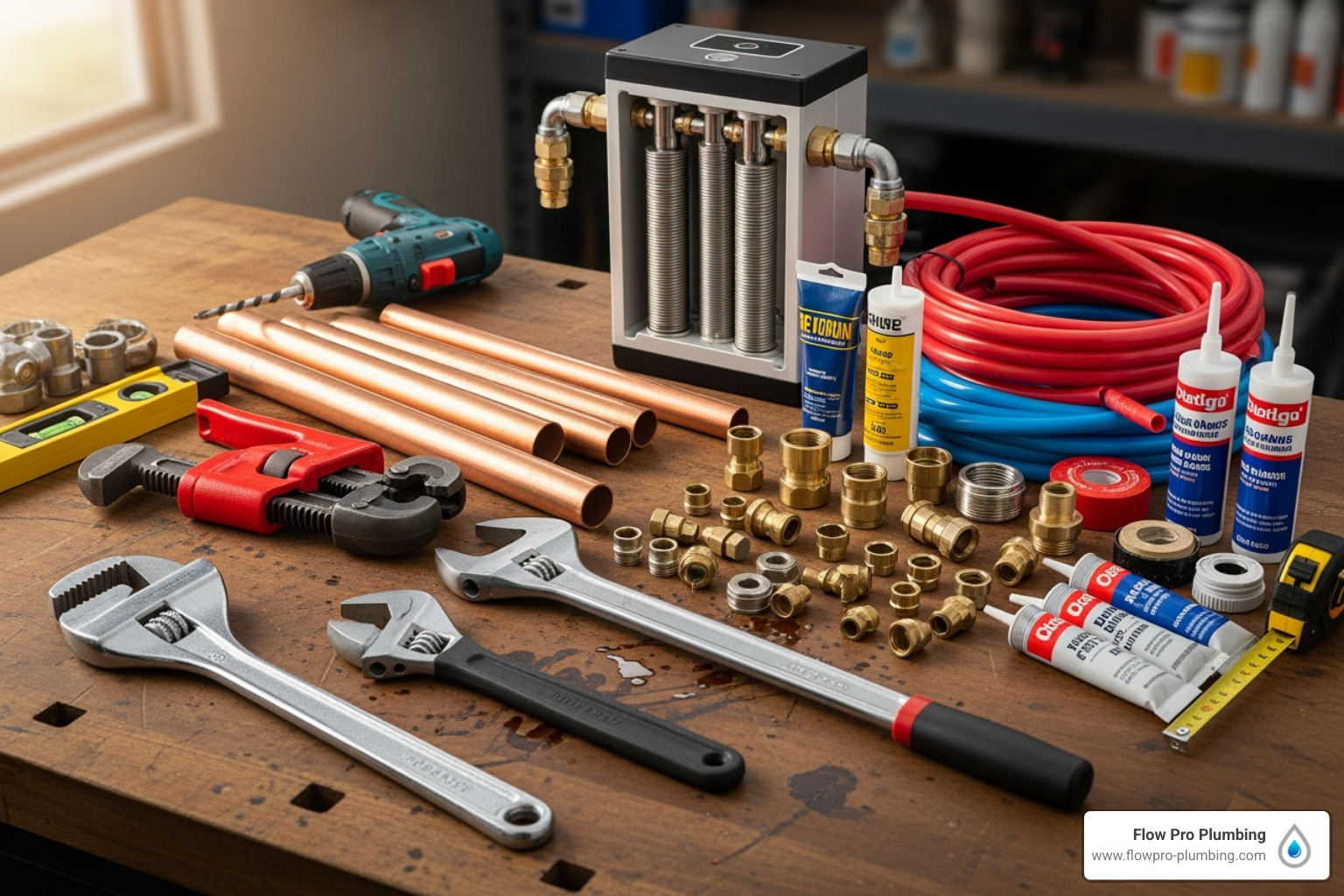
Gathering your tools and materials first will streamline the installation.
Essential Tools: You’ll need adjustable wrenches, pipe wrenches, a drill, a level, a pipe cutter, a soldering torch (for copper pipes), and a reciprocating saw.
Critical Materials: Your new tankless unit and its mounting hardware, a unit-specific venting kit, copper pipe or flexible water lines, shutoff valves, Teflon tape, and gas-rated pipe dope and fittings for gas models.
Step 1: Preparation and Old Unit Removal
This step requires patience and safety.
First, turn off water main, then open an upstairs hot water faucet to relieve pressure. For gas models, shut off the gas valve to the heater; if you smell gas, stop immediately and call your gas company. Turn off the circuit breaker for the water heater.
Next, drain your old tank heater by connecting a garden hose to the drain valve. Once empty, disconnect all lines (water, gas, electrical).
Safely remove the old unit. Old water heaters in California often require special disposal due to mercury sensors. Contact your local waste management for proper recycling guidance. For more on this process, see our Water Heater Installation guide.
Step 2: Mounting the New Tankless Heater
Here’s where your new compact powerhouse finds its permanent home. Location matters tremendously for both performance and safety.
Choose your location carefully, keeping in mind everything we discussed in the planning section. The spot needs proper ventilation for gas models, easy access for future maintenance, and protection from freezing temperatures. Ensure proper clearances by checking your unit’s manual – these requirements aren’t suggestions, they’re safety necessities.
Locate wall studs using a stud finder because your tankless unit needs solid support. These units may be compact, but they’re still substantial pieces of equipment that need secure mounting. Securely mount the unit by drilling pilot holes and attaching the mounting bracket with strong lag screws directly into the studs. Use a level to make sure everything is perfectly straight – a crooked water heater just looks wrong and can cause operational issues down the line.
Step 3: Connecting Water Lines
Proper connections prevent future leaks and headaches.
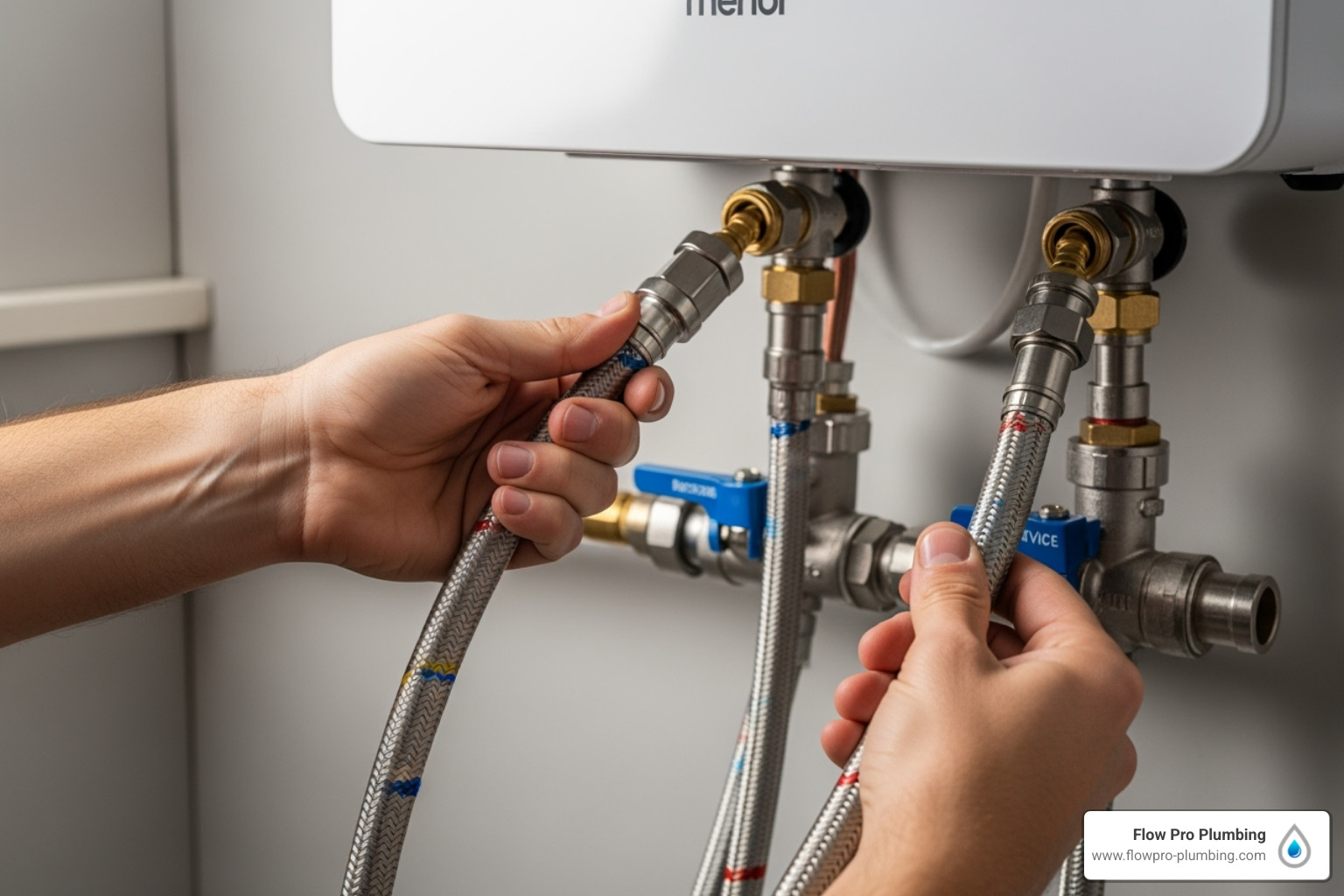
Connect your home’s cold water supply to the unit’s inlet and the hot water outlet to your distribution system. Install service valves on both lines before the unit; these isolation valves simplify future maintenance and flushing.
Apply Teflon tape on all threads, wrapping clockwise, to ensure watertight seals. After connecting, turn the water back on slowly and check for leaks at every connection.
Step 4: Gas and Venting Connections (Gas Models)
This is the most critical step for gas units, where precision and safety absolutely cannot be compromised. If you have any doubts about your gas work experience, this is definitely the time to call a professional.
Make your gas line connection to the unit’s gas inlet, but first install a sediment trap – that’s a short vertical pipe with a cap that catches debris before it reaches your heater. Use only gas-rated sealant on all threaded connections, never regular Teflon tape or pipe dope.
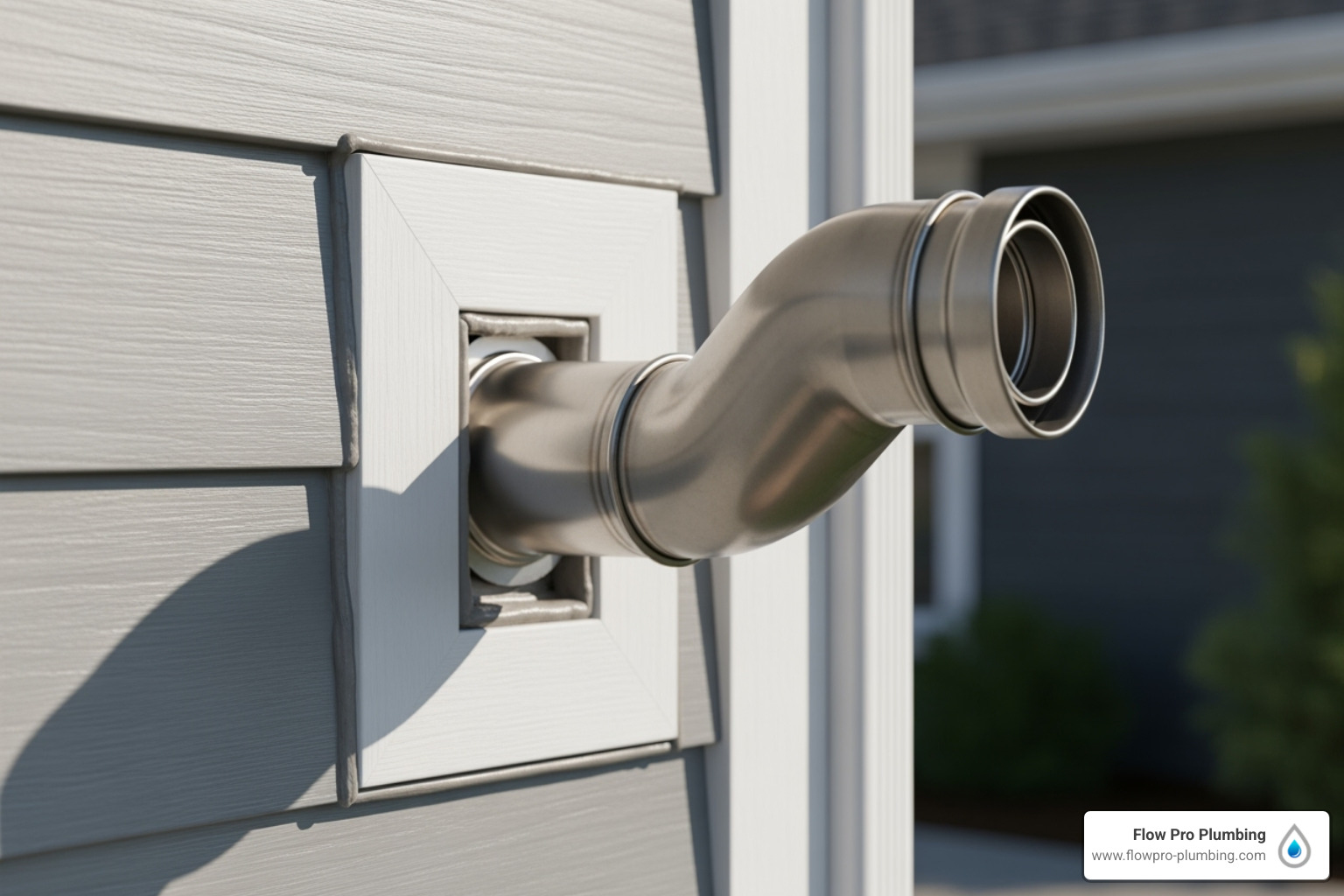
The venting system depends on your unit type. Direct-vent vs. power-vent systems have different requirements, with most residential units being direct-vent. For non-condensing units, you’ll need expensive stainless steel venting, while condensing units can use more affordable PVC or CPVC pipe due to their cooler exhaust temperatures.
Install your vent pipe with proper slope – about 1/4 inch per foot rising toward the outside termination. This prevents condensate buildup and ensures proper draft. When you penetrate the exterior wall, take extra care with sealing the exterior penetration using appropriate flashing and weatherproof sealant.
Step 5: Electrical Connections (Electric Models)
Electric tankless units eliminate the complexity of gas and venting, but they demand serious electrical power. The electrical requirements are substantial and often require panel upgrades.
Your unit needs a dedicated circuit with the correct voltage and amperage – typically 240 volts with high amperage requirements. Use the correct wire gauge for your unit’s amperage needs; undersized wiring creates dangerous overheating conditions. Always ground the unit properly to prevent electrical shock hazards.
Follow the manufacturer’s wiring diagram exactly – this isn’t the place for improvisation. Each unit has specific wiring requirements that must be met for safe operation. If electrical work isn’t your strong suit, please consult a licensed electrician. For additional insights into water heater electrical and installation work, visit our Water Heater Repair and Installation resource page.
Post-Installation: Safety, Maintenance, and Troubleshooting
You’re almost there! Properly finishing the job and knowing how to care for your new heater will ensure years of reliable service. Think of it as the grand finale of your tankless water heater installation project – and honestly, it’s just as important as everything that came before.
Common Installation Mistakes to Avoid
Even seasoned DIYers can stumble at the finish line. After years of fixing installation problems, I’ve seen these mistakes more times than I’d like to count. Let me save you the headache (and the service call).
Improper venting tops my list of safety concerns for gas units. I’ve walked into homes where someone tried to vent through an old chimney or used the wrong pipe material. This is a huge no-no that can lead to carbon monoxide buildup or poor performance. Remember: direct-vent only, and use the right materials for your unit type.
Undersized gas or electric supply is like trying to feed a hungry teenager with a toddler’s portion – it just won’t work. If your gas line can’t deliver enough BTUs or your electrical panel can’t handle the amperage, you’ll get lukewarm disappointment instead of hot satisfaction.
Skipping the pressure relief valve is playing with fire – literally. This little safety hero prevents your unit from becoming a very expensive (and dangerous) pressure cooker. Never, ever install without one.
Forgetting to flush the system before powering up is a rookie mistake that can instantly fry electric heating elements. Those elements don’t like air bubbles any more than you’d like finding them in your morning coffee.
Incorrect mounting might seem fine initially, but gravity always wins. I’ve seen units slowly pull away from walls because someone skipped finding the studs. Trust me, drywall anchors aren’t enough for something this important.
Your First Run and Long-Term Maintenance
Congratulations! Your tankless water heater installation is nearly complete. Now comes the moment of truth – let’s get that endless hot water flowing.
Start by purging air from your lines. With all connections made and your main water supply back on, open hot water faucets throughout your home, starting with the highest one. Let them run until the water flows smoothly without that telltale sputtering that screams “air bubbles!”
Next, it’s time to turn on water and power. Open your cold water supply valve to the unit first, then the hot water outlet valve. For gas models, slowly turn on that gas supply valve. Finally, flip the breaker at your electrical panel. Even gas units need electricity for their smart controls.
Test hot water at faucets by turning on the fixture closest to your new heater. The unit should spring to life – gas models will ignite with a satisfying whoosh, while electric models will hum quietly to work. Test other faucets to make sure you’re getting consistent hot water delivery throughout your home.
Set your temperature to something sensible – we recommend 120°F for most households. It’s hot enough for everything you need but safer for kids and elderly family members. Some people crank it to 140°F, but honestly, that’s hot enough to make instant coffee!
Now for the long-term care that’ll keep your investment running smoothly for decades.
Annual descaling and flushing is absolutely crucial, especially here in Contra Costa County where our water can be pretty hard. Those mineral deposits build up like barnacles on a ship’s hull, slowly choking your unit’s performance. We recommend flushing annually with a descaling solution – it’s like giving your heater a spa day.
Don’t forget about inlet filter cleaning. That little filter at the water inlet catches sediment and debris. Check it every few months and give it a rinse. It takes five minutes but can save you from major headaches down the road.
For gas models, inspect your vent system periodically. Look for obstructions (birds love to nest in warm places), damage, or corrosion signs. A blocked vent is like trying to breathe through a straw – it won’t end well.
Even with diligent maintenance, professional check-ups every few years are smart. We can spot potential issues before they become expensive problems. For more insights into when your unit might need professional attention, check out our article: Can a Tankless Hot Water Heater Be Repaired?.
Frequently Asked Questions
Over the years, I’ve heard just about every question you can imagine about tankless water heater installation. These three questions come up in almost every conversation I have with homeowners considering the switch.
Can I perform a tankless water heater installation myself?
Here’s the honest truth: while it’s technically possible for someone with serious plumbing, electrical, and gas fitting experience, I strongly recommend against DIY tankless water heater installation for most homeowners. This isn’t like replacing a faucet or unclogging a drain – we’re talking about a project that involves high-pressure gas lines, high-voltage electricity, and complex venting systems.
The risks are real and significant. Gas leaks from improper connections can lead to dangerous situations, including potential explosions. Electrical hazards from incorrect wiring can cause shock, short circuits, or house fires. Even water damage from poorly sealed connections can cost thousands to repair.
Beyond safety concerns, there are code compliance issues to consider. Every jurisdiction has specific requirements for gas and electrical work, and violations can result in fines, required re-work, and complications when selling your home. Many manufacturers will also void your warranty if the unit isn’t installed by a licensed professional.
The good news? A skilled plumber can often complete a tankless water heater installation in about the same time as a traditional tank replacement, debunking the myth that these installations are always more complex and time-consuming. Professional installation ensures safety, code compliance, and protects your investment.
What is the average cost of a professional tankless water heater installation?
This is probably the question I get asked most, and my answer is always the same: “It depends!” The cost of professional tankless water heater installation varies significantly based on several key factors.
Unit type plays a major role in pricing. Gas units often cost more to install due to potential gas line upgrades and complex venting requirements. Home modifications can really impact the final bill – if your existing gas line needs upgrading from a 1/2-inch to a 1-inch diameter, or if your electrical panel requires new dedicated circuits, these additions will increase costs substantially.
Venting complexity also affects pricing. The type of venting material needed (stainless steel versus PVC) and the route the vent pipe must take can significantly impact both labor and material costs. Finally, location matters – installation costs vary geographically and between different plumbing companies.
Generally, professional installation costs (not including the unit itself) can range from several hundred dollars for a straightforward swap to several thousand dollars if extensive gas line, electrical, or venting modifications are needed. The best approach is always to get a detailed, specific quote from a qualified plumber who can assess your unique situation.
How do I know if my gas line needs an upgrade?
This question keeps a lot of homeowners up at night, and for good reason – it’s often one of the biggest cost factors in a gas tankless water heater installation.
The key issue is BTU demand. Your current tank water heater might use around 30,000 to 40,000 BTU per hour, but a tankless unit can demand anywhere from 90,000 to 199,000 BTU per hour when it fires up. That’s a massive jump – often three to four times more gas than your current system uses.
Signs your gas line may need upgrading include having other gas appliances (like your furnace, stove, or dryer) that already strain your current gas supply, or if you’ve noticed performance issues with existing gas appliances during peak usage times.
The most reliable way to know for sure is to have a licensed plumber conduct a professional assessment. We’ll evaluate your current gas line capacity and perform a BTU load calculation for all your gas appliances combined. This tells us definitively whether your existing line can handle the additional demand or if an upgrade (typically jumping from a 1/2-inch to a 1-inch line) is necessary.
This step is crucial for both performance and safety – an undersized gas line won’t just hurt your water heater’s efficiency, it can also affect the operation of your other gas appliances and create safety concerns.
Conclusion: Enjoy Endless Hot Water with Confidence
You’ve made it to the finish line! A successful tankless water heater installation truly transforms your home experience. Imagine never running out of hot water during those back-to-back showers or when the dishwasher and washing machine are both running. Plus, you’ll see real savings on your energy bills – we’re talking 27-50% fuel cost savings compared to traditional tank heaters.
The space savings alone can be a game-changer. Where that bulky old tank once dominated your utility room, you now have precious square footage back. Many of our customers are amazed at how much room they gain, often converting the space for storage or other uses.
While this guide walks you through every step of the process, we hope it’s clear that tankless water heater installation requires careful attention to detail. From proper gas line sizing and electrical connections to meticulous venting and thorough leak testing, every aspect matters for both safety and performance. One small mistake with gas connections or electrical wiring can turn your dream upgrade into a nightmare.
The truth is, most homeowners find that professional installation gives them confidence and peace of mind. You’re not just paying for labor – you’re investing in safety, code compliance, and warranty protection. When something involves gas lines, high-voltage electricity, and complex venting systems, having experienced hands on the job makes all the difference.
Here in Brentwood and throughout Contra Costa County, we’ve seen how proper installation transforms homes while improper DIY attempts create costly headaches. Our team at Flow Pro Plumbing brings years of experience to every tankless water heater installation, ensuring your investment delivers the endless hot water and energy savings you’re expecting.
Ready to upgrade to endless hot water and start saving on your energy bills? Our experienced, friendly team is here to make the process smooth and stress-free. Contact us for your professional tankless water heater installation and join the countless homeowners who’ve already made the smart switch to tankless technology.