

Why Gas Water Heater Installation Matters for Your Home
Gas water heater installation is a critical home improvement project. When your current unit fails, you’re left without hot water for showers, dishwashing, and laundry, making replacement an urgent priority.
Quick Answer for Gas Water Heater Installation:
- Turn off gas and water supply to the old unit
- Drain and disconnect the existing water heater
- Position and level the new unit with proper clearances
- Connect water lines using flexible connectors or soldered joints
- Connect gas supply with proper fittings and test for leaks
- Install venting according to manufacturer specifications
- Fill, test, and fire up the new system
The decision between a DIY project or hiring professionals involves serious considerations. Gas water heaters require connections to gas lines and venting systems, which can be dangerous if done incorrectly. Poor installation can lead to gas leaks, carbon monoxide exposure, or code violations that affect your home’s safety and resale value.
Professional installation typically costs between $1,000 and $3,500, while DIY installation can save on labor but requires significant plumbing and gas fitting experience. Tank water heaters are generally less complex to install than tankless systems, but both require proper venting and gas connections.
I’m Jesse Delgado, a licensed plumber with over ten years of experience and owner of Flow Pro Plumbing in Brentwood, California. I’ve completed hundreds of gas water heater installation projects, helping homeowners steer the technical challenges while ensuring safety and code compliance. This guide will walk you through the entire process, from preparation to final testing, so you can make an informed decision.
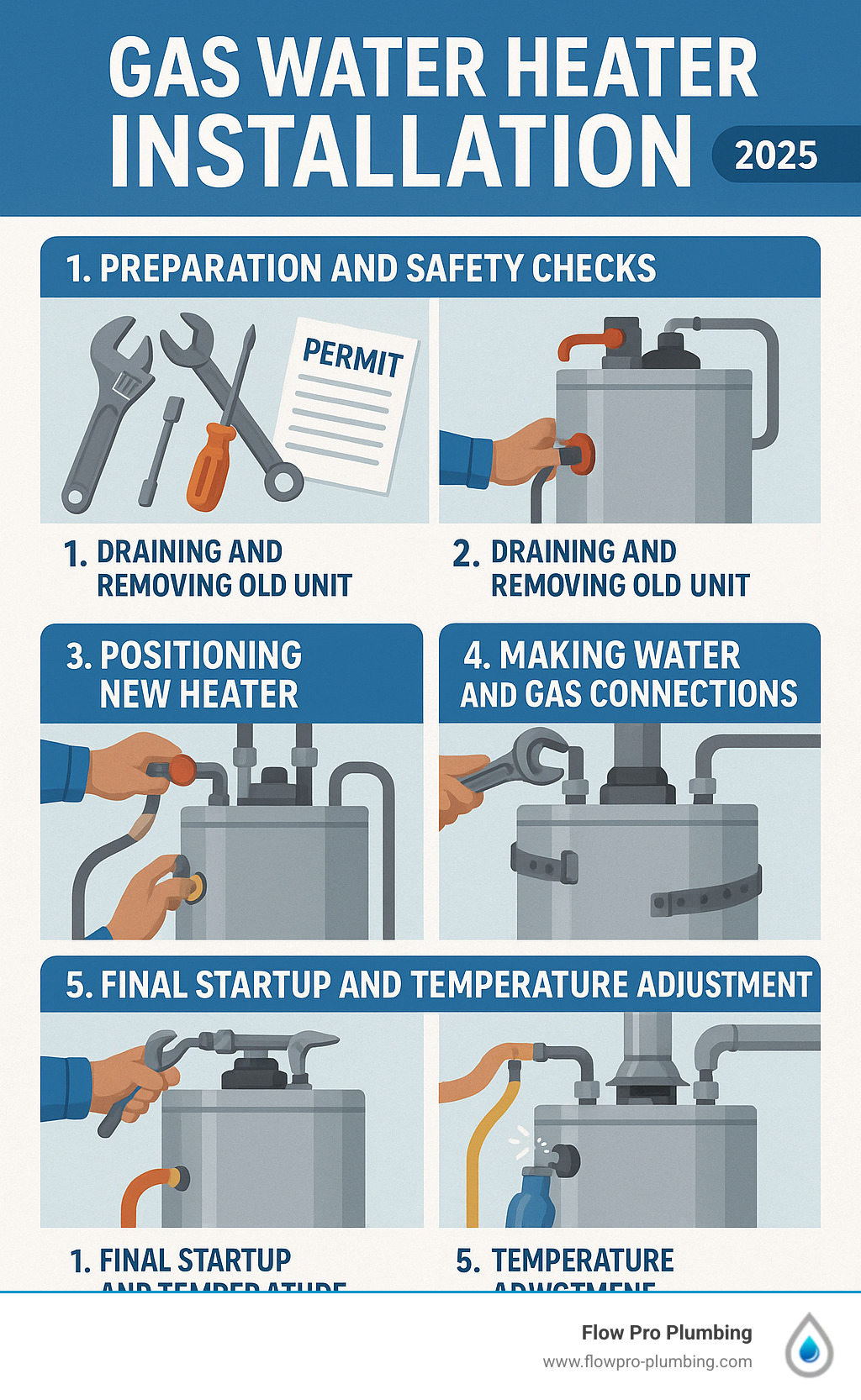
Before You Begin: Preparation and Safety
Gas water heater installation is a complex project that requires careful preparation. Before you begin, it’s important to understand the signs of a failing unit, choose the right replacement, and gather all necessary tools and safety equipment.

First, how do you know your water heater is ready for retirement? Look for these telltale signs: leaks around the base, rusty water from your taps, or if the unit is over 10 years old. It’s better to replace it proactively than to wait for a complete failure.
Next, choose between a tank and tankless system. Traditional tank water heaters store a ready supply of hot water, cost less upfront, and are simpler to install. Tankless units heat water on demand, saving space, lasting longer, and reducing energy bills. For more details, Explore Tankless Water Heaters. For an independent overview of types and efficiency, see the U.S. Department of Energy’s guide on Water Heating.
Sizing your new unit correctly is crucial. For tank water heaters, consider your household size and peak usage. A couple might need a 23-35 gallon unit, while a family of four typically needs 46-55 gallons. Tankless sizing is based on gallons per minute (GPM). To run multiple fixtures at once, you’ll need a higher GPM rating.
Many homeowners overlook local building codes and permit requirements. These are essential for ensuring your installation meets safety standards. Check with your local municipality before starting the project to avoid future complications.
Before you start, gather all your tools and materials. You’ll need your new gas water heater, adjustable wrenches, pipe cutters, a level, measuring tape, thread sealant, flexible water connectors, a gas connector, a new T&P valve, vent pipe fittings, and seismic straps (especially important in California).
You’ll also want a bucket, garden hose, work gloves, safety glasses, and gas leak detection solution (a mixture of dish soap and water also works).
Key Safety Precautions
Working with gas and water requires your full attention to safety.
Shutting off the gas supply is your first and most critical step. Turn off both your home’s main gas shut-off valve and the dedicated valve for your water heater. No exceptions.
Turning off the water main is next to prevent flooding when you disconnect the old unit.
Proper ventilation is a matter of life and death. Gas water heaters produce carbon monoxide, an invisible, odorless gas that can be deadly. Your venting system must be installed correctly to exhaust these gases safely. Learn more about carbon monoxide safety from the CDC.
Always wear protective gear like gloves and safety glasses. Hot water, sharp metal edges, and unexpected issues can cause injuries.
After making any gas connections, testing for leaks is critical. Apply gas leak detection solution to all new connections and watch for bubbles. If you see bubbles, you have a leak that must be fixed immediately. For more information, read our guide on Top Signs of Gas Leak.
If you feel uncertain at any point, especially with gas lines, call a professional. At Flow Pro Plumbing, we’ve seen DIY projects create bigger, more dangerous problems. Your family’s safety is worth more than any potential savings.
The Step-by-Step Guide to Gas Water Heater Installation
Now that you’re prepared, let’s walk through the gas water heater installation process. This is complex work involving gas lines and venting systems. If you’re not completely comfortable, this project can be dangerous due to risks like gas leaks and carbon monoxide exposure. Many manufacturers will also void your warranty if the unit isn’t installed by a licensed professional.
If you have experience with plumbing and gas work, follow these steps carefully, and always refer to your manufacturer’s specific instructions, as details vary between models.
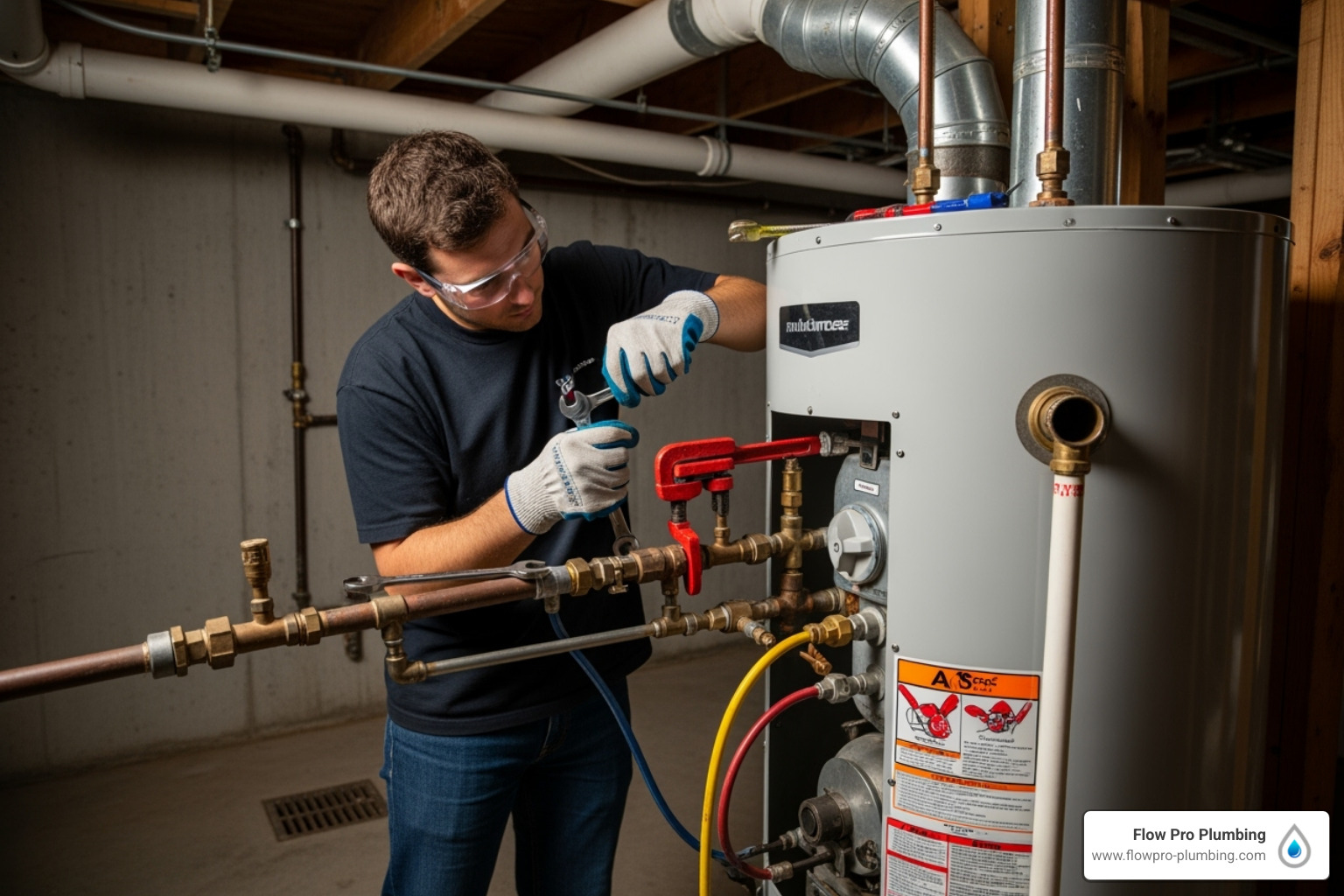
Step 1: Drain and Remove the Old Unit
Draining a full tank takes time, especially if there’s sediment buildup.
First, double-check that both the gas supply and electrical power are shut off. Then, close the cold water supply valve to the water heater.
Connect a garden hose to the drain valve at the bottom of the unit and run it to a safe drainage area that can handle hot water. Open the drain valve, then open a hot water faucet elsewhere in the house to break the vacuum and help the tank drain. A 40-gallon tank can take 30 minutes or more to empty.
Once the tank is empty, disconnect the water lines from the top of the unit. Next, carefully disconnect the gas line. Finally, detach the vent pipe.
With all connections severed, remove the old heater. These units are heavy even when empty, so get help to avoid injury.
Step 2: Position and Prep the New Heater
Before installing the new unit, some prep work is essential.
Clean the installation area and ensure the floor is level. Newer water heaters are often larger than older models due to better insulation, so confirm you have adequate clearance—typically at least 6 inches on all sides for ventilation and maintenance.
Level the new heater using a level and shims if necessary. A level unit operates more efficiently and lasts longer.
In California, installing seismic straps is usually required by code. These straps secure the water heater to wall studs, preventing it from toppling during an earthquake.
Install the new Temperature and Pressure Relief (T&P) valve into its port. The discharge pipe must run downward to within 6 inches of the floor or a proper drain.
Next, connect the vent pipe. You may be able to reuse the existing pipe if it’s in good condition and meets current codes, but proper draft is essential for safely expelling combustion gases. For tips on long-term care, learn How to Flush a Water Heater to keep your new unit running efficiently.
Step 3: Making the Connections for Your Gas Water Heater Installation
Take your time with these connections to avoid dangerous and costly mistakes.
Start with the water connections. Install dielectric unions on the cold water inlet (blue or “C”) and hot water outlet (red or “H”) to prevent corrosion. Connect your cold and hot water supply lines using flexible connectors or soldered copper joints, depending on codes and your comfort level. Flexible connectors are a more forgiving option for those not experienced with soldering.
Next is the gas supply connection. This is a step where many DIYers should consider calling a professional. Clean the gas line threads and apply gas-rated thread sealant (pipe dope or yellow PTFE tape). Connect the gas supply line to the water heater’s gas control valve and tighten all fittings. For detailed safety information, see our guide on Safety with Gas Line Installation.
Testing for gas leaks is non-negotiable. Apply soapy water or leak detection solution to every gas connection. Turn the gas on slowly and watch for bubbles. If you see any, shut off the gas, tighten the connection, and re-test. Do not proceed until all connections are leak-free.
Step 4: Firing Up and Final Checks
These final steps are just as important as the installation itself.
Before lighting the pilot, fill the tank completely. Open the cold water supply valve and a hot water faucet in the house. Once you get a steady stream of water from the faucet, the tank is full. This prevents dry firing, which can damage the new unit.
Light the pilot light according to the manufacturer’s instructions. Most units require you to turn the gas control knob to “Pilot,” press and hold it while igniting the flame, and continue holding for about a minute before turning to “On.” If you have issues, our article on Water Heater Pilot Light Won’t Stay Lit can help.
Set the temperature to around 120°F. This provides ample hot water while minimizing scalding risk and energy waste. Temperatures above 140°F can be dangerous.
Finally, verify proper venting. With the burner on, hold a lit match or thin paper near the draft hood opening. The smoke or paper should be drawn into the vent pipe. If it’s pushed away, you have a venting problem. Shut down the unit immediately and call a professional, as this indicates a risk of carbon monoxide buildup.
Professional vs. DIY: Weighing the Costs and Risks
For gas water heater installation, the choice between DIY and hiring a professional is significant. While saving on labor is appealing, it’s crucial to weigh the risks.
DIY Pros and Cons:
- Pros: The main advantage is saving money on labor costs. It also provides a sense of accomplishment and a better understanding of your home’s systems.
- Cons: The risks of a DIY gas water heater installation are substantial.
- Gas Leaks: Incorrect gas line connections can be deadly.
- Improper Venting: Faulty venting can cause carbon monoxide to enter your home.
- Code Violations: Without knowledge of local codes in areas like Contra Costa County, you risk fines and problems with insurance or home resale.
- Warranty Void: Many manufacturers require professional installation to maintain the warranty.
- Complexity: The job involves hazardous work with gas lines, plumbing, and pressurized equipment.
Professional Benefits:
Hiring a licensed professional like Flow Pro Plumbing offers key advantages:
- Safety and Compliance: Our technicians ensure your installation is performed safely and meets all local codes and manufacturer specifications.
- Warranty Protection: Professional installation protects your unit’s warranty and your investment.
- Long-Term Efficiency: A properly installed water heater operates more efficiently, saving you money on energy bills. We often recommend ENERGY STAR®-rated appliances, which are designed to reduce energy consumption. In 2021, ENERGY STAR® appliances and their partners helped Americans save 520 billion kilowatt-hours of electricity.
- Expertise and Experience: We handle unforeseen issues, complex modifications, and ensure the gas line is properly sized for the new unit’s BTU demands.
- Disposal of Old Unit: We handle the proper disposal of your old water heater, saving you the hassle.
While a DIY approach seems cheaper upfront, the potential costs from improper gas water heater installation—including repairs, code violations, health hazards, and voided warranties—often outweigh the savings. It’s an investment in your home’s safety and comfort.
Frequently Asked Questions about Gas Water Heaters
Here are answers to the most common questions we receive about gas water heater installation from homeowners in Brentwood and surrounding areas.
How do I know what size gas water heater I need?
Sizing a water heater correctly ensures you have enough hot water without wasting money. It depends on more than just household size.
What matters most is your peak hour demand—the busiest hour for hot water use in your home. For traditional tank water heaters, match your peak demand to the First Hour Rating (FHR), which tells you how many gallons of hot water the unit can deliver in an hour.
A general tank sizing guide: 1-2 people need 23-35 gallons, 2-3 people need 36-45 gallons, 4-5 people need 46-55 gallons, and 5+ people should consider 56+ gallons.
Tankless systems are sized by GPM (Gallons Per Minute) and the required temperature rise. Consider how many fixtures might run at once: 3.5 GPM handles 1-2 fixtures, 5 GPM manages 2-3 fixtures, and 7 GPM can supply 3-4 fixtures simultaneously.
For more on this topic, see our guide on How Long Does a Water Heater Take to Heat Up?.
What are the venting requirements for a gas water heater?
Venting is critical for safety, as it removes combustion gases like carbon monoxide from your home.
- Atmospheric venting (natural draft) is common for traditional tank heaters. Hot exhaust rises naturally through a vent pipe that must have a proper upward slope.
- Power vent systems use a fan to push exhaust out, ideal for locations far from a chimney. They require an electrical connection.
- Direct vent systems are sealed from indoor air, pulling combustion air from outside and venting exhaust directly back out. They are great for tight spaces.
- Condensing vents, used on high-efficiency units, require special PVC piping to drain condensation created during the process.
All vent types require proper clearance from combustibles (wood, insulation, etc.) and must comply with manufacturer specifications and local codes.
What are the potential costs of a gas water heater installation?
The cost of a gas water heater installation varies based on several factors.
- Unit cost is the biggest variable. Tank water heaters are more budget-friendly upfront, while tankless systems cost more but offer long-term energy savings.
- The national average cost for professional installation is typically between $1,000 and $3,500.
- Labor costs depend on the job’s complexity. A simple replacement is cheaper than relocating a unit or converting from electric to gas.
- Permit fees are required by most municipalities to ensure the installation is up to code.
- Material costs include connectors, fittings, valves, and vent piping.
- Plumbing upgrades, such as larger water or gas lines, may be necessary and add to the cost.
For more on gas line work, read our article on How Much Does It Cost to Get a Gas Line Installed?.
A properly installed gas water heater is an investment in your home’s comfort, safety, and long-term efficiency.
Conclusion: Enjoy Your New, Reliable Hot Water
This guide has walked you through the key aspects of gas water heater installation, from preparation and safety to the final checks. We’ve covered turning off supplies, removing the old unit, connecting the new heater, and conducting safety tests. Each step is crucial for a successful installation.
Safety is paramount. Working with gas lines, pressurized water, and venting is complex. While this knowledge empowers you as a homeowner, recognizing when to call a professional is vital. A mistake with gas or venting can have serious consequences.
The benefits of a properly installed new gas water heater are substantial. You’ll enjoy consistent hot water, improved energy efficiency, and cost savings on your utility bills. A professional installation also protects your warranty, ensures code compliance, and optimizes your unit’s performance for long-term value and peace of mind.
For residents throughout Contra Costa County – from Brentwood and Oakley to Antioch, Bay Point, Concord, and beyond – the experienced team at Flow Pro Plumbing is ready to handle your gas water heater installation needs. Our friendly, skilled technicians bring years of experience and a commitment to quality workmanship.
Don’t let another day pass with unreliable hot water. Contact us for your Brentwood water heater installation needs! We’ll ensure your new system is installed safely, efficiently, and ready to provide years of dependable service.