
When Your Home’s Main Artery Gets Blocked
Clogged sewer line solutions range from simple DIY methods to professional interventions, depending on the severity and location of the blockage. Here’s what you need to know:
Quick Solutions Overview:
- Minor clogs: Enzyme cleaners, plumbing snake through cleanout
- Major blockages: Professional hydro-jetting, camera inspection
- Root intrusion: Mechanical root cutting, pipe repair
- Broken pipes: Trenchless repair or full replacement
- Emergency situations: Immediate professional intervention required
A clogged sewer line creates serious problems for your home’s plumbing system and requires immediate attention. When your main sewer line becomes blocked, it affects multiple drains throughout your house – causing water to back up into showers when you flush the toilet, gurgling sounds from drains, and foul sewage odors both inside and outside your home.
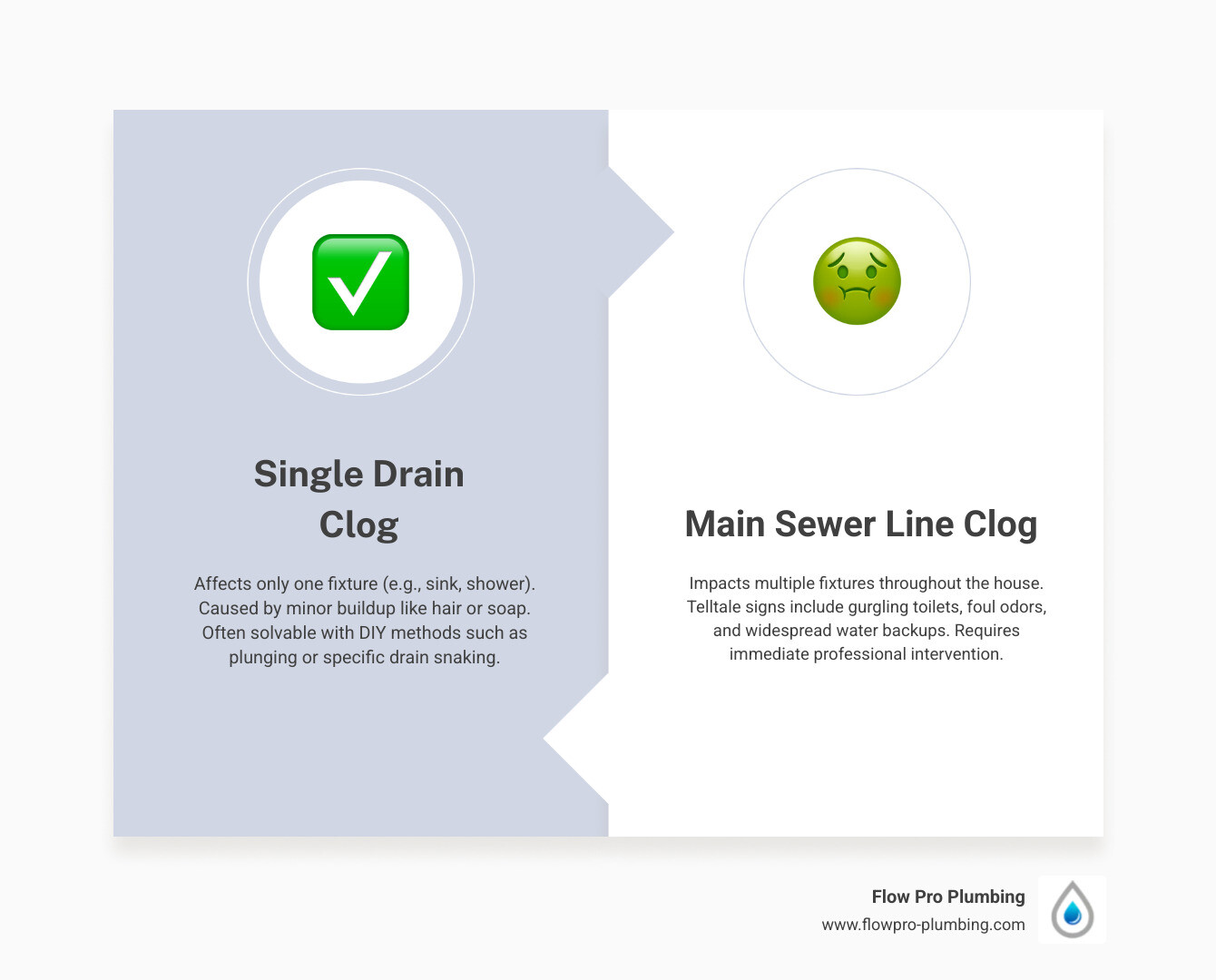
The key is recognizing the difference between a simple drain clog and a main sewer line problem. While a single slow drain might just need a plunger, multiple fixtures backing up simultaneously signals a much bigger issue that can lead to costly property damage and health hazards if left untreated.
As Jesse Delgado, owner of Flow Pro Plumbing in Brentwood, California, I’ve helped countless East Bay homeowners tackle everything from minor blockages to major sewer line emergencies over my decade-plus career in the plumbing industry. My experience has taught me that understanding clogged sewer line solutions – from simple preventive measures to advanced professional techniques – can save homeowners both money and stress when these urgent situations arise.
Is It Your Main Sewer Line? Telltale Signs and Diagnosis
When you flush the toilet and hear a gurgling sound from the shower, or you’re washing dishes and water backs up in a bathroom sink, these aren’t random plumbing quirks. They’re signs of a much bigger problem.
A single slow drain is a localized issue, but when multiple fixtures start acting up at the same time, you’re likely looking at a main sewer line clog. Think of your main sewer line as your home’s plumbing superhighway. Every toilet flush, shower, and load of laundry flows through this main artery. When it gets blocked, wastewater has nowhere to go except back into your home.
Signs of a Main Sewer Line Clog
Recognizing a main sewer line clog early can save you from a messy, expensive disaster. Here’s what to watch for:
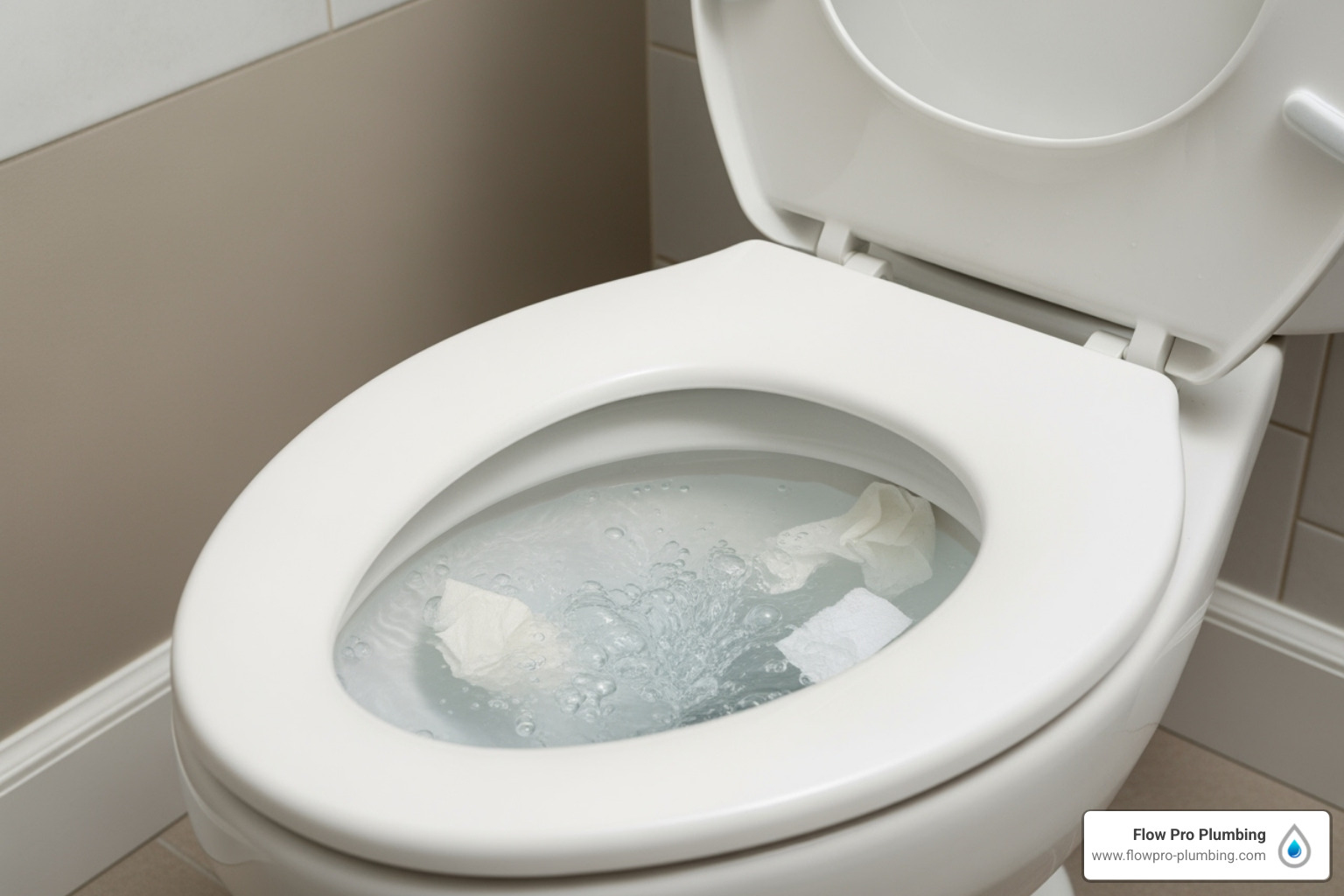
Multiple drains backing up simultaneously is the biggest red flag. If flushing a toilet causes water to appear in your shower, your main line is crying for help.
Gurgling sounds from toilets and drains happen when trapped air tries to squeeze past a blockage. It’s a sign your plumbing system is struggling.
Foul sewage odors inside or around your home signal that wastewater isn’t flowing away as it should, causing gases to back up through drains.
Raw sewage backing up into your fixtures is the most serious warning sign. This is a plumbing emergency that requires immediate professional attention.
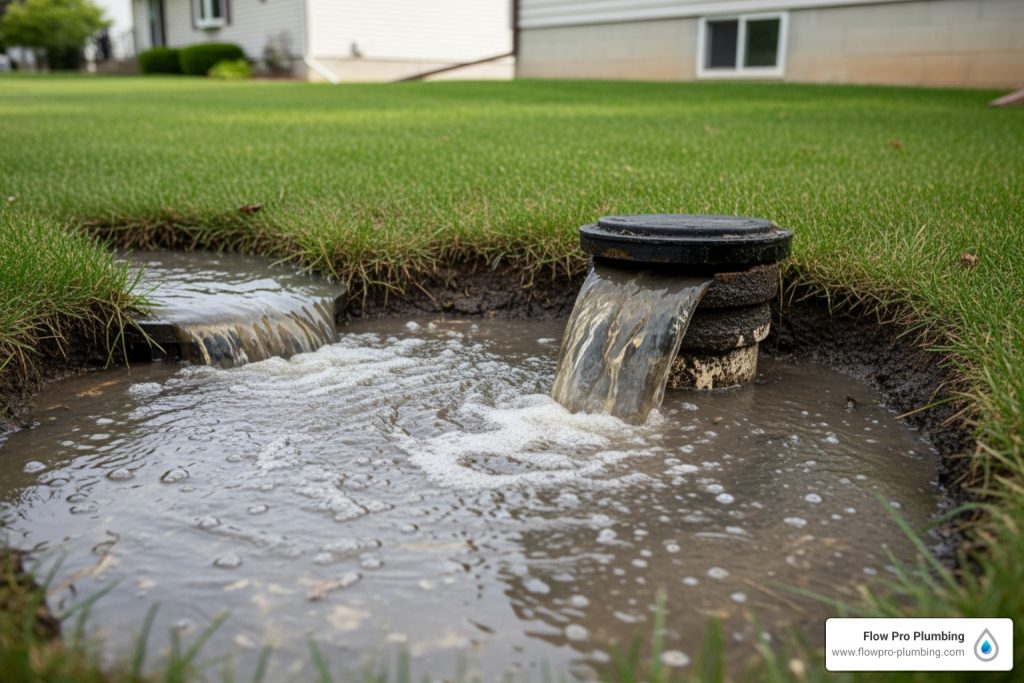
Water pooling in your yard, especially unusually green or soggy patches, might indicate a leaking or severely clogged sewer line underground.
The Dangers of a Delayed Response
Hoping a sewer line problem will fix itself is a mistake. Main sewer line clogs only get worse, and the consequences can be devastating.
Health hazards are a top concern. Raw sewage contains harmful bacteria, viruses, and parasites that can make your family seriously ill, especially children and the elderly.
Property damage occurs quickly when sewage backs up. Contaminated water can ruin flooring, furniture, and personal belongings, destroying irreplaceable items like photo albums and important documents.
Mold growth often follows water damage. The moisture and organic matter create perfect conditions for toxic mold, and remediation costs can be substantial.
Foundation issues can develop from persistent leaks that saturate the soil around your home’s foundation, potentially causing settling, cracking, and expensive structural damage.
The bottom line? Clogged sewer line solutions work best when applied quickly, before a manageable problem becomes a major disaster. For comprehensive information about protecting your home’s plumbing system, check out our guide on Essential Sewer Repair Services.
What’s Causing the Blockage? Common Culprits Behind Sewer Clogs
Once you’ve spotted the signs of a main sewer line clog, the next step is identifying the cause. Knowing the culprit is key to finding the best clogged sewer line solutions. The problem is usually a mix of what goes down the drains and what’s happening underground.
A notorious cause is grease and fat buildup. While liquid when warm, cooking oil and fat solidify as they cool inside your pipes. This sticky mess clings to the pipe walls, trapping other debris and eventually causing a complete blockage.
Then there are “flushable” wipes and other foreign objects. Unlike toilet paper, these wipes don’t break down easily and can clump together to form a solid barrier. Other items like paper towels, dental floss, and cotton swabs also contribute to blockages. A simple rule: if it’s not human waste or toilet paper, don’t flush it.
Sometimes, the problem is the pipe itself. Sagging sewer lines, or a “bellied pipe,” can occur if the ground shifts. This creates a dip where waste collects, leading to frequent clogs.
Damaged or broken pipes are also common, especially in older homes with clay or cast iron lines. Cracks from age or shifting soil allow dirt and debris to enter the pipe, causing blockages. In worst-case scenarios, a pipe can collapse entirely.
Finally, pipe scale accumulation from hard water can narrow your pipes. Minerals build up on the pipe walls, creating a rough surface that makes it easier for other debris to stick and form a clog.
For more helpful tips on what not to put down your drains, take a look at our guide on Why You Shouldnt Put Food in Garbage Disposal. It might surprise you!
The #1 Natural Offender: Tree Root Intrusion
Arguably the biggest natural villain for sewer clogs is tree root intrusion. If you have mature trees, their roots are constantly seeking water and nutrients, and your sewer pipes are a prime target.

Roots can enter through the tiniest crack or a loose joint. Once inside, they grow into a dense, tangled network that acts like a net, catching everything that flows by. This quickly leads to a tough blockage. Homes with older clay pipes are especially vulnerable, as their joints weaken over time.
When tree roots are the problem, DIY solutions won’t work. Effective clogged sewer line solutions for root intrusion require a professional touch, which usually involves:
- Mechanical Root Cutting: Our plumbers use specialized augers with cutting blades to slice through the roots and clear the immediate blockage.
- Pipe Repair or Replacement: For recurring root problems or severe pipe damage, a permanent fix may be needed. This could involve repairing a section or replacing part of the line, often using trenchless methods to minimize disruption to your yard.
To dive deeper into how we tackle stubborn main sewer line issues, including those pesky root problems, visit our dedicated page on Sewer Main Line Repair. We’re here to help keep your home’s plumbing running smoothly!
DIY vs. Professional: Clogged Sewer Line Solutions You Can Try
When you see the warning signs of a sewer clog, you have to decide: tackle it yourself or call a professional? While some clogged sewer line solutions are DIY-friendly, others require professional equipment and expertise. Knowing the difference is key to avoiding a more expensive disaster.
A safe DIY approach can be effective if you have easy access to your sewer cleanout. The first step is locating your sewer cleanout—usually a capped pipe (3-4 inches wide) near your home’s foundation, in the basement, or in the yard. If you can’t find it, you’ll likely need professional help.
Safe DIY Clogged Sewer Line Solutions
If you’ve found your cleanout and feel confident, here are some safe DIY methods. Always wear heavy-duty gloves and safety glasses.
Enzyme cleaners are the gentlest option. They use beneficial bacteria to eat away at organic matter like grease and hair. They work slowly (often overnight) but are safe for your pipes and the environment.
Using a plumbing snake or auger is often the most effective DIY approach. You can rent professional-grade equipment from home improvement stores. Place a bucket under the cleanout to catch wastewater, then feed the auger cable into the pipe until you feel resistance from the clog. Work the snake according to the instructions until the blockage breaks up. Push a little further to clear any remaining debris. For detailed guidance, see our guide on How to Use a Drain Snake on Clogged Pipes.
These DIY methods address the immediate blockage but don’t solve underlying issues like damaged pipes. For more preventive strategies, our article on How to Keep Your Home Clog-Free offers valuable insights.
When to Call a Professional Plumber
Knowing when to step back is crucial. I’ve seen many well-intentioned homeowners make a problem worse by pushing their DIY limits. Call a professional if:
Your DIY attempts fail or the clog returns quickly. This indicates a deeper problem, like a severe blockage or pipe damage that requires professional diagnosis.
You suspect pipe damage. Broken pipes, sagging lines, or extensive root intrusion require specialized diagnostic tools like a sewer camera to identify the exact problem.
There is no visible cleanout. Attempting to access the line without proper knowledge can lead to costly mistakes.
You’re uncomfortable with the process. If you lack the right tools or simply prefer not to deal with raw sewage, calling for help is a smart choice.
There is severe water backup. Sewage overflowing into your home is an emergency. The health risks and potential for property damage are too high for a DIY approach.
You have recurring clogs. This signals a systemic problem that needs a professional to identify and address the root cause.
Sometimes the most cost-effective approach is calling an expert from the start. For insights into preventing these issues, explore our resources on how to Avoid Common Sewer Problems.
The Professional’s Toolkit: How Plumbers Tackle Tough Clogs
When DIY methods fail, professional plumbers use a specialized toolkit to diagnose and clear stubborn main sewer line clogs. This involves high-tech diagnostics and powerful clearing equipment.
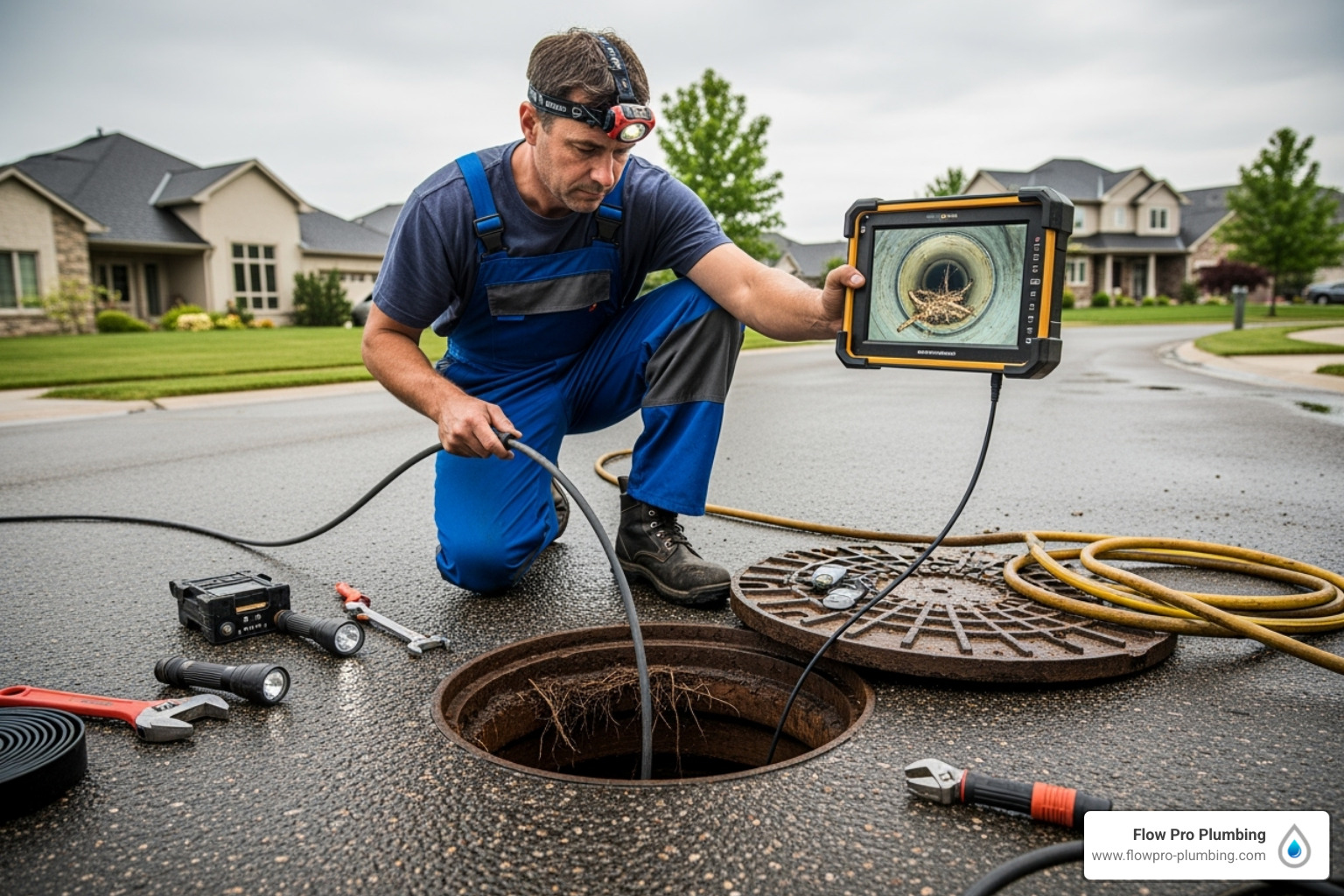
Our approach begins with a thorough assessment to understand the clog’s nature and location.
Advanced Professional Clogged Sewer Line Solutions
- Sewer Camera Inspection: This is our first and most crucial step. A high-resolution camera is inserted into your sewer line, transmitting real-time video that lets us see the exact cause and location of the blockage—be it roots, grease, or a broken pipe. This precision diagnostic tool helps us pinpoint the problem without guesswork. Learn more on our Sewer Camera Inspection page.
- Hydrostatic Testing: To check for leaks, we may perform a hydrostatic test. This involves plugging the sewer line and filling it with water to check for pressure drops that indicate a leak.
- Smoke Testing: We can detect elusive leaks or improper connections by introducing harmless smoke into the sewer system and watching where it escapes.
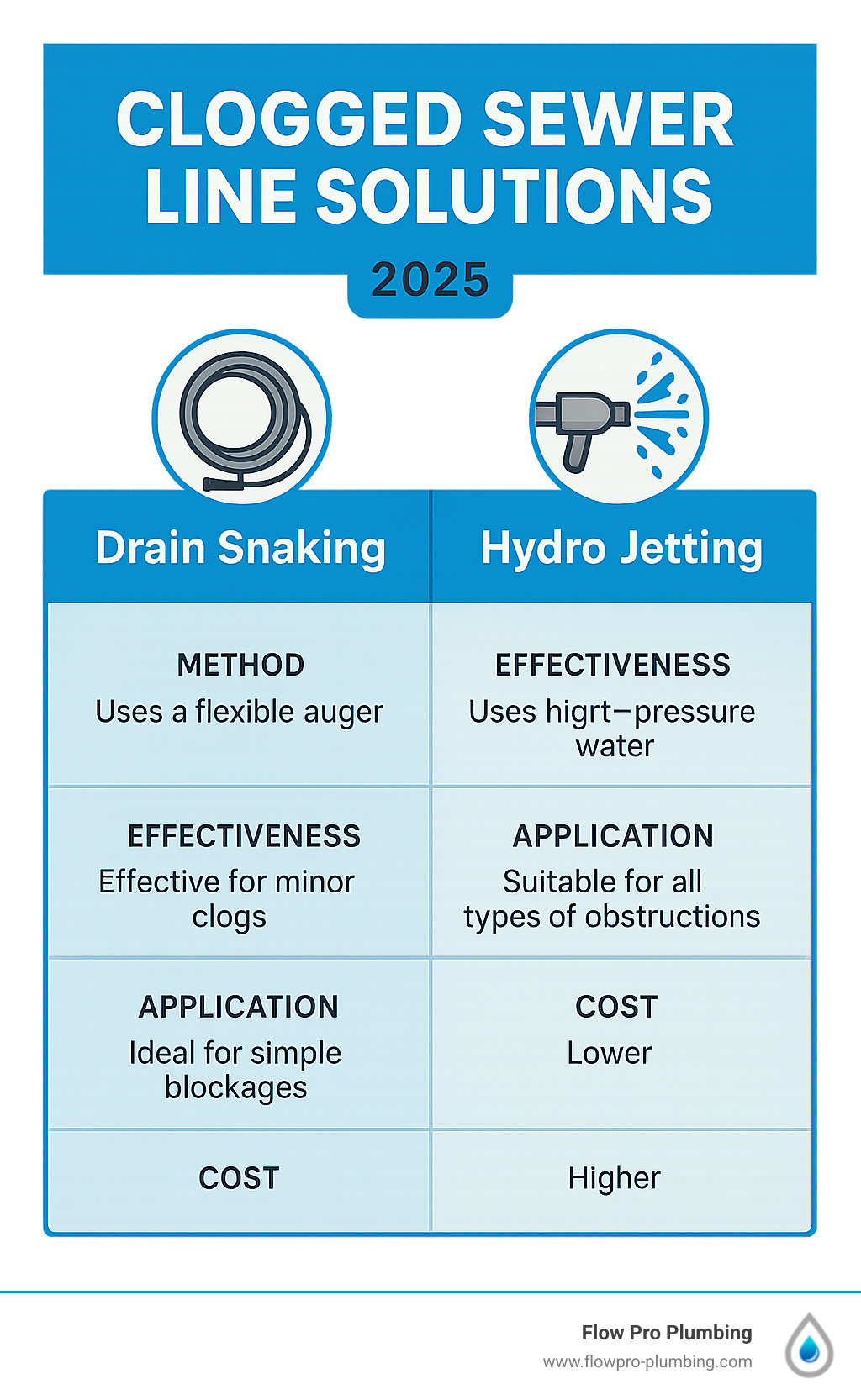
- High-Pressure Hydro Jetting: Once a clog is identified, hydro jetting is one of our most powerful clogged sewer line solutions. This technique uses highly pressurized water (up to 4,000 PSI) to blast away tough blockages like tree roots and hardened grease. It not only clears the clog but also scours the pipe walls clean, restoring flow. Find out more on our What Does Hydro Jetting Do? page.
- Mechanical Drain Snaking (Professional Grade): Our drain snakes are more robust and powerful than DIY versions. They can penetrate deeper and use specialized cutting heads to break through severe clogs and roots.
Here’s a quick comparison of two common professional clearing methods:
- Sewer Line Repair or Replacement: If the camera reveals significant pipe damage (cracks, collapse), we may recommend repair or replacement. Modern solutions often include trenchless sewer repair, which minimizes digging and disruption.
Understanding the Costs
The cost of professional clogged sewer line solutions varies based on the clog’s severity, the methods used, and the need for repairs. While an assessment is required for an exact price, here is a general overview:
- Initial Inspection: A professional camera inspection typically costs a few hundred dollars.
- Clog Clearing (Snaking): Basic main line snaking is generally less than a few hundred dollars.
- Clog Clearing (Hydro-Jetting): This more powerful method typically ranges from several hundred dollars.
- Overall Clog Removal: Total costs can range into the thousands for complex jobs.
- Pipe Repair or Replacement: This is the most significant expense, potentially costing hundreds to thousands per linear foot, depending on the job’s complexity. Full replacements can range from a few thousand to over ten thousand dollars.
Factors affecting the price include the clog’s nature and location, pipe condition, and the required method. Advanced techniques like trenchless sewer repair can be a higher upfront investment but may save money long-term by avoiding excavation costs. Learn more about the Benefits of Trenchless Sewer Repair.
Preventing Future Headaches: Proactive Sewer Line Maintenance
The smartest clogged sewer line solutions are the ones that stop problems before they start! Think of it this way – would you rather spend a few minutes each week on simple maintenance, or deal with raw sewage backing up into your home at 2 AM on a Sunday? I think we both know the answer to that one.
After helping countless Brentwood homeowners through sewer line emergencies over the years, I’ve learned that most of these messy situations could have been avoided with some basic preventive care. The good news? Keeping your sewer line healthy doesn’t require a plumbing degree or expensive equipment.
Being mindful of what goes down your drains is your first and most powerful line of defense. Your toilet isn’t a trash can – it should only see human waste and toilet paper. Those “flushable” wipes we talked about earlier? They’re about as flushable as a sock. Feminine hygiene products, dental floss, cotton balls, and paper towels all belong in the garbage, not your plumbing.
In the kitchen, never pour cooking grease, oils, or fats down the drain. I know it seems harmless when it’s liquid, but once it cools in your pipes, it becomes a sticky trap for everything else flowing through. Let it solidify in the pan, then scrape it into the trash. Your pipes will thank you! For more kitchen drain wisdom, check out our guide on Why You Shouldnt Put Food in Garbage Disposal.
Installing simple drain strainers throughout your home is like having tiny security guards at every drain. These inexpensive little mesh screens catch hair, food particles, and debris before they can travel down to cause trouble in your main line. It’s amazing how much stuff they collect!
Regular light-duty drain cleaning keeps things flowing smoothly. A weekly flush with hot water helps clear minor buildup, while a monthly treatment with enzyme cleaners uses natural bacteria to break down organic matter without harsh chemicals. These products work slowly but effectively, and they’re much gentler on your pipes than chemical drain cleaners.
If you have mature trees near your home, managing your landscaping becomes crucial. Those beautiful oak trees that provide shade in summer can send roots dozens of feet underground, seeking the moisture in your sewer line. Consider having a professional assess whether your trees pose a risk to your plumbing.
Here’s the game-changer: scheduling annual sewer line inspections. I can’t stress this enough – having a professional plumber run a camera through your main line once a year is like getting a yearly physical for your home’s plumbing. We can spot developing clogs, small cracks, or early root intrusion before they turn into expensive emergencies. It’s so much easier (and cheaper!) to address these issues when they’re small.
Regular maintenance truly prevents most sewer line problems. When you combine smart habits with professional oversight, you’re giving yourself the best possible protection against those middle-of-the-night plumbing disasters.
For additional preventive strategies and expert tips, explore these Tips for regular maintenance and visit our comprehensive guide on Preventing Sewer Blockages.
Conclusion
Well, we’ve certainly taken a deep dive into the messy world of clogged sewer line solutions today! We started by exploring those undeniable warning signs – like that alarming gurgling sound from your toilet or when multiple drains back up at once. These are your home’s clear distress signals.
We then uncovered the usual suspects behind these frustrating blockages. From the persistent problem of tree roots seeking moisture in your pipes, to the sneaky buildup of grease and fat, and even those misleading “flushable” wipes that cause so much trouble. Understanding these causes is the first step in finding the right fix.
We also walked through the different approaches to tackling a clog. You learned when a little DIY plumbing snake might do the trick, and more importantly, when it’s time to step back and call in the professionals. Ignoring a main sewer line clog is a gamble you don’t want to take. The longer it’s left, the greater the risk of serious property damage, costly repairs, and even health hazards. Prompt action truly is paramount.
For homeowners in Brentwood, CA, and the surrounding Contra Costa County areas – including Oakley, Antioch, Findly Bay, Pittsburg, Bay Point, Concord, Byron, Bethel Island, Clayton, Walnut Creek, Pleasant Hill, and Knightsen – remember that Flow Pro Plumbing is here to help. Our expert team is equipped with advanced tools like state-of-the-art sewer cameras for precise diagnosis and powerful hydro-jetting to blast away even the toughest blockages. We’re ready to provide reliable diagnostics and effective, lasting clogged sewer line solutions.
Don’t let a stubborn sewer clog hold your home hostage. If you’re seeing those telltale signs, or if your DIY efforts just aren’t cutting it, please don’t hesitate to reach out. We’re committed to getting your home’s plumbing system flowing smoothly and efficiently once again.
Schedule Service with us today. Let Flow Pro Plumbing take the stress out of your sewer line concerns with the professionalism and care you deserve.