

Why Clogged Sinks Happen to Everyone
Fix clogged sink problems are one of the most common plumbing headaches homeowners face. Whether it’s in the kitchen or bathroom, a slow-draining sink is always frustrating and inconvenient.
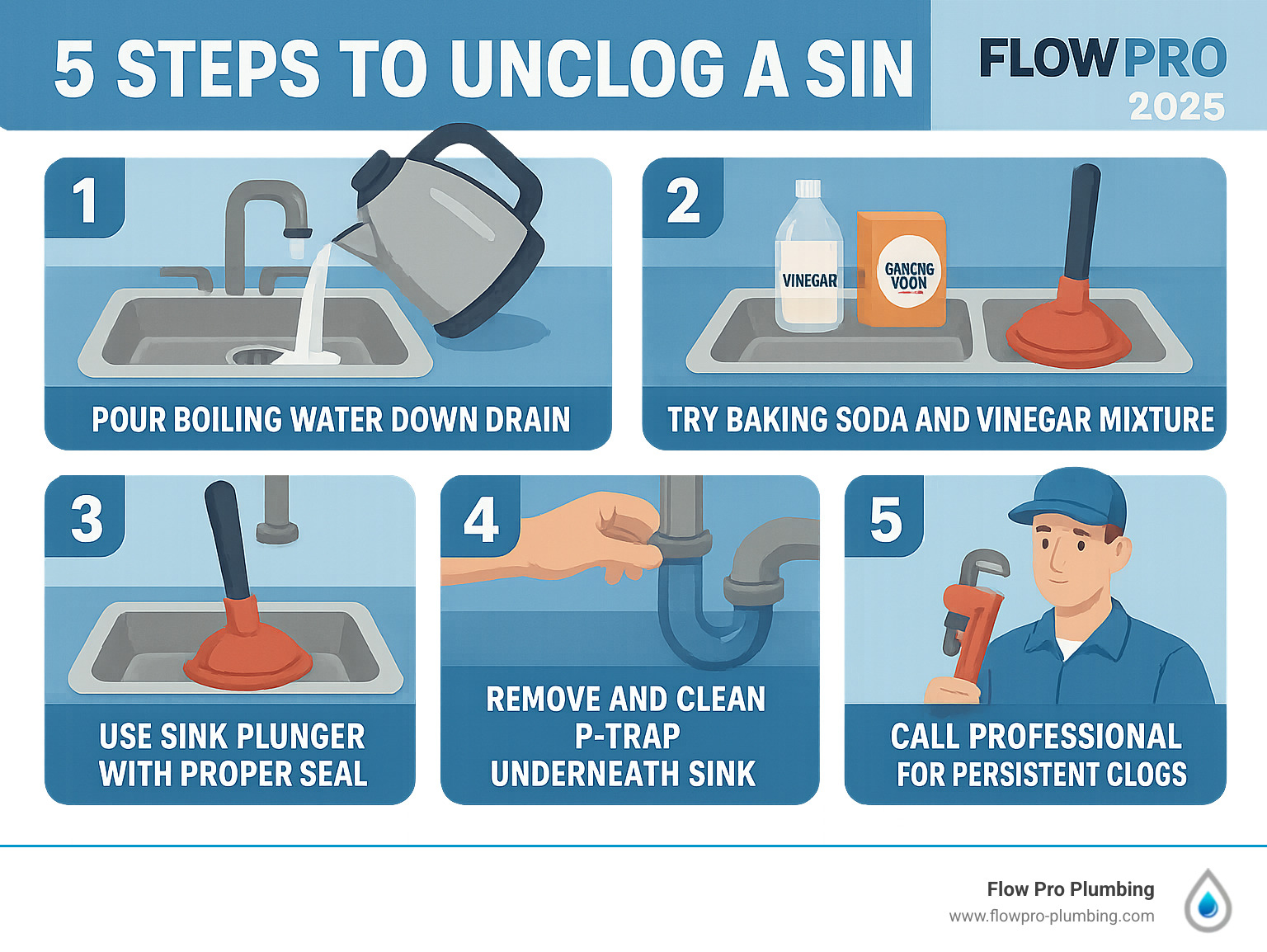
Quick Solutions to Fix a Clogged Sink:
- Boiling Water – Pour slowly down the drain to dissolve grease and soap buildup
- Baking Soda + Vinegar – Natural fizzing action breaks apart clogs
- Plunger – Create suction to dislodge stubborn blockages
- Clean the P-Trap – Remove and clear the curved pipe under your sink
- Call a Professional – For recurring clogs or multiple blocked drains
The good news is that most clogs can be cleared with simple DIY methods, saving you a call to the plumber. Plus, a few changes to your routine can prevent future problems.
However, knowing when to tackle the problem yourself versus when to call for backup is key to saving time and money in the long run.
I’m Jesse Delgado, owner of Flow Pro Plumbing. As a licensed plumber with over a decade of experience helping East Bay homeowners fix clogged sink issues, I’ve seen every type of clog and know which solutions work best.
First, Understand the Enemy: Common Causes of Sink Clogs
To effectively fix clogged sink problems, you first need to understand the cause. This helps you choose the right solution and avoid making the problem worse.
In the kitchen, the main culprits are:
- Grease and oil: Poured down the drain as a liquid, they cool and solidify inside your pipes. This creates a sticky coating that traps other debris, forming stubborn blockages.
- Food particles: Small bits of food like coffee grounds, rice, and pasta get trapped by grease and build up over time. Coffee grounds are especially problematic as they don’t break down and clump together.
Bathroom sinks face different challenges:
- Hair: This is the primary cause of bathroom clogs. Strands of hair weave together into mats that act like a net, catching soap and other debris.
- Soap scum: The waxy residue from bar soap combines with minerals in your water to create a film on pipes. This coating helps hair stick, turning small blockages into major ones.
- Mineral buildup: Hard water can cause minerals to build up over time, narrowing the pipes and making clogs more likely.
Occasionally, foreign objects like jewelry or cotton swabs can fall down any drain, creating an instant blockage. Once you know what you’re dealing with, you can choose the best method to clear the clog.
Start Simple: Easy DIY Methods to Fix a Clogged Sink
When you need to fix clogged sink issues, start with natural remedies from your pantry. They are gentler on your pipes and the environment than harsh chemical drain cleaners.
We don’t recommend chemical cleaners because they can corrode pipes, create toxic fumes, and are dangerous around children and pets. Never mix different chemical cleaners, as this can create deadly gases. As plumbers, we’ve seen too much damage from these products. The natural methods below are safer and often just as effective.
The Boiling Water Flush
This method is highly effective for grease clogs and soap buildup. After removing any standing water, heat a pot of water to boiling. Pour it slowly down the drain in stages, allowing the heat time to dissolve the greasy buildup.
Important: Use caution with PVC pipes and porcelain sinks, as extremely hot water can cause damage. If you’re unsure, let the water cool slightly before pouring.
The Baking Soda and Vinegar Volcano
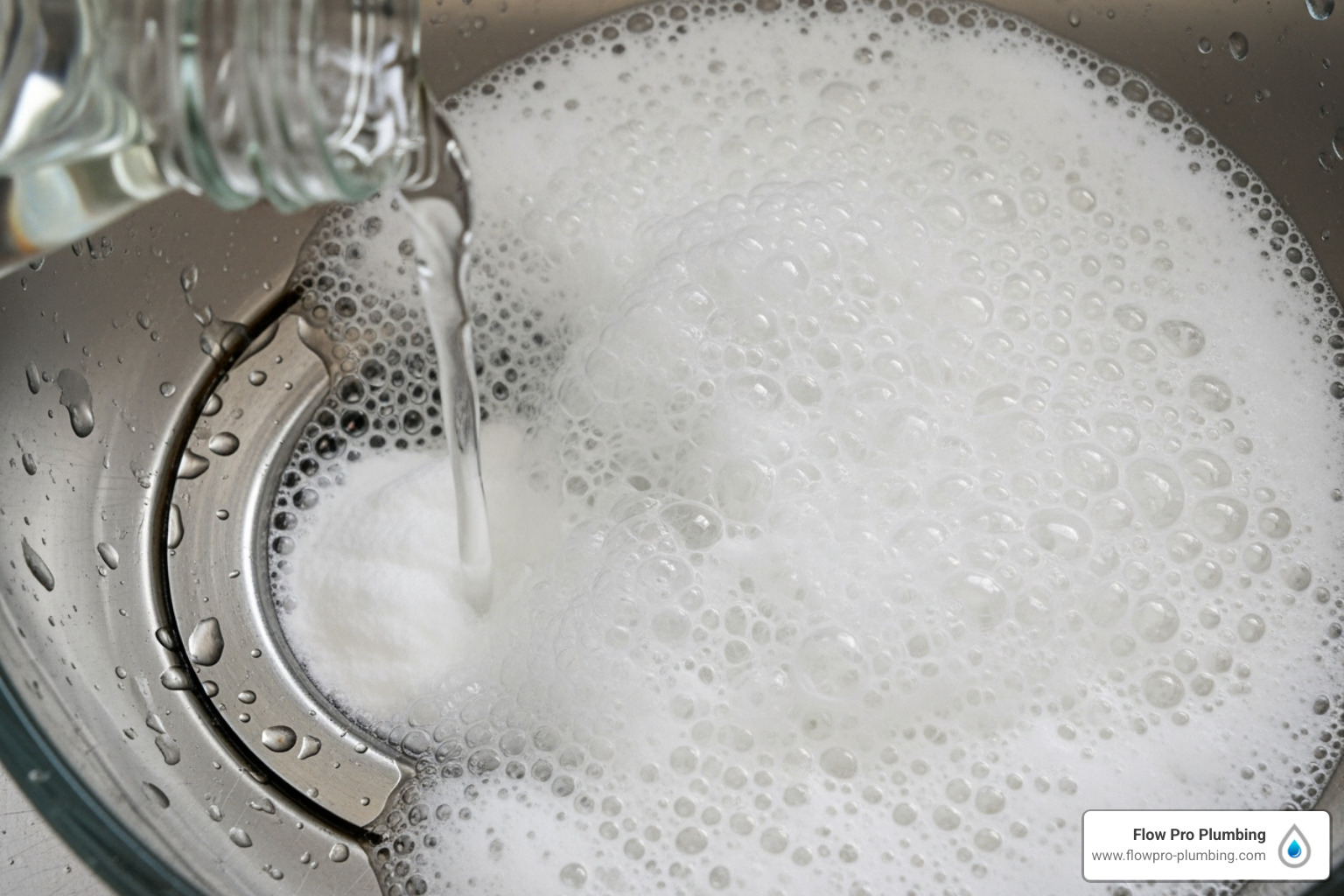
This natural combination uses a fizzing reaction to break apart clogs. First, clear any standing water. Pour about one cup of baking soda down the drain, followed by one cup of white vinegar.
Immediately plug the drain with a stopper to trap the fizzing action inside the pipe. Let it sit for at least 30 minutes (or overnight for tough clogs). Finally, flush the drain with hot water to clear the loosened debris. This is also a great monthly maintenance trick. For more tips, see our guide on regular drain cleaning.
The Salt and Baking Soda Scrub
For an overnight solution that tackles clogs and odors, try this method. The salt provides abrasive action to scrub pipe interiors.
Mix one cup of baking soda with a half cup of table salt and pour it down the drain. Let it sit overnight. In the morning, flush with two cups of hot water. This combination is excellent for breaking down grease and deodorizing drains.
Level Up Your Tools: Mechanical Fixes for Tougher Clogs
When household remedies aren’t enough to fix clogged sink problems, it’s time to use mechanical tools. These methods physically dislodge or break up blockages like hair, hardened soap scum, or foreign objects.
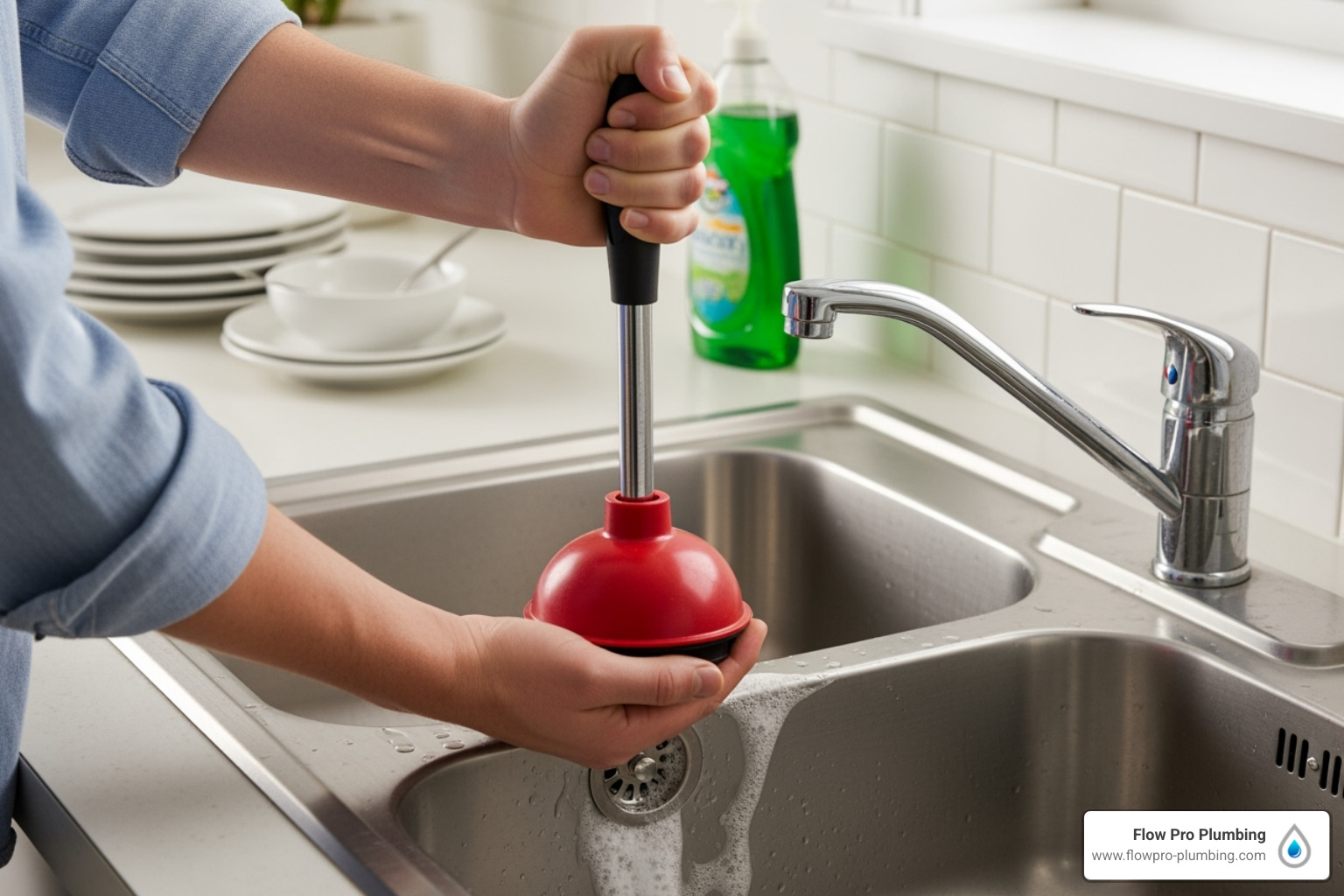
How to fix a clogged sink with a Plunger
Using the right plunger is key. Sink plungers have a flat rim for a proper seal, unlike toilet plungers. Leave enough water in the sink to cover the plunger’s cup.
To create maximum pressure, seal off other openings. Plug the second drain in a double sink and the overflow hole in a bathroom sink. Place the plunger firmly over the drain to create a seal, then plunge vigorously for 20-30 seconds. The alternating pressure and suction should dislodge the clog. Repeat a few times if necessary.
How to fix a clogged sink by Cleaning the P-Trap
The curved pipe under your sink is the P-trap. Its U-shape holds water to block sewer gas, but this curve also easily traps debris, causing clogs.
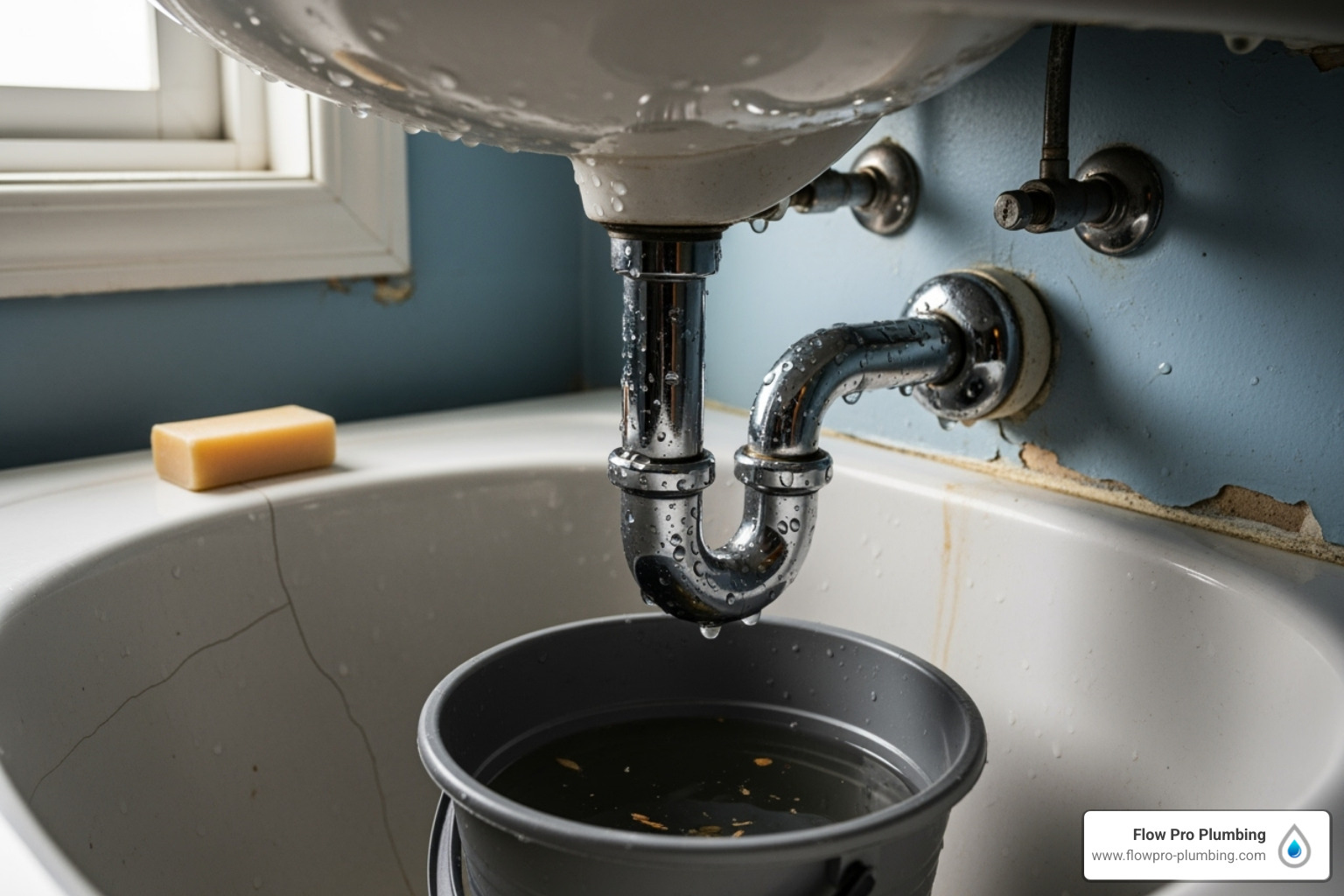
Place a bucket under the P-trap to catch water. Use an adjustable wrench to loosen the slip nuts on both ends of the trap. Once loose, wiggle the P-trap free and empty its contents into the bucket. Clean out any gunk, hair, or soap scum from the trap. Before reassembling, check the pipes leading to the wall for any visible blockages.
Reassembly is crucial: Hand-tighten the slip nuts, then give them a quarter-turn with your wrench. Don’t over-tighten. Run water to check for leaks. For more tips, see this guide: How to Unclog a Sink: 7 Easy Tips to Try.
Taming the Drain Snake
For clogs deep in the pipes, use a drain snake (or plumbing auger). This flexible tool can reach far into your plumbing to break up or retrieve blockages.
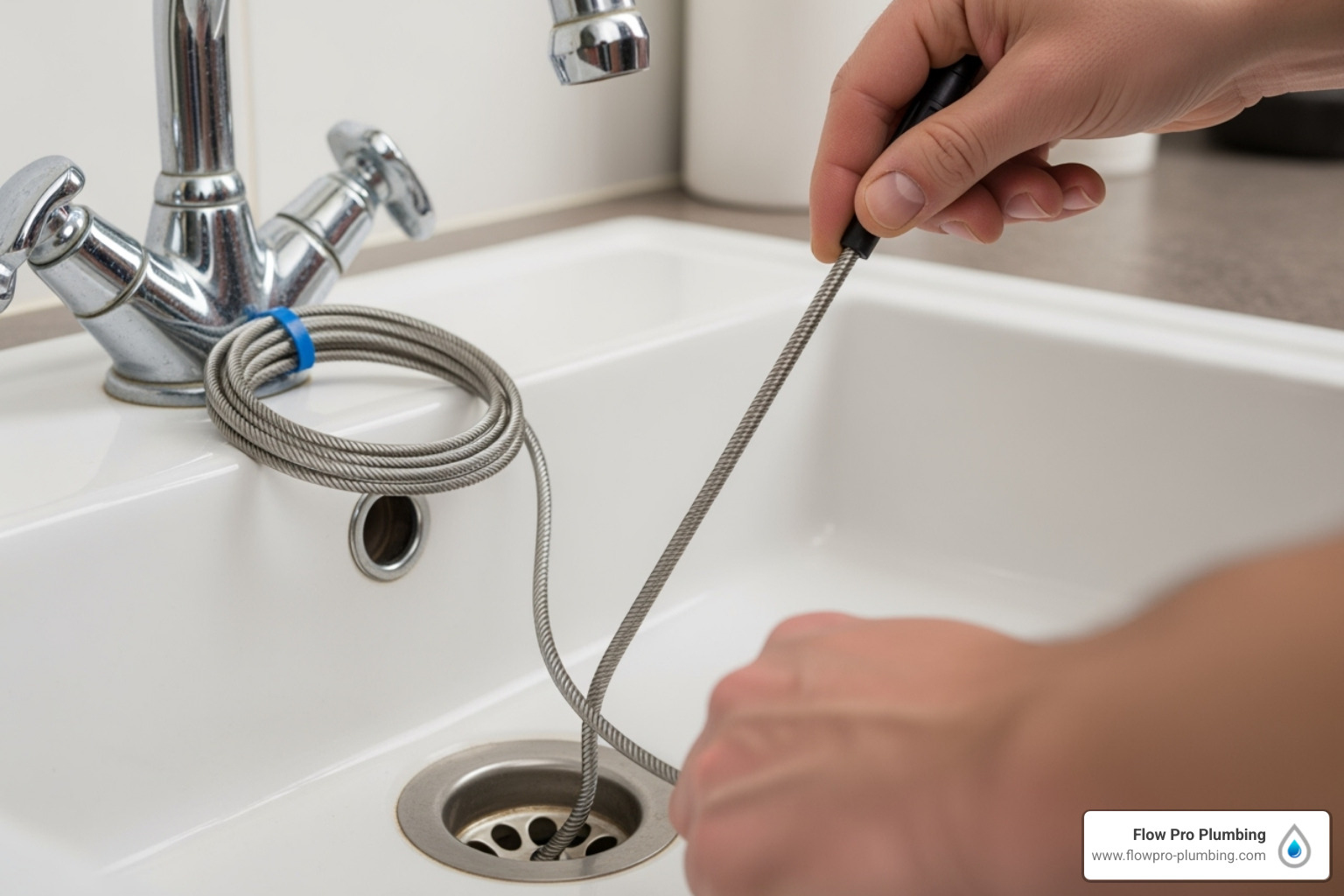
A handheld drum auger is a flexible metal cable with a hook on the end. You feed it into the drain until it hits the clog, then crank a handle to rotate the cable, which breaks up or hooks the blockage.
To use it, remove the P-trap and feed the snake into the wall pipe. Feed the cable slowly until you feel resistance. Lock the cable and crank the handle clockwise to rotate the auger, allowing it to break through or grab the obstruction. Pull the snake back to extract the clog, then flush the drain with hot water.
For more detailed techniques, check out our guide to Master the Drain Snake Technique.
Prevention is the Best Medicine: Keeping Your Drains Clear
Preventing clogs is much easier than having to fix clogged sink issues later. By managing what goes down your drains with a few simple habits, you can avoid most blockages.

Follow these tips to keep your drains flowing freely:
- Use Drain Strainers: Install mesh strainers in all sinks and showers to catch hair and food particles. Clean them regularly.
- Proper Grease Disposal: Never pour grease, oil, or fat down the drain. Pour it into a container, let it solidify, and throw it in the trash.
- Mind Your Food Scraps: Scrape food into the trash before rinsing plates. Avoid putting fibrous vegetables, coffee grounds, pasta, or rice down the garbage disposal.
- Flush with Hot Water: Run hot water for 30 seconds after using the kitchen sink to flush away grease and debris.
- Regular Maintenance Flushes: Once a month, use the baking soda and vinegar method to break down minor buildup and keep drains fresh.
- Clean Sink Stoppers: Regularly pull out and clean bathroom sink stoppers, where hair and soap scum collect.
These habits will help you maintain a clog-free home. For more advice, check out our Tips for Preventing Sewer Blockages.
When to Throw in the Towel and Call a Professional
Despite your best DIY efforts to fix clogged sink problems, some jobs require a professional. Pushing your limits can turn a simple clog into a costly problem. Knowing when to call for help saves time and money.
Here are the signs you need to call a plumber:
- Recurring clogs: If the same sink clogs every few weeks, there’s likely a deeper issue like buildup in the main line, damaged pipes, or tree roots.
- Multiple drains clogged: If several drains are slow or backed up at once, it points to a main sewer line blockage that requires professional equipment.
- Persistent foul odors: Lingering bad smells can indicate a serious blockage, P-trap problems, or sewer line issues.
- Slow drains after all methods fail: If you’ve tried everything and the drain is still slow, the clog is likely too deep or stubborn for DIY tools.
- Water backing up: If using one fixture causes water to back up in another (e.g., flushing the toilet makes the shower gurgle), you have a main line problem that needs immediate attention.
At Flow Pro Plumbing, we use advanced tools like Hydro Jetting to blast away years of buildup with high-pressure water. We also use camera inspections to pinpoint the exact cause of the problem. If you’re unsure what to do, we can help you figure out What is the best method for cleaning drains? for your situation.
Frequently Asked Questions about Fixing Clogged Sinks
Here are answers to common questions we get from homeowners in Contra Costa County trying to fix clogged sink problems.
Are chemical drain cleaners safe to use?
We strongly advise against using chemical drain cleaners as a first resort. While tempting, they have serious downsides:
- Pipe damage: The corrosive chemicals can eat away at your pipes (especially older or PVC ones), leading to expensive repairs.
- Toxic fumes: The vapors are harmful to your lungs, particularly in poorly ventilated spaces.
- Safety hazards: They can cause severe burns and are dangerous around children and pets.
- Environmental impact: These harsh chemicals end up in our waterways.
Never mix chemical cleaners with each other or with natural ingredients like vinegar. The natural methods in this guide are a much safer starting point.
How often should I clean my drains to prevent clogs?
Monthly cleaning is ideal for most drains. A simple baking soda and vinegar treatment once a month is a gentle, effective way to keep drains fresh and clear of minor buildup. For high-use kitchen sinks, a quick hot water flush for 30 seconds after washing dishes helps prevent grease from sticking.
What’s the difference between a kitchen sink clog and a bathroom sink clog?
The location of the clog often reveals the cause, which helps determine the best way to fix clogged sink issues.
- Kitchen clogs are typically caused by grease and food. Grease solidifies in pipes and traps food particles. Hot water is effective because it melts the grease.
- Bathroom clogs are usually from hair and soap scum. Hair forms mats held together by soap residue. These often require mechanical removal with a drain snake or by cleaning the pop-up stopper.
Knowing the cause helps you choose the right solution: heat for grease, and physical removal for hair.
Get Your Sink Flowing Freely Again
This guide has equipped you with a toolkit to fix clogged sink problems, from simple flushes to using a drain snake. These methods can handle most common blockages.
The secret to avoiding future headaches is prevention. Small daily habits like using drain strainers and properly disposing of grease can save you from dealing with stubborn clogs.
However, some jobs are best left to professionals, especially with recurring clogs, multiple blocked drains, or persistent sewer smells. When DIY methods aren’t enough, it’s time to call for backup.
At Flow Pro Plumbing, our experienced team uses advanced tools like hydro jetting and camera inspections to solve any drainage problem, big or small. We’ve seen it all and know how to get your water flowing freely again.
Don’t let a stubborn clog ruin your day. If you’re in Contra Costa County, including Brentwood, Oakley, Antioch, or the surrounding communities, we’re here to help with superior service.
Ready to get back to worry-free sinks? Contact our Antioch plumbers for expert help and let us handle the tough stuff.