
Why Bathroom Drain Cleaning is Essential for Every Home
Bathroom drain cleaning becomes necessary when you notice slow-draining water, gurgling sounds, or unpleasant odors coming from your sink or shower. Here are the most effective methods to restore proper drainage:
Quick Solutions for Clogged Bathroom Drains:
- Boiling water flush – Pour hot water down the drain to dissolve soap scum
- Baking soda and vinegar – Mix 1 cup each, let sit for 1 hour, then flush with hot water
- Manual removal – Use a drain snake or hair removal tool to pull out hair clogs
- Plunging – Create suction to dislodge blockages
- Professional cleaning – Call a plumber for recurring or severe clogs
Nothing ruins the clean feeling of your bathroom quite like standing water in your sink or that musty smell wafting up from the drain. You’re definitely not alone in this struggle – research shows that 75% of homeowners experience a clogged drain at least once a year.
The good news? Most bathroom drain problems are caused by simple buildups of hair, soap scum, and everyday grooming products that you can tackle yourself with the right approach.
Hair and soap scum are the usual suspects, creating a sticky mess that traps more debris over time. When left untreated, these clogs can lead to more serious plumbing issues and costly repairs. The black sludge you might notice is actually biofilm – a combination of bacteria, mold, soap residue, and organic matter.
I’m Jesse Delgado, a licensed plumber with over ten years of experience helping East Bay homeowners solve their toughest plumbing challenges, including bathroom drain cleaning issues that range from simple hair clogs to complex sewer line backups. Through my work at Flow Pro Plumbing, I’ve seen how proper drain maintenance can save homeowners hundreds of dollars in emergency repairs.
What’s Clogging Your Drain? Common Culprits and Telltale Signs
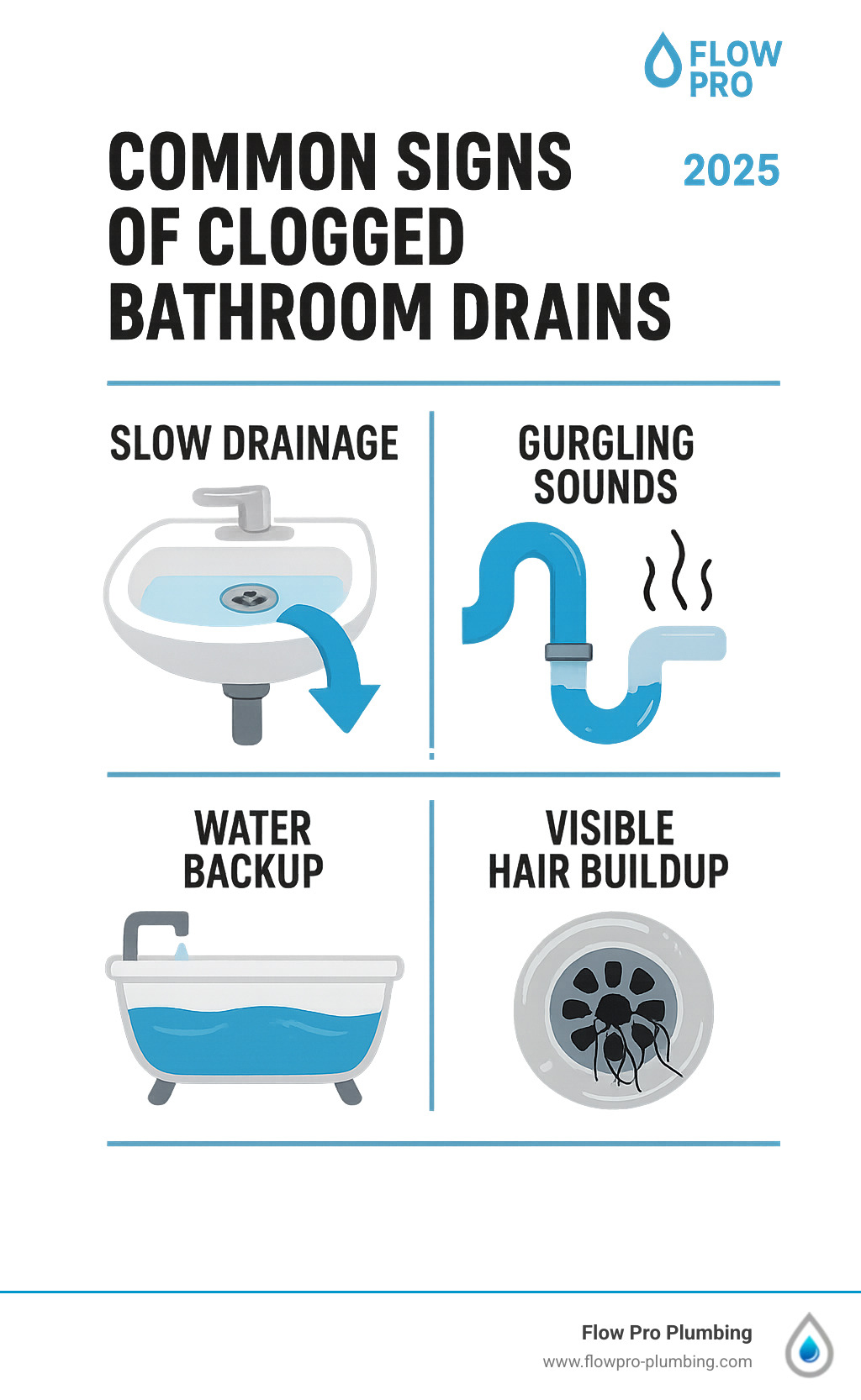
A stubborn, slow-draining sink is trying to tell you something important. Most bathroom drain cleaning issues start small, with hair and soap residue building up over time, eventually turning your morning routine into a frustrating ordeal.
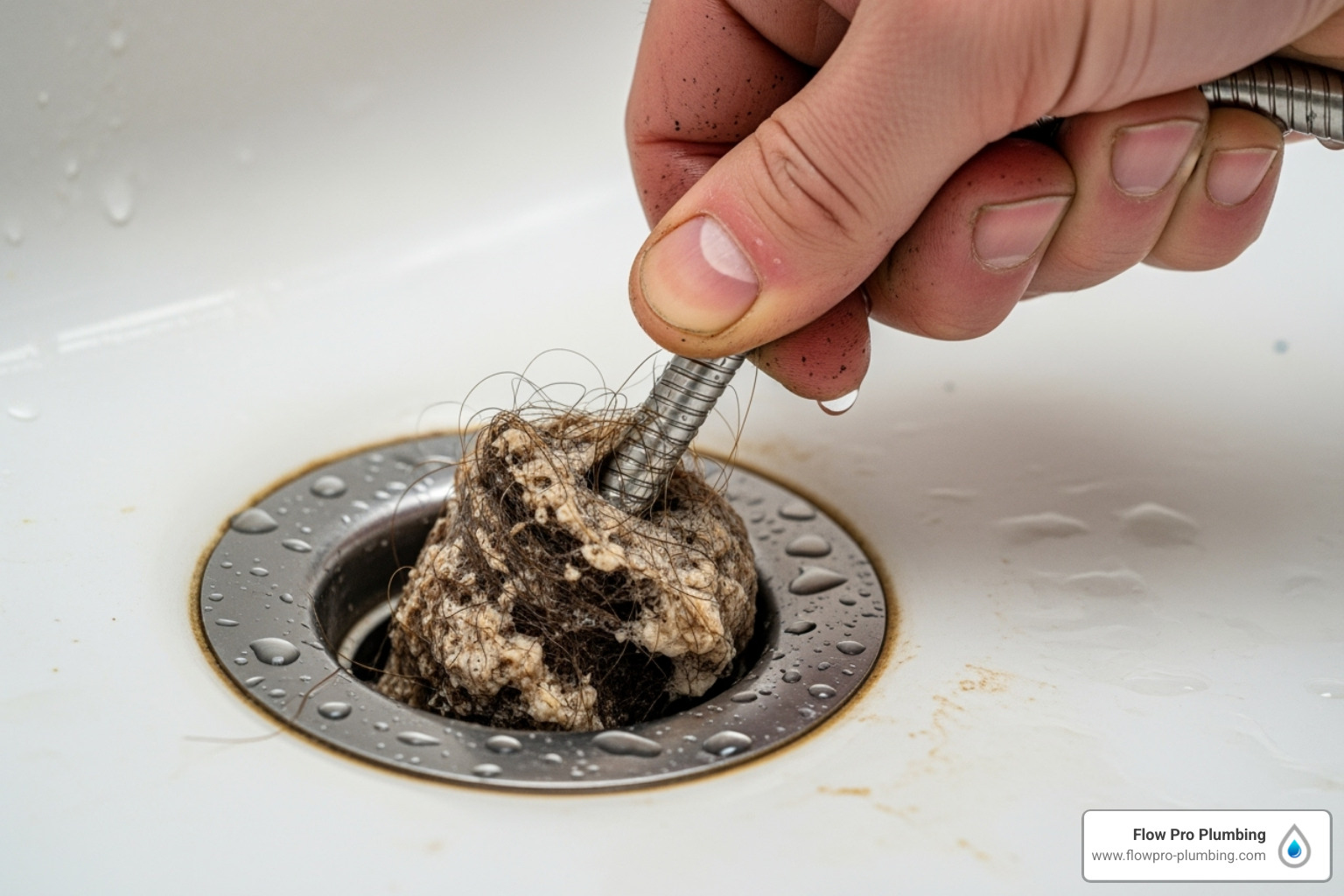
Pay attention to the warning signs. Slow draining water is the first red flag, followed by strange gurgling sounds, unpleasant odors, and eventually, water backup. These signs often point to a buildup of hair and soap scum, toothpaste and cosmetic residue, or the mysterious black sludge we’ll discuss next.
If you’re dealing with particularly sluggish drainage, our guide on Tips to Fix a Slow Draining Sink can help you tackle the problem before it gets worse.
The Usual Suspects: Hair and Soap Scum
Let’s talk about the dynamic duo of drain destruction: hair and soap scum. These two might seem harmless on their own, but together they create the perfect storm for clogged pipes.
Every time someone in your household showers, brushes their hair, or even just washes their face, tiny strands of hair make their way down the drain. Once they’re in your pipes, these hairs act like tiny fishing nets, catching everything else that flows by.
Meanwhile, soap scum from your shampoo, body wash, and bar soap creates a sticky mess that coats your pipe walls. This residue doesn’t just wash away – it clings to everything, including those hair strands, creating an increasingly thick barrier that keeps trapping more debris as time goes on.
The result? A gooey, hair-filled mass that grows stronger with each shower until your drain finally waves the white flag. If you’ve got a bathtub that’s particularly hair-prone, check out our detailed guide on How to Unclog a Bathtub Full of Hair for specific solutions.
Understanding the ‘Black Sludge’
Now, about that mysterious black gunk you might have spotted lurking in your drain – the stuff that looks (and smells) like it belongs in a horror movie rather than your bathroom.
This black sludge isn’t just ordinary dirt. It’s actually something called biofilm – a living, breathing ecosystem of bacteria and mold growth that’s been having a party in your pipes. This biofilm feeds on soap residue and other organic matter that flows through your drain, creating that distinctive black, smelly mess.
The good news is that removing the sludge is totally doable with the right approach. The bad news? This biofilm is often the main odor cause behind those unpleasant smells that seem to appear out of nowhere. Once you understand what you’re dealing with, though, you can tackle both the blockage and the smell at the same time.
Think of biofilm as your drain’s way of telling you it needs some serious attention – and the sooner you give it that attention, the easier it’ll be to get your bathroom back to its fresh, clean-smelling self.
Your DIY Toolkit: Simple and Effective Bathroom Drain Cleaning Methods
When your bathroom drain starts acting up, your first instinct might be to grab the phone and call a professional. But hold on! Many bathroom drain cleaning challenges can be solved with simple tools and ingredients you probably already have in your kitchen pantry. The key is starting with the gentlest methods first – your pipes will appreciate the TLC.
Before you start, let’s discuss what not to use: chemical drain cleaners. While tempting, they pose serious risks. The harsh acids they contain can damage your pipes, with the heat from the chemical reaction softening PVC or corroding older metal pipes. The health hazards are also significant, including severe burns from splashes and lung irritation from fumes. Accidentally mixing cleaners can even create toxic gas. Furthermore, these chemicals harm the environment when they enter our water systems. At Flow Pro Plumbing, we rarely recommend them, as safer, effective alternatives exist. For a detailed comparison of your options, check out our guide on The Best Drain Clog Remover.
Natural Solutions for Bathroom Drain Cleaning
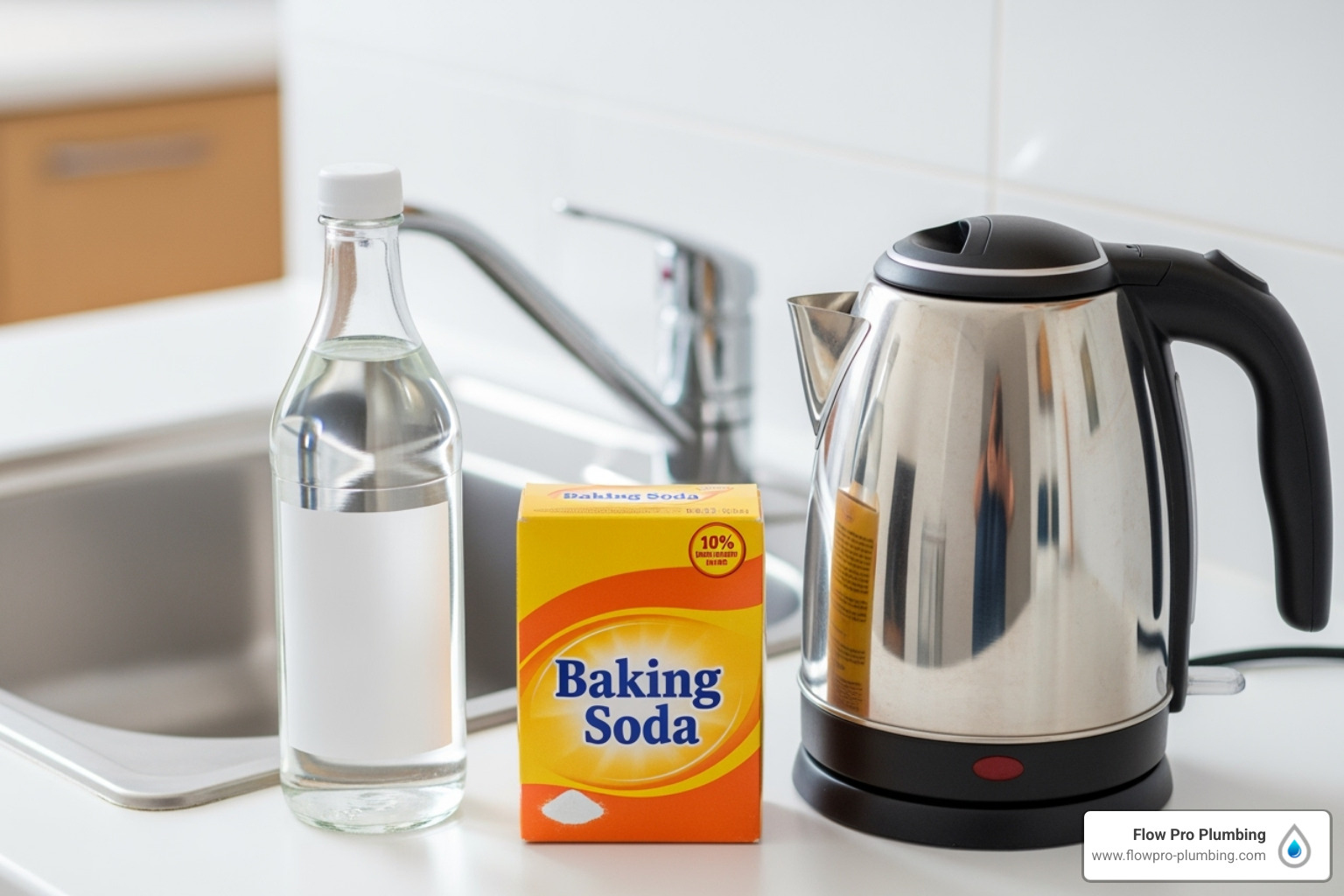
Mother Nature has provided us with some pretty amazing cleaning solutions, and when it comes to bathroom drain cleaning, the winning combination is baking soda and white vinegar. This dynamic duo is safe for your pipes, tough on clogs, and completely non-toxic. Plus, you probably have both ingredients in your kitchen right now!
The magic happens when these two ingredients meet. Baking soda acts as a mild abrasive and natural deodorizer, while white vinegar brings the acid power. When they combine, they create a fizzing reaction that produces carbon dioxide gas, helping to break apart clogs and push debris through your pipes.
Here’s the step-by-step process: First, run hot tap water down the drain for 30 seconds to loosen soap scum and grease. (Use hot tap water, not boiling, for PVC pipes). Next, pour one cup of baking soda down the drain, followed by one cup of white vinegar. Immediately cover the drain to trap the fizzing reaction, which helps break up the clog. Wait time is crucial; let the mixture sit for at least 30-60 minutes, or even overnight for tough blockages. Finally, flush the drain with a half-gallon of hot water to wash away the loosened debris.
This method works wonders for dissolving soap scum, breaking down grease, and even tackling some hair clogs. It’s also fantastic for refreshing smelly drains. We recommend this routine for regular maintenance too. For more details on this popular method, see our article on How to clean drains with baking soda.
Advanced DIY Bathroom Drain Cleaning: Using a Drain Snake
Sometimes that baking soda and vinegar combo meets its match – usually in the form of a dense hair clog that’s just too stubborn to dissolve. That’s when it’s time to get physical with a drain snake, also called a drain auger or hair snare.
Before you start, you’ll need to remove the drain stopper. Most bathroom sink stoppers are the pop-up type that you can twist and pull straight out. Some might have a pivot rod underneath the sink that needs disconnecting first. Don’t force it – if you’re unsure about the mechanism, this guide will show you how to remove the stopper safely.
For bathroom drain cleaning, you have a couple of tool options. A plastic hair snare (sometimes called a Zip-It tool) is perfect for clogs near the surface. These flexible plastic strips have barbs that grab onto hair as you pull them back out. They’re inexpensive and available at any hardware store.
For deeper clogs, a plumber’s auger is your best bet. This tool has a flexible metal cable that you feed into the drain, with a crank handle to rotate the cable and break through or grab onto clogs.
The technique is straightforward but requires patience. Feed your tool into the drain slowly, feeling for resistance. With a hair snare, you’ll feel it grab onto the clog. With an auger, crank the handle to rotate the cable as you work it through the blockage.
When you hit the clog, work the tool back and forth gently. You’re either breaking up the blockage or hooking onto it to pull it out. Don’t force it – aggressive movements can damage your pipes.
Once you’ve cleared as much debris as possible, flush with hot water to wash away any remaining loosened material. You might need to repeat the process a few times for complete success.
Using a drain snake can be messy work, but it’s incredibly effective for hair-related clogs. It’s a valuable skill that can save you money on service calls. To really master the technique, check out our comprehensive guide on how to Effortlessly Unclog Pipes: Master the Drain Snake Technique.
Keep it Flowing: A Simple Maintenance Routine to Prevent Clogs
You know what they say – an ounce of prevention is worth a pound of cure! This couldn’t be truer when it comes to bathroom drain cleaning. A simple maintenance routine is the best way to stop clogs before they start. The payoff is significant: homes with a regular cleaning routine cut their emergency plumbing calls in half, saving money and avoiding surprise repair bills.
But it’s not just about your wallet. Regular bathroom drain cleaning keeps your bathroom fresher and more hygienic. No more standing water breeding bacteria or that mysterious smell that makes guests wrinkle their noses. Plus, your entire plumbing system runs more efficiently when water can flow freely through clean pipes.
I’ve seen too many homeowners in Brentwood and across Contra Costa County learn this lesson the hard way. The good news? A simple, consistent routine can save you from joining that club.
How Often Should You Clean Your Drains?
Here’s the maintenance schedule that works best for keeping bathroom drains happy and flowing freely. It’s simpler than you might think, and once you get into the rhythm, it becomes second nature.
Weekly maintenance is your first line of defense. Every week, treat your bathroom sink and shower drains to a good hot water flush. Not scalding hot if you have PVC pipes, but nice and steamy from the tap. Let it run for a few minutes after you’re done brushing your teeth or taking a shower. This simple habit washes away soap scum and oils before they can team up with hair to create problems. It won’t stop every clog, but it definitely slows down how often they happen.
Monthly deep cleaning takes things up a notch. Once a month, break out that baking soda and vinegar combo we talked about earlier. This monthly treatment tackles the stubborn buildup that weekly flushes might miss. It’s your secret weapon against that black sludge and the funky smells that come with it.
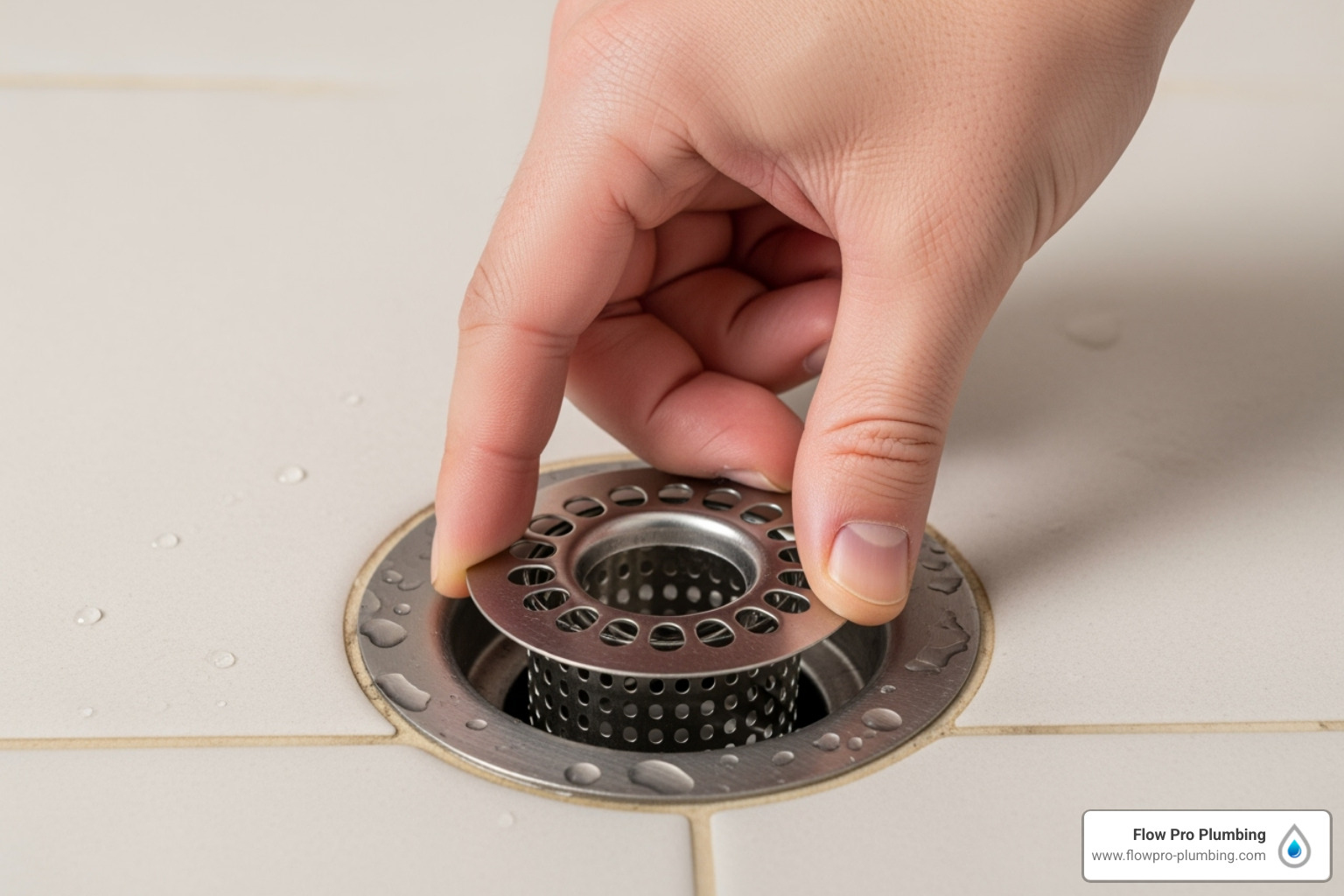
Between these regular cleaning sessions, consider installing drain guards or hair catchers. These little devices are like bouncers for your drains – they stop hair and bigger debris from getting past the entrance. You can pick them up at any hardware store for just a few dollars, and they’ll save you from fishing out gross hair clogs later.
The beauty of making bathroom drain cleaning part of your routine is that it becomes effortless. Instead of dealing with emergency clogs at the worst possible moments, you’re staying ahead of the game. Your future self will thank you when you’re not dealing with a backed-up sink right before company arrives. For more ways to keep your entire home’s drainage system in top shape, check out our tips on Regular Drain Cleaning.
When to Call in the Pros: Signs You Need an Expert
Despite your best DIY efforts, some clogs won’t budge. There comes a point where calling a professional for bathroom drain cleaning isn’t just smart—it’s necessary to avoid bigger problems. It’s important to recognize the signs that a drain problem has moved beyond a simple DIY fix.
Recurring clogs are often the first red flag. If you’re clearing the same drain every few weeks, or if it seems to clog again within days of your cleaning efforts, there’s likely a deeper issue at play. You might have a partial blockage further down the line that your home tools simply can’t reach.
When multiple slow drains start appearing throughout your home – perhaps your bathroom sink, shower, and even another bathroom all acting sluggish at once – that’s your plumbing system waving a white flag. This usually points to a problem in your main drain line, not just an isolated hair clog in one fixture.
Severe blockages where water won’t drain at all, or worse, water backing up into other fixtures, require immediate professional attention. I’ve seen situations where flushing a toilet causes water to bubble up in the shower – that’s a main sewer line issue that needs specialized equipment to resolve safely.
Perhaps most concerning is when you notice a foul sewer gas odor that goes beyond the typical drain smell. While biofilm can cause unpleasant odors, a strong sewer gas smell throughout your bathroom or home could indicate a broken vent pipe or significant blockage that’s allowing dangerous gases to escape.
Finally, if you’ve tried everything – the hot water, the baking soda and vinegar, even a drain snake – and you’re still dealing with the same problem, it’s time to call in the cavalry. Continuing to attempt DIY solutions at this point might actually make the situation worse. For guidance on the most effective approaches, check out our article on What is the Best Method for Cleaning Drains?.
Professional Solutions: Snaking and Hydro Jetting
When you call Flow Pro Plumbing for a challenging bathroom drain cleaning situation, we bring tools and techniques that go far beyond what’s available at your local hardware store. We typically use one of two powerful methods: professional snaking or hydro jetting, and the choice depends entirely on what’s causing your specific drain drama.
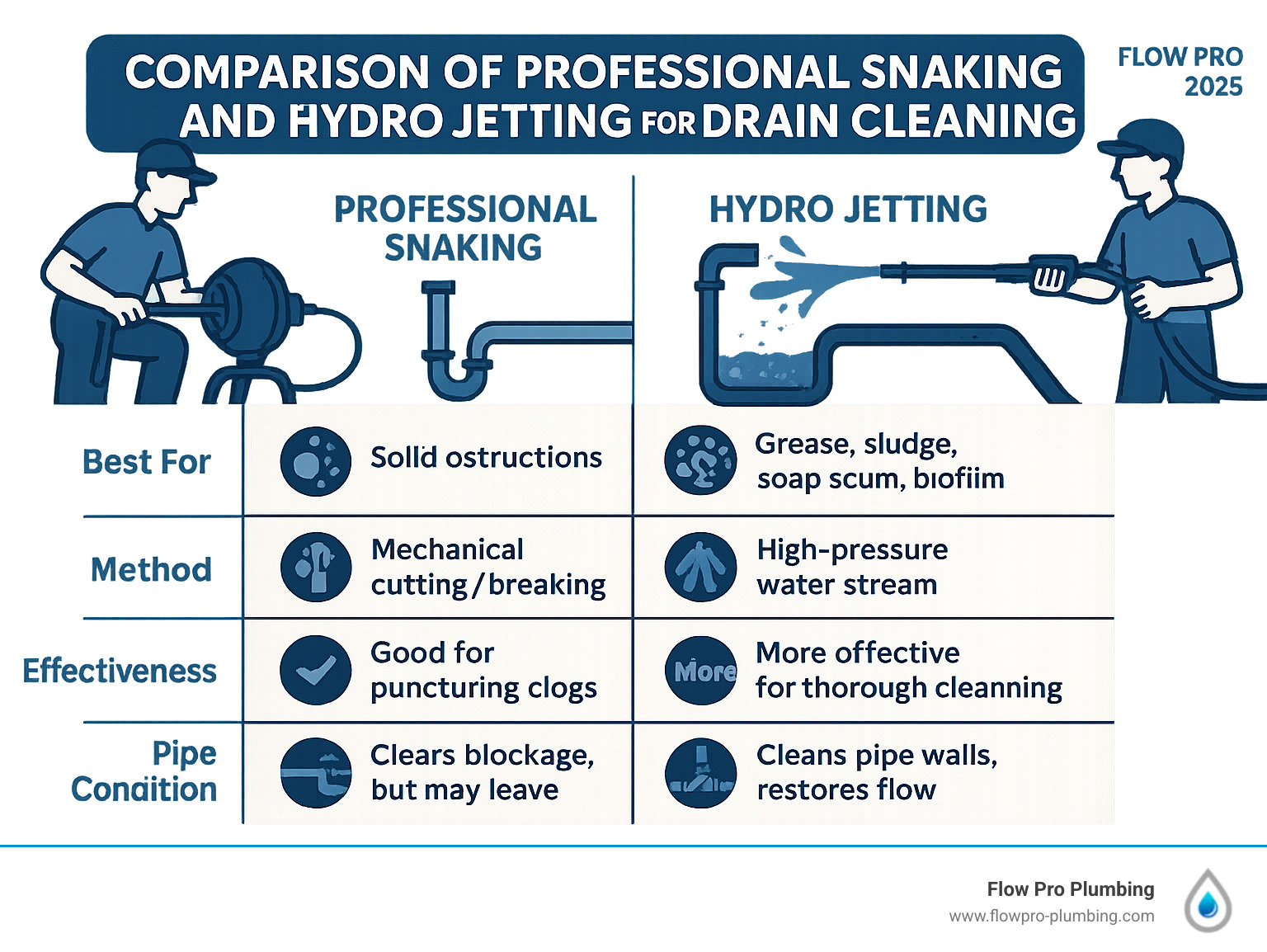
Professional snaking isn’t your average DIY snake that you might pick up for twenty bucks. Our industrial-grade augers can reach deep into your plumbing system – we’re talking 100 feet or more when needed. These machines pack serious power and come with various cutting attachments designed to tackle different types of obstructions. They’re particularly effective for solid obstructions like dense hair clogs or even tree roots that have found their way into your pipes.
Hydro jetting, on the other hand, is like bringing a pressure washer to your pipes – except this pressure washer delivers up to 4,000 PSI of cleaning power! This method doesn’t just poke a hole through your clog; it completely scours the inside of your pipes, removing grease, sludge, soap scum, and biofilm that cling to pipe walls. Think of it as giving your pipes a complete spa treatment.
The difference in effectiveness is remarkable. While traditional snaking can clear a blockage, hydro jetting is proven to be 90% more effective than traditional snaking methods, especially when dealing with the soft, sticky buildups common in bathroom drains. Snaking might punch through a clog, but hydro jetting restores your pipes to nearly their original condition.
Snaking works best when we’re dealing with solid blockages or localized clogs that need to be mechanically broken apart. Hydro jetting excels at comprehensive cleaning, removing years of accumulated grime and preventing future clogs by eliminating the sticky surfaces that trap debris.
If you’re curious about this powerful cleaning method, take a look at our detailed explanation of What Does Hydro Jetting Do?. Whether you’re in Oakley, Antioch, or anywhere else in our service area, we’ll assess your specific situation and recommend the method that will give you the best, longest-lasting results.
Frequently Asked Questions About Bathroom Drains
Over the years, we’ve fielded countless questions from homeowners dealing with bathroom drain cleaning challenges. Whether you’re a first-time homeowner or you’ve been battling the same stubborn drain for months, these are the questions that come up most often in our conversations.
Is it safe to use chemical drain cleaners?
We hear this question often. While chemical drain cleaners promise a quick fix, they can create bigger problems than the original clog. Chemical drain cleaners pose serious risks to your plumbing and health. The harsh chemicals can damage pipes, especially PVC, by generating intense heat that can lead to softening, melting, and costly leaks. We’ve seen these products cause significant damage.
Beyond the pipe damage, these chemicals are genuinely hazardous to your health and the environment. They’re corrosive enough to cause severe burns if they splash on your skin or get in your eyes, and the fumes can irritate your respiratory system. Once they’re flushed away, they don’t just disappear – they enter our water systems and can impact local ecosystems.
Natural methods like baking soda and vinegar, or mechanical tools like drain snakes, are safer first steps and often just as effective. If those don’t work, that’s usually a clear sign it’s time to call in the professionals rather than escalating to harsher chemicals.
How do I remove the sink stopper to clean the drain?
Getting to the actual clog often means removing that sink stopper first, and we totally understand why this step stumps so many people. The good news is that most bathroom sink stoppers are designed to come out relatively easily – once you know the trick.
Most pop-up stoppers can be removed by simply pulling them straight up and out. Some might need a gentle twist counterclockwise to disengage from the mechanism below. If you feel resistance, don’t force it – there might be a pivot rod connection underneath that needs to be disconnected first.
For the more complex pivot-rod stoppers, you’ll need to do a bit of detective work under your sink. Look for a horizontal rod that connects to the vertical drain pipe – that’s your pivot rod. Place a bucket under the area first to catch any water, then carefully loosen the nut holding the pivot rod in place. Once you pull that rod straight out, the stopper should lift right out from the top.
The key is being gentle throughout this process. These components aren’t meant to withstand a lot of force, and replacing a broken stopper mechanism can be more expensive than the original clog was worth fixing. If you’re feeling uncertain about any step, Learn how to remove the stopper safely with this detailed guide.
Can I pour boiling water down my bathroom sink?
This question comes up a lot, especially since pouring hot water is often the first step we recommend for bathroom drain cleaning. Hot water is fantastic for dissolving soap scum and grease buildup, which are major contributors to slow drains.
Here’s where it gets a bit nuanced: very hot tap water is generally safe and effective for most drain cleaning purposes. It’s usually hot enough to make a real difference in breaking down soap residue without putting your pipes at risk.
Boiling water straight from the kettle requires more caution, especially if you have PVC pipes, which are common in modern homes. That intense heat can potentially soften the plastic pipes or cause problems at the joints, leading to leaks down the road. We’ve seen this happen, particularly in older PVC installations where the joints might already be under some stress.
The reality is that very hot tap water will accomplish most of what boiling water would do for your drain, but with much less risk to your plumbing system. Save the boiling water for your pasta – your pipes will thank you for the gentler approach.
Enjoy Clear Drains with Professional Help
Regular maintenance and simple DIY fixes can handle most minor bathroom drain cleaning issues, but sometimes a clog fights back harder than expected. When you’ve tried the baking soda and vinegar trick, wrestled with a drain snake, and that stubborn blockage still won’t budge, it’s time to bring in the professionals.
There’s no shame in calling for backup! Some clogs are simply beyond what household tools can handle. Whether it’s a deep blockage that’s out of reach, multiple drains acting up at once, or that mysterious black sludge that keeps coming back no matter what you do, professional help ensures the problem gets solved correctly without risking damage to your plumbing.
At Flow Pro Plumbing, we’ve seen it all across Contra Costa County – from simple hair clogs in Brentwood bathrooms to complex sewer line issues in Antioch. Our experienced team knows exactly which approach will work best for your specific situation, whether that’s professional snaking for a stubborn solid blockage or hydro jetting to completely restore your pipes to like-new condition.
Professional solutions offer peace of mind that goes beyond just clearing the immediate problem. When we tackle your drain issue, we’re also identifying potential future problems and ensuring your entire plumbing system stays healthy. Our state-of-the-art equipment can reach places and clear blockages that simply aren’t possible with DIY methods.
Don’t let a clogged drain turn into a plumbing emergency or disrupt your family’s daily routine. Whether you’re dealing with recurring clogs, water backing up into other fixtures, or just want the confidence that comes with professional-grade cleaning, we’re here to help residents throughout Oakley, Pittsburg, Bay Point, Concord, Byron, Bethel Island, Clayton, Walnut Creek, Pleasant Hill, and Knightsen.
Contact Flow Pro Plumbing today to schedule your Drain Cleaning Services and experience what it’s like to have drains that flow perfectly again. Our friendly team is known for unsurpassed workmanship and building a great reputation – because your home deserves nothing less than expert care.