
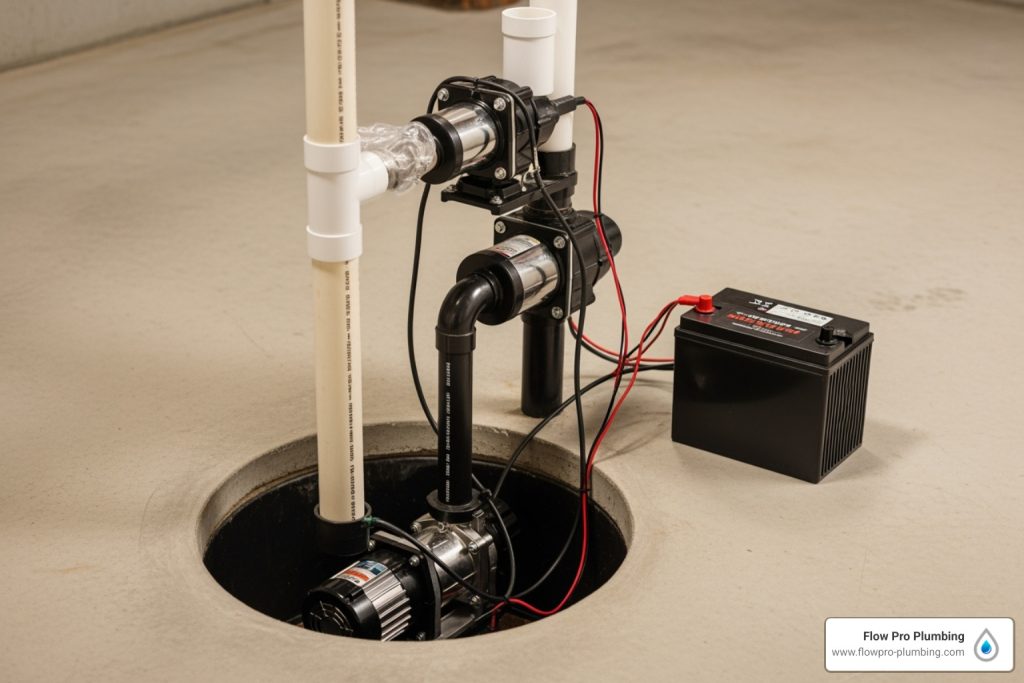
Why Every Basement Needs a Battery Backup Sump Pump
A battery backup sump pump is your best defense against basement flooding when your primary pump fails or the power goes out. Here’s what you need to know:
Key Benefits:
- Automatic activation during power outages or primary pump failure
- 7-8 hours of continuous pumping with a fully charged battery
- Works with any 115V primary pump up to 1/2 HP
- Prevents costly water damage to flooring, walls, and belongings
Essential Features to Look For:
- Dual float switches for reliability
- Deep-cycle AGM battery (75-120 amp hours)
- Automatic battery charger
- Audible alarms for system alerts
- Wi-Fi monitoring capabilities
Weather-related power outages have nearly doubled since 2000, often occurring during the worst storms. Without backup protection, a single power failure can lead to a costly flooded basement.
Primary sump pumps fail for three main reasons: power loss, mechanical breakdown, and being overwhelmed by excessive water. A battery backup system automatically kicks in when any of these problems occur, giving you peace of mind.
I’m Jesse Delgado, owner of Flow Pro Plumbing. With a decade of experience, I’ve seen that investing in a reliable battery backup sump pump is always cheaper than dealing with the aftermath of a flood.
How a Battery Backup System Provides Ultimate Protection
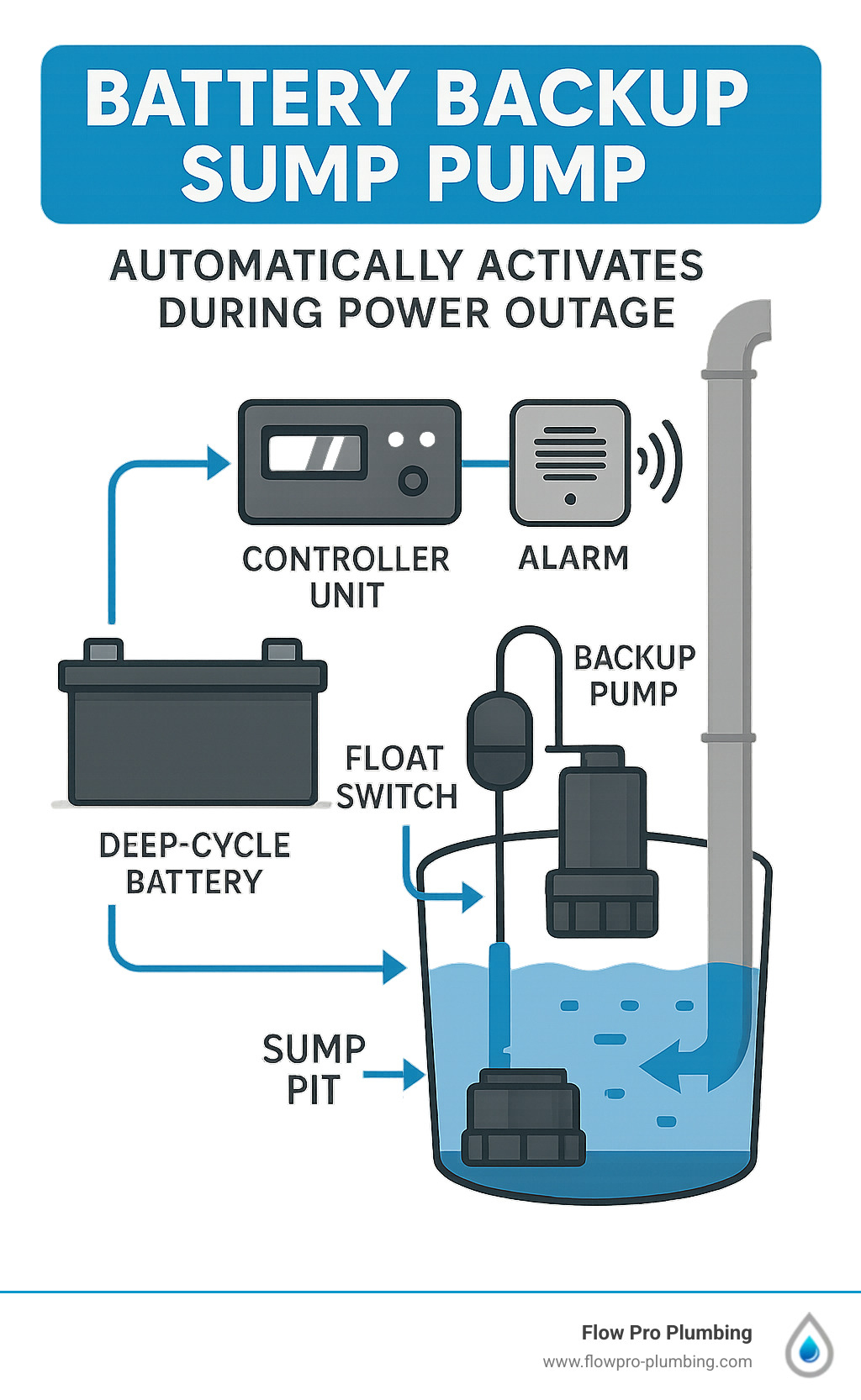
When a storm cuts the power, your battery backup sump pump automatically gets to work, protecting your basement from flooding even while you sleep.
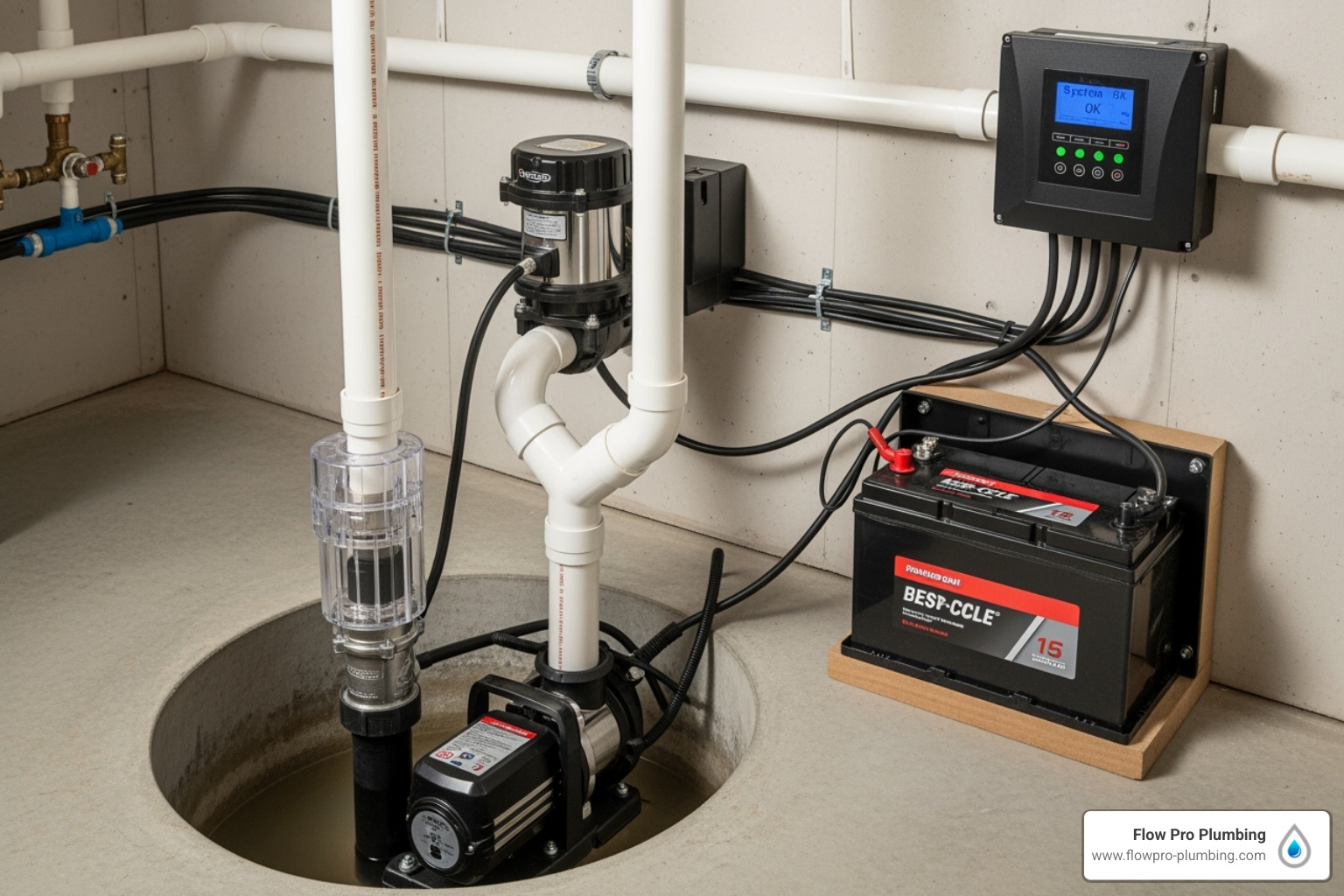
A battery backup sump pump works with your primary pump to defend against flooding. It activates automatically during a power outage, primary pump failure, or when the main pump is overwhelmed by water.
The controller unit is the brain, monitoring water levels and the primary pump. When it senses trouble, it switches to the deep-cycle battery, powering the backup pump to take over.
Advanced systems may include an inverter function, allowing the battery to power your main AC pump directly. This provides full pumping capacity during an outage, acting like a dedicated generator for your pump.
The system’s automatic activation means you don’t have to do anything. It stands guard 24/7, ready to engage within seconds of a problem.
The Critical Role of the Float Switch
The float switch is the sensor that tells the pump when to activate. For a battery backup sump pump, its reliability is crucial to preventing water damage.
That’s why quality backup systems use dual float switches. This smart engineering provides redundancy. If one switch gets stuck or fails, the second switch ensures your pump still activates when needed.
The activation process is simple. As water rises in the sump pit, it lifts the float, which triggers the switch and starts the pump. As the water level drops, the float lowers and stops the pump. This precise control prevents false starts that waste battery power.
Modern float switches use reliable micro-reed technology, and this redundancy provides peace of mind that your system will work when you need it most.
Understanding the Power Source
The system’s heart is a 12-volt deep-cycle battery. Unlike a car battery, it’s designed to provide consistent power over long periods.
You’ll encounter two main battery types: AGM and lead-acid. AGM (Absorbed Glass Mat) batteries are the gold standard. They’re maintenance-free, won’t spill, and typically last up to seven years. Lead-acid batteries cost less but require regular water level checks and need replacement every three to five years.
An automatic charger keeps the battery ready, monitoring its charge and topping it off as needed. Advanced multi-stage chargers maximize battery lifespan.
The controller also provides monitoring of battery health. You’ll get alerts if the battery is low, needs attention, or is nearing the end of its life. This ensures your backup system is always ready.
Types of Sump Pump Backup Systems
When choosing a backup system, there isn’t a one-size-fits-all solution. The best choice depends on your home’s water source, plumbing setup, and typical power outage scenarios.
Let’s explore the main types of backup systems that can work alongside your sump pump to keep your basement dry.
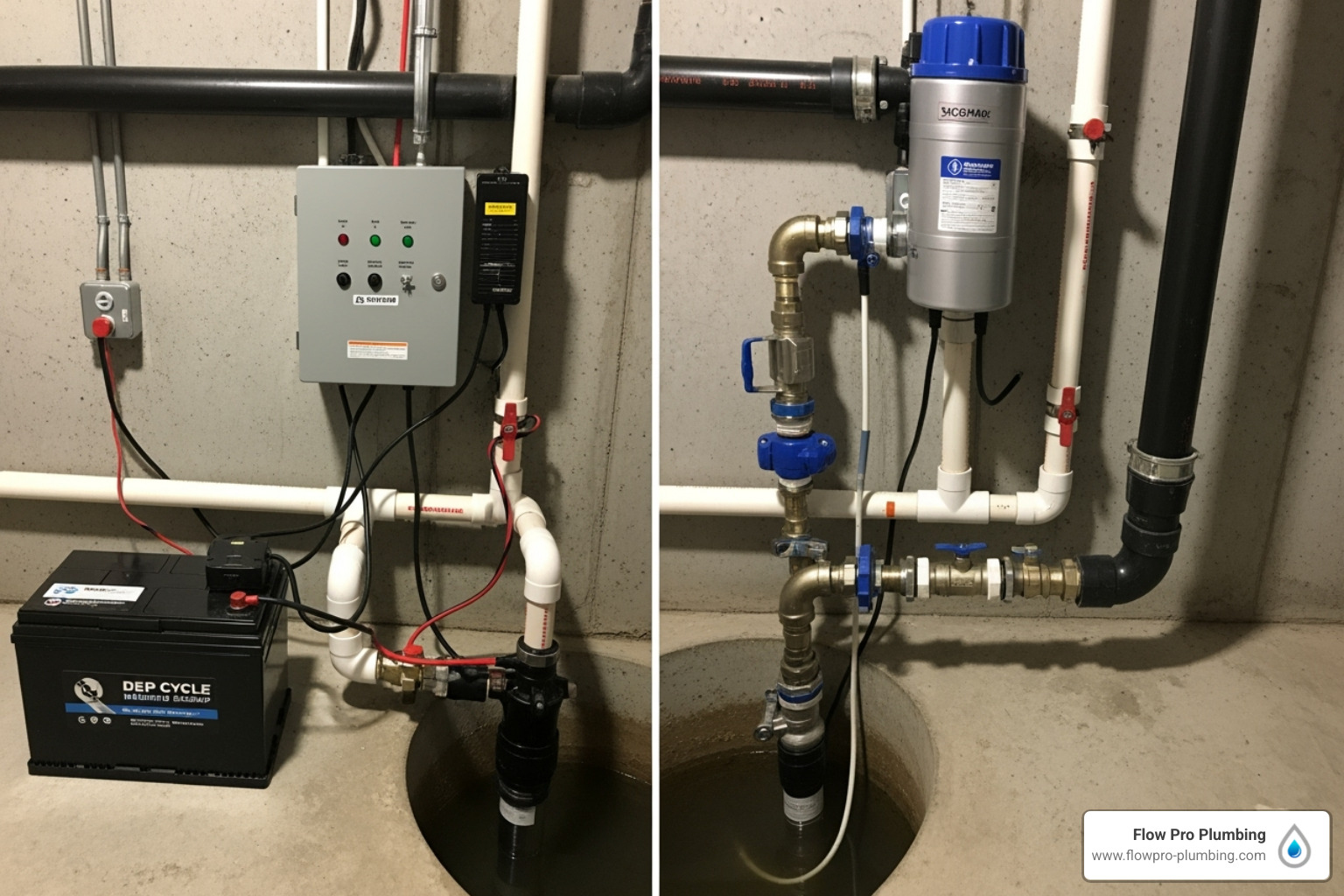
Battery-Powered Backup Pumps
The most popular option is the battery backup sump pump. This system includes a secondary DC pump, a control unit, and a deep-cycle battery.
When your primary AC pump loses power or fails, the control unit immediately switches to battery power and activates the DC pump. It’s an automatic and reliable solution.
What makes battery-powered systems so appealing is their complete independence. They work even if your water pressure drops or if you’re on well water. Installation is usually straightforward and compatible with most existing primary pumps.
The only constraint is battery life. A quality, fully charged deep-cycle battery typically provides about 7 to 8 hours of active pumping, which translates to several days of protection during intermittent use.
Water-Powered Backup Systems
A water-powered backup system uses your home’s water pressure instead of electricity. It operates on the Venturi effect, using municipal water flow to create suction that removes water from the sump pit.
The main advantage of these systems is their unlimited run time. As long as your city’s water supply is flowing, the backup system works. There are no batteries to charge or replace.
However, these systems are not for every home. They will not work if you are on well water; a pressurized municipal connection is required. They also use a significant amount of water, typically two gallons of city water for every one gallon pumped from your pit, which can increase your water bill during an emergency.
Installation is more involved, requiring a connection to your main water line and a backflow prevention device. But for homeowners on city water who prioritize unlimited runtime, it’s a fantastic option.
Backup System Comparison
| Feature | Battery-Powered Backup Pump | Water-Powered Backup System |
|---|---|---|
| Power Source | 12-volt deep-cycle battery | Municipal water pressure |
| Run Time | 7-8 hours active pumping, several days intermittent | Unlimited with water supply |
| Installation | Relatively straightforward, works with existing setup | More complex, requires water line connection |
| Pros | Independent operation, easy maintenance, works with well water | No battery replacement, unlimited runtime, reliable for extended outages |
| Cons | Limited by battery capacity, battery replacement every 3-7 years | High water usage, municipal water only, more complex installation |
| Best For | Homes with well water, frequent shorter outages, simpler setup | Homes with city water, extended outages, continuous operation priority |
Most homeowners find that battery-powered systems offer the best balance of reliability and ease of use. But if you’re on municipal water and face long power outages, a water-powered system could be a perfect match.
Key Factors for Choosing the Right Battery Backup Sump Pump
Selecting the right battery backup sump pump means getting enough protection without overspending. I’ve helped many Bay Area homeowners find their ideal system, and I’ll guide you through the key factors.
The urgency is clear. Weather-related power outages are increasing, and they often happen during major storms. Understanding your specific needs is crucial for making the right choice.
Your pumping capacity requirements depend on your basement’s vertical lift. You’ll also want to consider battery compatibility and whether alarms and smart features are important for your peace of mind.
Understanding Pumping Power (GPH) for your battery backup sump pump
Gallons Per Hour (GPH) is the key measurement for pumping power, but the rating changes based on head height—the vertical distance water must be pushed to exit your home.
A pump that moves 3,500 GPH at ground level might only manage 2,200 GPH when pushing water up 10 feet. This is why understanding your basement’s setup is so important.
When sizing for your basement, I recommend choosing a backup system that can match your primary pump capacity at your specific head height. It’s better to have extra power than to find your backup can’t keep up during a storm.
Example GPH ratings vary widely. Entry-level systems might provide 1,800 GPH at 10 feet of head, while premium units can deliver 3,500 GPH or more. The key is matching the pump to your actual needs.
Smart Features and Alerts
Modern battery backup sump pumps include many smart features.
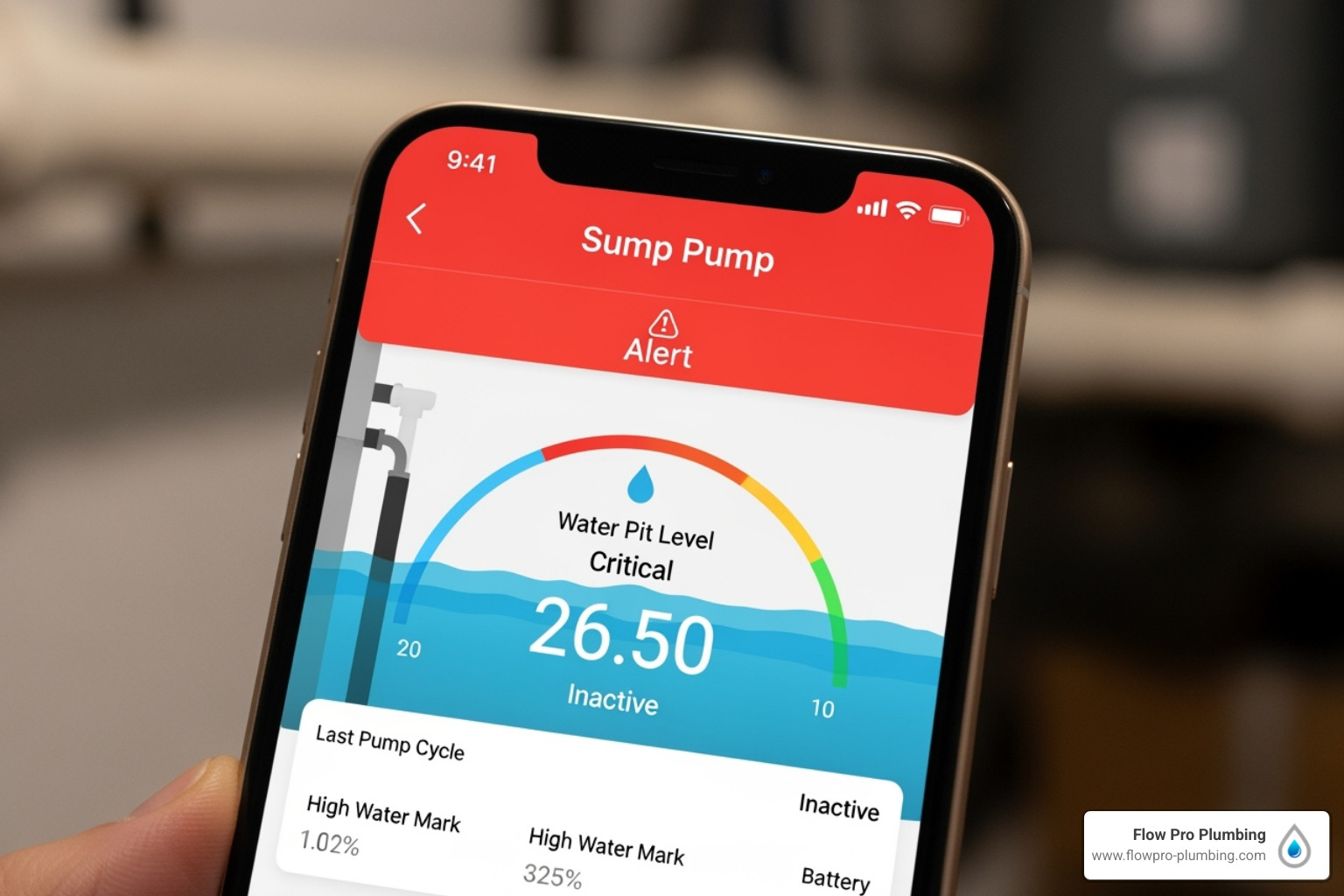
Wi-Fi connectivity is a game-changer. Imagine getting a text or email alert the moment your backup system activates or when your battery needs attention. This remote monitoring capability means you’re always informed about your basement’s protection.
Audible alarms remain essential for immediate notification when you’re home. The best systems provide different tones for different issues, such as high water, battery problems, or pump malfunctions. Some units even perform system self-testing automatically to catch potential problems early.
These features are practical investments in preventing water damage. An early alert can prevent thousands of dollars in repairs.
Battery Selection and Lifespan
The battery is the heart of your battery backup sump pump system. Don’t cut corners; use a deep-cycle marine battery designed for sustained power delivery.
AGM batteries are my top recommendation. They’re sealed, maintenance-free, and last longer than flooded lead-acid types. While they cost more upfront, their reliability is worth it.
Battery capacity is measured in Amp-hours (Ah), which affects run time. A 75 Ah battery might provide 6-8 hours of intermittent pumping, while a 120 Ah battery could extend that to 12 hours or more. The right size depends on your local weather and outage patterns.
Expected lifespan varies. AGM batteries often last 3-7 years, while traditional flooded batteries might need replacement every 3-5 years. Temperature and usage frequency affect longevity.
Consider whether batteries are included or require separate purchase. Many systems let you buy the battery separately, giving you control over quality and capacity. Factor this cost into your budget when comparing systems.
Installation and Maintenance Essentials
Proper installation of your battery backup sump pump is as crucial as choosing the right model. Correct setup and maintenance ensure your system works flawlessly for years.
Before installation, ensure your sump pit is large enough for both pumps and that their float switches can move freely. The discharge pipe system also needs a proper check valve to prevent water from flowing backward into the pit.
While a DIY installation is tempting, this job involves complex electrical and plumbing work. A small mistake can lead to a flooded basement, so professional installation is recommended for a battery backup sump pump.
A Quick Guide to Installation
Professional installation ensures everything works together seamlessly. Positioning the pump correctly is the first step; the backup pump sits slightly higher than the primary pump’s activation level.
Connecting the plumbing involves integrating the backup pump into the discharge system, typically with its own check valve to ensure water flows out, not back in.
Setting up the battery and controller requires a safe, well-ventilated spot for the battery. The controller unit acts as the system’s brain, monitoring the primary pump and water levels.
Testing the system is the final step. A thorough test simulates a power outage to confirm the backup activates properly and all alarms function as expected.
If you’re located in Walnut Creek CA, our Flow Pro Plumbing team can handle your installation, ensuring your system is ready when you need it.
Essential Maintenance for Your battery backup sump pump
Your battery backup sump pump needs regular maintenance to remain reliable. Fortunately, most tasks are straightforward.
- Quarterly testing: Unplug your primary pump and add water to the sump pit until the backup activates. This confirms the system is working.
- Cleaning the sump pit: Remove debris, dirt, and sediment to prevent clogs that could disable your pump.
- Battery terminal inspection: Check for and clean any corrosion on the battery terminals to ensure a solid connection.
- Checking fluid levels: For flooded lead-acid batteries, check fluid levels every few months and top off with distilled water. AGM batteries are maintenance-free.
- Float switch inspection: Ensure the float switches can move freely without obstruction.
- Discharge line check: Make sure the line is clear and directs water safely away from your foundation.
These simple steps provide maximum peace of mind, ensuring your battery backup sump pump is ready for the next storm.
Frequently Asked Questions about Backup Sump Pumps
Here are answers to the most common questions I get from homeowners about battery backup sump pump systems.
What is the typical lifespan of a backup sump pump and its battery?
A quality battery backup sump pump is built to last. The pump itself typically has a lifespan of 5 to 10 years, depending on usage. The less it has to work, the longer it will serve you.
The battery is a different story. A deep-cycle battery typically needs replacement every 3 to 7 years. AGM batteries usually last closer to seven years, while flooded lead-acid batteries last three to five years.
Factors like extreme temperatures, frequent deep discharges, and poor charging can shorten battery life. It’s wise to replace the battery as it nears the end of its expected lifespan to avoid failure during a storm.
What kind of warranty can I expect?
Most battery backup sump pump systems come with a 1 to 3-year warranty. Some manufacturers offer extended warranties for product registration or purchasing compatible batteries, sometimes stretching up to four years.
Warranties typically cover defects in materials and workmanship. They do not cover normal wear and tear, damage from improper installation, or problems arising from a lack of maintenance.
My advice is to keep your receipts and registration paperwork in a safe place in case you need to make a claim.
What are the main benefits compared to only having a primary pump?
Relying on a single primary pump is risky. A backup system provides crucial benefits.
Protection during power loss is the most obvious advantage. When the lights go out in a storm, your primary pump is useless, but your backup system keeps working.
Mechanical failures happen. Primary pumps can fail due to a stuck float switch, a burned-out motor, or old age. A backup system provides redundancy, taking over regardless of why the primary pump stopped.
During heavy rainfall, a primary pump can be overwhelmed by excessive water inflow. A backup system provides the extra pumping power needed to keep up.
This protection helps prevent costly water damage to your flooring, drywall, furniture, and personal belongings, not to mention long-term issues like mold.
The biggest benefit is 24/7 peace of mind. Knowing your basement is protected whether you’re home or away is priceless.
Secure Your Home with a Reliable Backup System
Your basement deserves the protection of a battery backup sump pump. We’ve covered how they provide automatic protection, the different types available, key features to look for, and essential maintenance.
Your home is where you store precious belongings and create memories. Basement flooding can destroy these items and lead to long-term health issues from mold.
At Flow Pro Plumbing, I’ve seen the devastation of a flooded basement, but I’ve also seen the relief when a battery backup sump pump kicks in during a storm, quietly protecting the home. That’s the peace of mind every homeowner deserves.
Weather-related power outages are on the rise, making backup protection more crucial than ever. An investment in a reliable backup system today can save you thousands in water damage repairs tomorrow and protect priceless family memories.
Our experienced team serves homeowners throughout Contra Costa County, including Brentwood CA, Concord CA, Pittsburg CA, Antioch CA, Bay Point CA, Findy Bay CA, Pleasant Hill CA, Walnut Creek CA, Oakley CA, Knightsen CA, Bethel Island CA, and Byron CA. We’ve built our reputation on keeping families dry and worry-free.
Don’t wait for the next storm. The time to protect your home is now. Contact us for professional sump pump installation in Brentwood and let us help you sleep better knowing your basement is protected.