
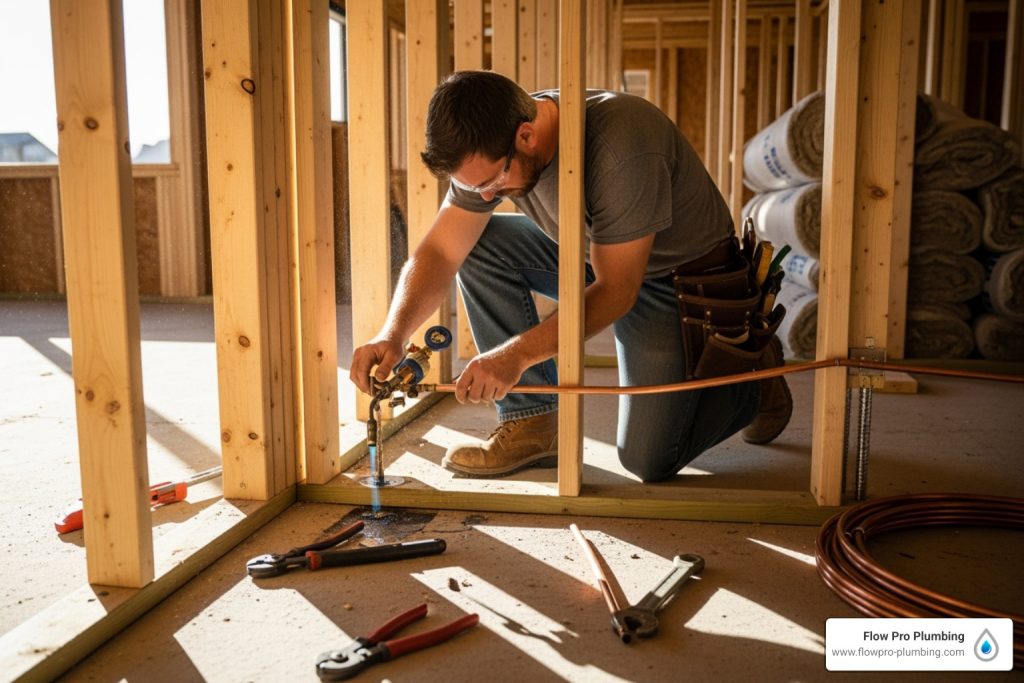
Why New Construction Plumbing Represents a Golden Career Opportunity
New construction plumbing offers a promising career path in the skilled trades. It combines technical expertise, job security, and excellent earning potential in a market experiencing unprecedented growth.
Quick Answer: What is New Construction Plumbing?
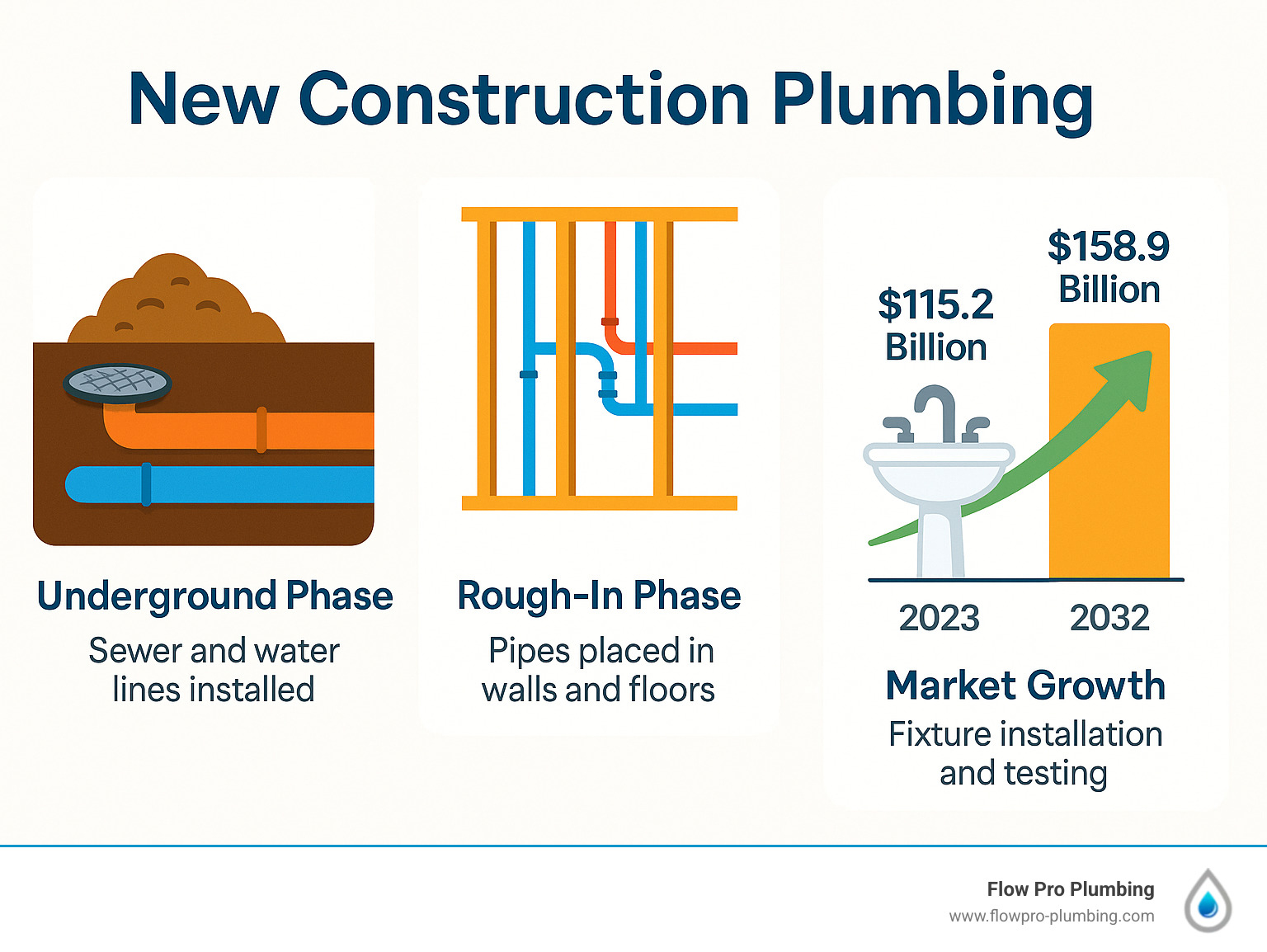
- Underground Phase: Install main sewer and water lines beneath foundations
- Rough-In Phase: Place pipes within walls and floors before they’re enclosed
- Finish Phase: Install fixtures like sinks, toilets, and connect all systems
- Market Growth: $120.5 billion industry projected to reach $158.9 billion by 2032
- Job Security: Over 1.5 million new housing starts in 2023 created massive demand
The global new construction plumbing market, valued at $115.2 billion in 2023, is projected to grow 3.6% annually through 2032. With the U.S. residential construction market also expanding, skilled plumbers specializing in new builds are positioned for long-term success.
Unlike repair work, new construction plumbing lets you build systems from the ground up. You’re creating the foundation that will serve families and businesses for decades. This work requires precision, planning, and collaboration, delivering the satisfaction of seeing your craftsmanship become part of something lasting.
My name is Jesse Delgado, and I’ve spent over a decade in the plumbing industry, with experience in new construction projects from residential to commercial. Growing up in a family of plumbers, I learned early that new construction offers some of the most rewarding and technically challenging opportunities in our trade.
The Blueprint of a Career: What is New Construction Plumbing?
New construction plumbing involves designing and installing the vital water supply, drainage, and gas systems in a new building. You’re creating the circulatory system of a home or business, ensuring water flows smoothly and waste is removed safely. It’s foundational work.
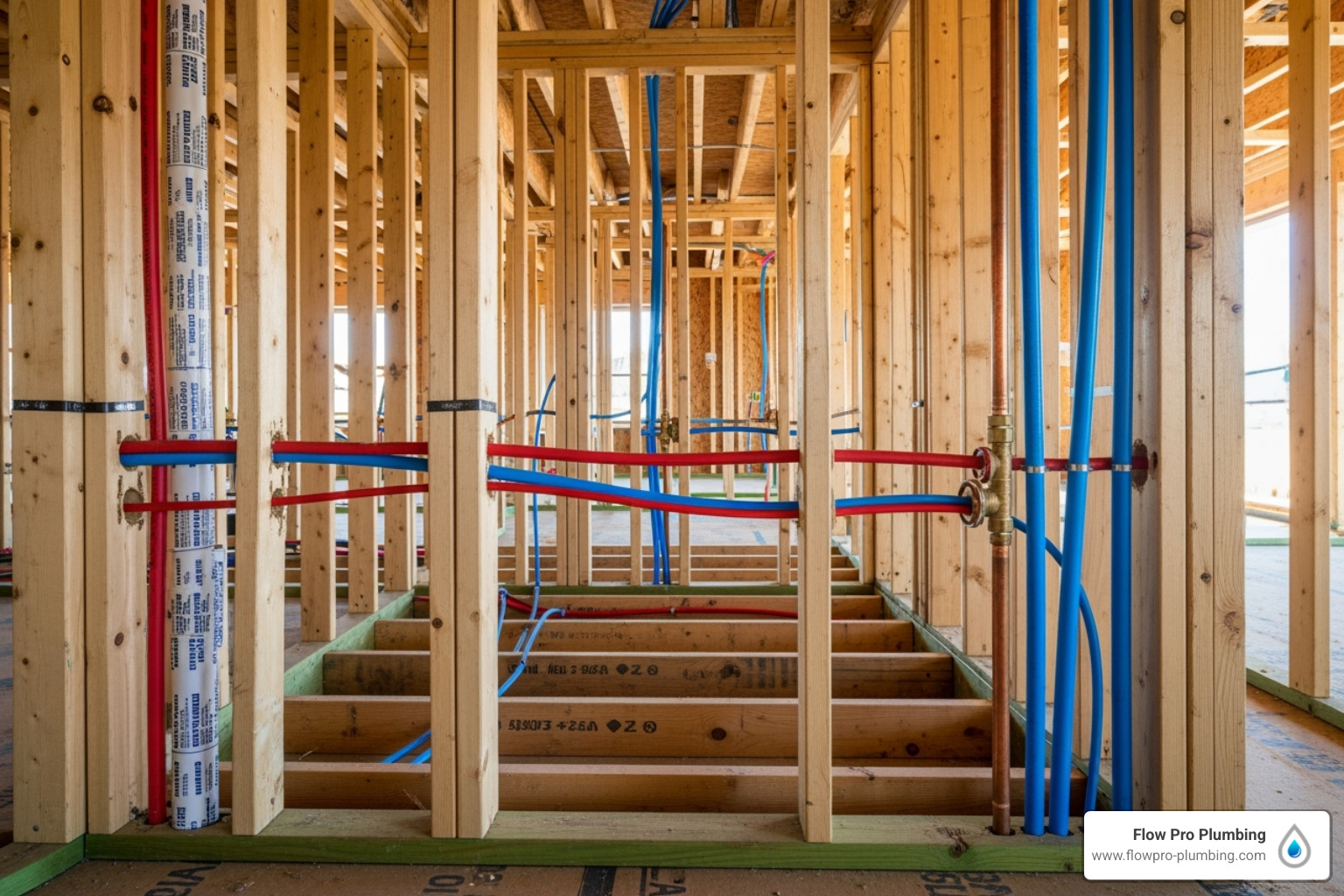
It’s about building systems from the ground up for long-term safety and efficiency. The project lifecycle is detailed, moving through distinct phases from layout to final inspection. Our goal is a functional, durable system that boosts the building’s value, prevents future repairs, and improves efficiency.
The Three Core Stages of Installation
Installing a new construction plumbing system unfolds in three crucial stages, each building on the last to create a seamless network.
-
Underground Phase: Before the foundation is poured, our team trenches and installs the main sewer and water lines. This stage is critical; mistakes here are costly to fix later. We ensure lines are correctly sized, buried at the proper depth, and protected.
-
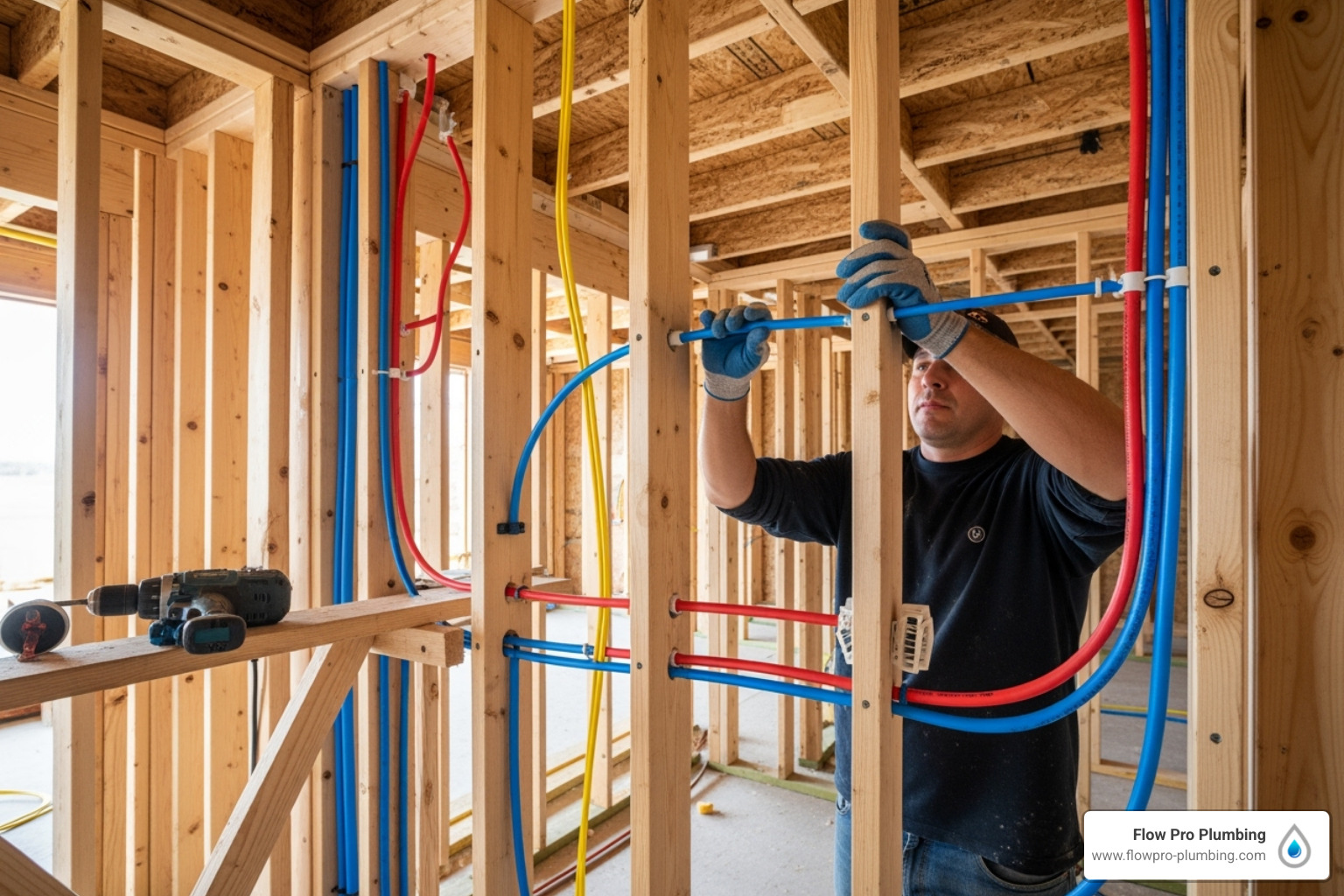
Rough-In Phase: After the foundation and framing are up, we enter the rough-in stage. We place all pipes within walls, ceilings, and floors before they’re covered by drywall. This involves making connections for future fixtures. The internal piping is laid out, but not yet connected to water or sewage. Understanding the blueprint is key to avoiding conflicts.
-
Finish/Trim Phase: In the finish or trim phase, we install all visible fixtures: sinks, toilets, showers, faucets, and appliances. We connect the system to the main water and sewer lines. Afterward, we conduct a thorough pressure test to ensure there are no leaks. Precision is vital to prevent future water damage.
For a deeper dive into how we handle these intricate processes, you can find More info about our New Construction Plumbing Services.
Key Systems You Will Build
Working in new construction plumbing means you’ll become an expert in installing a variety of interconnected systems, each vital for the building’s day-to-day life.
-
Water Supply Systems: These lines bring fresh water into the building from a municipal supply or a well. We size them to deliver excellent water pressure to all fixtures and appliances.
-
Drain-Waste-Vent (DWV) Systems: The DWV system safely carries wastewater and sewage away. Drains carry used water, while vents balance air pressure to prevent sewer gases and ensure proper drainage. The correct pipe slope is essential for gravity to move waste effectively.
-
Gas Lines: We install dedicated gas lines for appliances like stoves, water heaters, and furnaces. Safety and strict code adherence are paramount when working with flammable materials.
-
Fixtures and Appliances: This includes all the parts people interact with daily: sinks, toilets, showers, faucets, and appliances like dishwashers and washing machines. We ensure they are all perfectly connected.
-
Shut-Off Valves: A main shut-off valve controls water to the entire building for emergencies. Individual shut-off valves for fixtures like toilets and sinks allow for isolated repairs without shutting off water to the whole house.
-
Water Heaters: We install the system that provides hot water, whether it’s a traditional tank or a modern tankless unit. This includes safe connections to water, gas (if applicable), and proper venting.
Building Your Skills: The Core Competencies of a New Construction Plumber
A career in new construction plumbing requires more than just muscle. At Flow Pro Plumbing, our team brings a special blend of skills and intelligence to every new build. It’s rewarding work that keeps you on your toes.
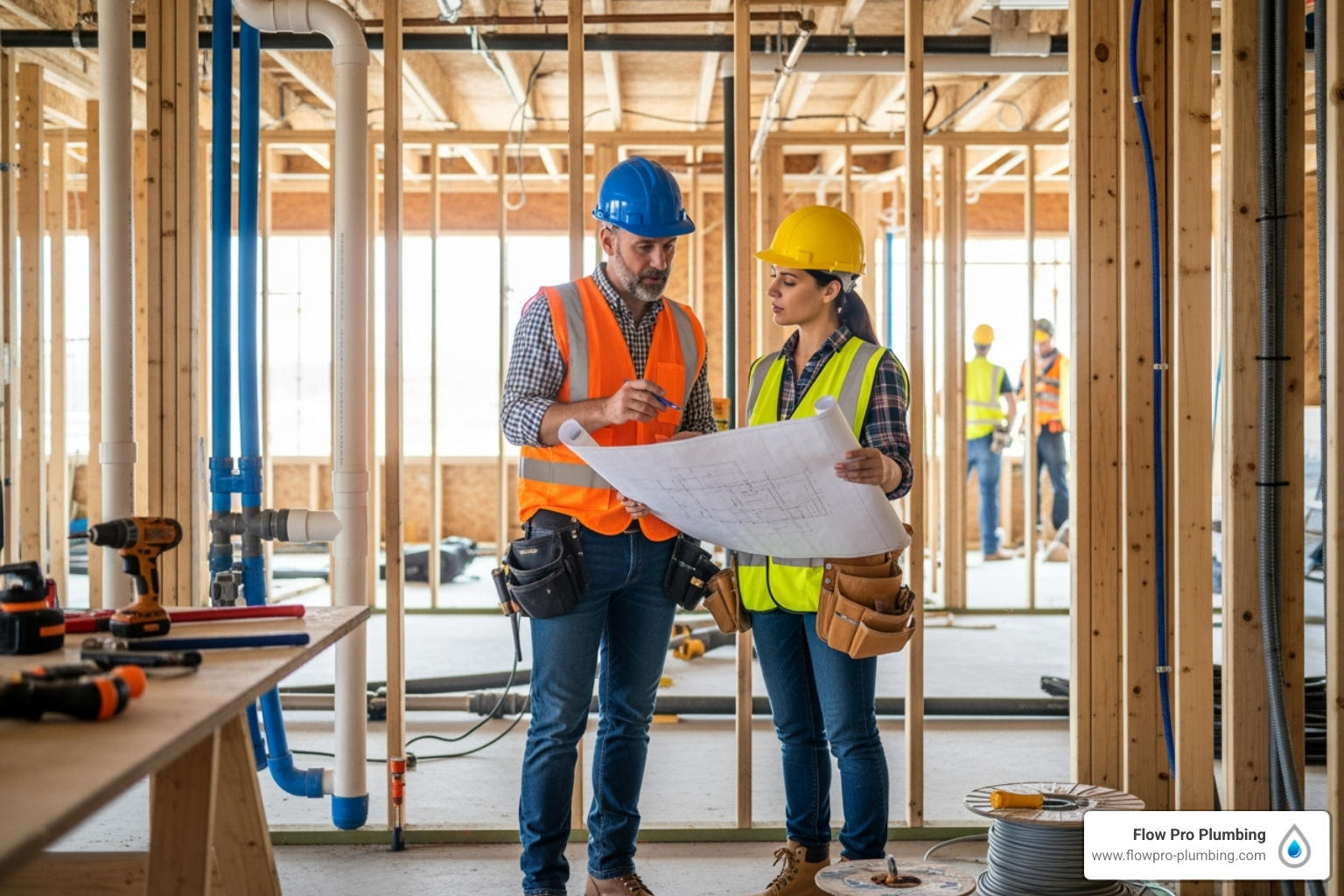
To excel, you need strong technical knowledge of fluid dynamics, pipe sizes, materials, and system components. Problem-solving is also crucial for navigating tricky installations or diagnosing issues. The trade demands physical stamina for lifting materials and working in tight spaces. However, attention to detail is perhaps the most vital skill. A tiny leak or a minor measurement error can compromise an entire system. Finally, professionalism, including clear communication and teamwork, distinguishes a top-notch new construction plumber.
Understanding Codes and Collaboration
Knowing plumbing codes is a critical part of new construction plumbing. These rules ensure safety and system efficiency. Each jurisdiction has specific codes governing materials and installation, which we follow carefully.
The permitting process requires official approval from local authorities before work begins. As licensed plumbers, we handle this paperwork, ensuring our work meets or exceeds all standards. Our work undergoes inspections at key stages: after the underground phase, post-rough-in, and upon final fixture installation. These thorough checks ensure everything is up to code and meets the highest safety and quality standards.
Successful new construction plumbing is a team effort. We coordinate closely with other trades on the job site:
- General Contractors: We work with them to align our plumbing schedule with the overall project timeline to prevent delays.
- HVAC Professionals: We coordinate to ensure our pipes and their ductwork don’t conflict in shared spaces.
- Electricians: We coordinate to keep water lines safely separated from electrical wiring.
- Framers and Masons: We rely on them to create the necessary openings and pathways for our pipes.
Good communication and teamwork are key to a smooth project. For more helpful information on industry standards and best practices, check out our More info about our Plumbing Resources.
An Overview of New Construction Plumbing: Residential vs. Commercial
While the core principles of new construction plumbing are similar for residential and commercial projects, key differences exist. Understanding these unique needs can help you specialize.
| Feature | Residential New Construction Plumbing | Commercial New Construction Plumbing |
|---|---|---|
| Scale & Complexity | Typically smaller (single-family homes, housing developments). Systems are generally less complex. | Often much larger (multi-story buildings, restaurants, offices). Systems are usually highly complex. |
| Demand | Focus on individual family needs; standard water usage patterns. | High-volume demands; often needs bigger pipes, stronger pumps, and specialized systems. |
| Materials | Common materials like PEX, PVC, copper. Designed for durability and being cost-effective for homeowners. | May use more robust materials (like larger copper or stainless steel) for heavy use and longer life. |
| Codes & Regulations | Follows residential building codes, which can be less strict than commercial ones. | Strict adherence to commercial building codes, public health rules, and often industry-specific standards. |
| Fixture Types | Standard home fixtures (toilets, sinks, bathtubs, showers, dishwashers, washing machines). | Commercial-grade fixtures (flushometers, industrial sinks, grease traps, specialized water heaters, backflow preventers). |
| System Design | Designed for comfort, convenience, and efficiency for a single family or small group of residents. | Designed for high traffic, heavy use, specialized equipment, and often unique business operations. |
| Inspections | Multiple inspections throughout the process (underground, rough-in, final). | More frequent and rigorous inspections, often including extra checks from the health department or fire marshal. |
| Maintenance | Designed for typical homeowner maintenance; focuses on long-term reliability with less frequent heavy use. | Built for heavy, continuous use with easier access for regular maintenance and repair by facility staff. |
Both paths offer exciting challenges and opportunities. You can learn More info about Residential Plumbing Services or our More info about Commercial Plumbing Services.
The Rewards and Challenges of the Trade
Working in new construction plumbing is a rewarding path. There’s deep job satisfaction in watching a building take shape, knowing you installed its vital systems. You see the tangible results of your work daily, from the first pipes to the final fixtures.
The field offers high earning potential and clear paths for career advancement. With new home starts and commercial construction booming, the demand for skilled plumbers is high, ensuring excellent job security.
Like any trade, it has challenges. Project delays require patience, and the work is physically demanding. Complex problem-solving is a daily task, from routing pipes to ensuring systems work perfectly. We also work in all weather conditions. For us at Flow Pro Plumbing, the satisfaction of a job well done outweighs these challenges.
The Lasting Impact of Quality Work
The importance of quality work in new construction plumbing cannot be overstated. A well-designed and expertly installed system has a lasting impact:
- Preventing Water Damage: Proper installation prevents leaks, burst pipes, and overflows, which can cause massive, costly damage to a building’s structure, including mold growth.
- Ensuring Public Health: Correctly installed drain-waste-vent systems safely remove wastewater, preventing the spread of disease and keeping sewer gases out of living spaces.
- Reducing Future Maintenance Costs: A system built right from the start requires fewer repairs, saving money and ensuring the building’s long-term operational health.
- Increasing Property Value: Quality plumbing increases a property’s value and appeal. Buyers and tenants appreciate reliable, trouble-free systems.
- Water Efficiency Benefits: Installing modern, efficient fixtures and smart systems significantly reduces water use, lowering water bills and benefiting the environment.
- Peace of Mind for Clients: Our careful work gives clients peace of mind, knowing their plumbing is safe, dependable, and built to last.
Common Pitfalls in a New Construction Plumbing Career and How to Excel
Knowing the common pitfalls in new construction plumbing is the first step to excelling in the field.
A major pitfall is avoiding layout errors. Changing the layout after framing or concrete is poured is difficult and expensive. We use meticulous planning, coordinating with architects and contractors during the design phase to perfect the pipe runs and avoid conflicts.
Another pitfall is imprecise installation. A small mistake, like an incorrect drain slope, can cause future leaks. At Flow Pro Plumbing, our commitment to precise installation means every joint, support, and alignment is perfect.
The importance of testing cannot be stressed enough. Rushing this step is a major mistake. We conduct thorough pressure tests after the rough-in and a complete functional test after the final trim-out to find and fix issues before they are hidden behind walls.
Finally, excellent communication skills are paramount. We prioritize clear, proactive communication to prevent misunderstandings and keep projects on track.
Continuous learning is essential to excel. Codes, materials, and technologies are always evolving. Staying updated keeps Flow Pro Plumbing at the forefront of the profession. For answers to common questions, visit our More info about our Plumbing FAQs.
The Future is Flowing: Modern Plumbing Innovations
The plumbing industry is evolving, which is exciting for anyone considering a career in new construction plumbing. Technology is meeting tradition, creating new opportunities.
The move toward green plumbing solutions is particularly exciting. Sustainability is now a standard approach, with clients and builders prioritizing water-efficient systems and conservation. Smart home technology is also changing plumbing. We now install systems that detect leaks, monitor water usage, and perform emergency shut-offs. Mastering these technologies ensures career longevity.
Adapting to new tech builds on solid fundamentals, using tools that improve efficiency and customer satisfaction.
Modern Materials and Technologies
Today’s materials and systems are far more advanced than those of the past, making our work easier and improving results for clients.
Cross-linked polyethylene (PEX) piping has been a game-changer. This flexible material requires fewer fittings, reducing potential leak points. It also resists bursting in freezing temperatures.
PVC and CPVC are proven materials in new construction plumbing. PVC is a lightweight, durable, and corrosion-resistant material for waste lines and vents. CPVC is a rust-proof option for hot and cold water supply lines.
Tankless water heaters are a popular choice for energy-conscious clients. These units heat water on demand, saving energy, space, and providing a continuous supply of hot water.
Water conservation drives demand for low-flow fixtures. Modern toilets, showerheads, and faucets use significantly less water without sacrificing performance, leading to real savings on water bills.
Smart leak detectors send alerts to smartphones at the first sign of moisture. Water monitoring systems track usage to identify hidden leaks or inefficient fixtures.
These innovations mean a career in new construction plumbing involves building intelligent, efficient systems that save money and protect the environment.
Conclusion
New construction plumbing is a promising career in the skilled trades. Your craftsmanship becomes a permanent part of homes and businesses, serving communities for generations.
With steady growth in the U.S. construction market and a global market projected to reach nearly $160 billion by 2032, skilled plumbers are in high demand. This sustained trend means excellent job security, competitive wages, and opportunities for growth.
The work is rewarding due to its variety and impact. From underground infrastructure to final fixtures, each project offers new challenges. You’re not just connecting pipes; you’re ensuring public health through safe water and waste systems.
The industry’s evolution is also exciting. You’ll work with cutting-edge technology like smart leak detection systems, energy-efficient tankless water heaters, and sustainable materials like PEX piping. This innovation ensures your skills remain relevant and valuable.
At Flow Pro Plumbing, we’ve seen how these projects shape communities. Our experienced team takes pride in quality workmanship, knowing that our attention to detail prevents future problems. The systems we build are the foundation for the homes and businesses we serve.
If you enjoy hands-on work, problem-solving, and seeing tangible results, new construction plumbing could be the perfect career. It’s a field where your skills matter, your work has a lasting impact, and opportunities for growth are abundant.
Ready to explore how professional plumbing expertise helps build thriving communities? Learn more about professional plumbing in Brentwood, CA and find what makes this such a rewarding profession.